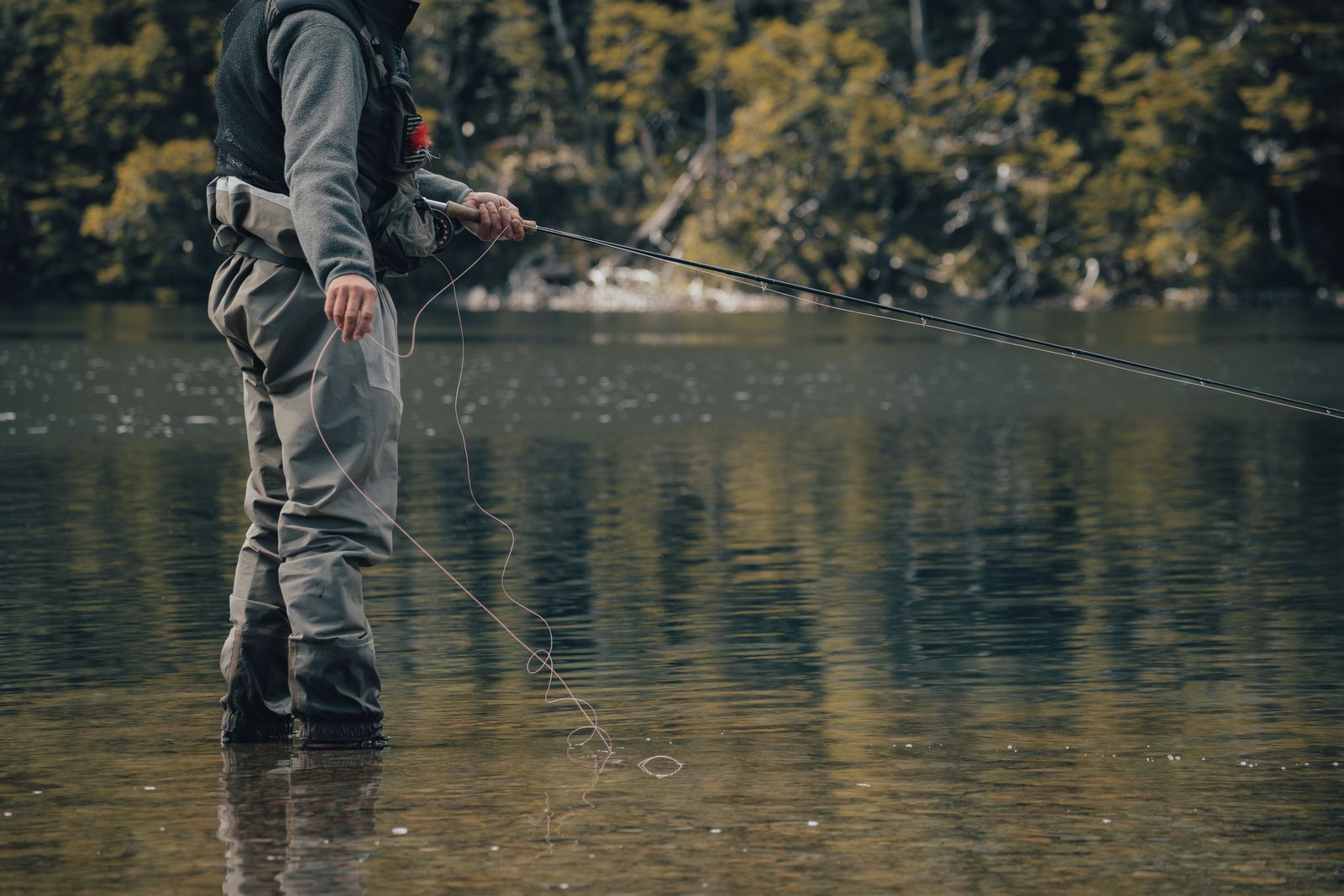
Virginia's freshwater fishing licence is about to cost more for the first time in 14 years, and the 1,200-odd comments the state collected on the proposal show anglers are nowhere near agreed on whether that is fair.
The Board of Wildlife Resources meets in Henrico County on Wednesday and Thursday to decide a package of rule changes released in July by the Department of Wildlife Resources: licence fee rises, higher motorboat registration fees, new boating safety rules, a first-ever $10 fee to camp on department land, and a set of endangered and invasive species measures. Cardinal News obtained the public comment responses through a Freedom of Information Act request after the comment window closed on 5 August.
The increases are modest on paper — roughly $5 to $20 for residents depending on the package, with non-resident rises reaching $50. A one-year resident hunting or freshwater fishing licence goes from $22 to $27. Many boat fees climb $5.
What sits behind them is not modest. In June the department took a $6.9 million loan from the state treasury to cover payroll, overdue contractor payments and travel reimbursements, after concluding that projected revenue and spending cuts would not get it through the fiscal year with a positive balance. The loan is interest-free over two years, and one of its conditions is that the agency actually pursue the fee increases its board has approved.
Unlike most Virginia agencies, DWR gets no general fund money. It runs on licences, boat registrations and federal funding. Licence fees have not moved since 2012; boat registration fees not since 2019. A 2019 review by the legislature's watchdog found the agency in reasonable shape with about $37 million in reserves, but flagged even then that revenue was not keeping pace with inflation.
"Report writers at that time could not have foreseen the accelerated rate of inflation and increases to the cost of doing business that DWR has experienced since the pandemic," agency spokeswoman Shelby Crouch told the Richmond Times-Dispatch. The department's operating budget was around $67 million in 2019; officials estimate it would take roughly $86 million today to deliver the same services.
Secretary of Natural and Historic Resources David Bulova said the job has grown while the funding has not, citing human-wildlife conflict response, invasive species management and endangered species work. "While the agency has done their part to request added support for these duties, those requests went unheeded," Bulova said. DWR submitted budget proposals in 2022 and again in 2024; neither advanced.
Governor Abigail Spanberger's office, which approved the loan, put the blame on the previous administration. "Governor Spanberger is committed to restoring stability to the Department of Wildlife Resources after the previous administration ignored years of warnings and jeopardized the agency's long-term mission," spokesman Jack Bledsoe said.
DWR executive director Ryan Brown told staff in an internal video that the loan itself is the message. "This will be a very stark sign to the rest of Virginia that, hey, there's a need here, and it needs to be addressed going forward," Brown said.
None of that lands the same way with someone buying the licence.
Edward Warmus of Warrenton, who lives on a fixed Social Security income, wrote that rising costs against flat income eventually force a choice. "If the fee increases become excessive, the choice might be hanging up the hunting rifle which I don't want to do," Warmus wrote.
Raymond Carter of King William County allowed the fees could help but argued the department is treating a symptom, calling the approach "putting a band-aid on a hemorrhage" without a look at other revenue. He proposed targeted increases instead — to the Deer Management Assistance Program fee, the Public Access Lands for Sportsmen fee and the Virginia State Forest Use Permit — and noted hound hunters are among the only groups without a dedicated licence or permit.
Others were willing to pay, with conditions attached. Keegan Gordon of Narrows said he does not mind chipping in as long as the money is used for "good." His expectation was specific: "I expect to see national forest gates open in SWVA, and it be taken care of better all over Virginia, not just [the] northern part where y'all make the most money," Gordon wrote.
The camping fee drew more than 100 comments on its own and split hardest. Patrick Carey of Powhatan called it "misleading" to describe camping on department land as currently free. "Access to these lands is already funded through the purchase of hunting, fishing, trapping, or other qualifying licenses," Carey wrote. "At the same time, DWR is proposing increases to many of those license fees." Charles Hurt of Gordonsville was shorter: "It has always been free and should stay free!"
Ronnie Tiller of Spotsylvania took the other side. "Campers should shoulder some of the financial cost to maintain and police these areas," Tiller wrote. "And $10 is a lot cheaper than renting a space at a commercial camp ground for one night."
The conservation measures ran quieter and warmer. Peggy Clark of Radford backed adding Abrams Creek and its tributaries in Washington County to the list of waters where seines, traps and nets are barred, protecting the state-endangered Tennessee dace. Another proposal would stop anglers taking snapping turtles on trotlines, juglines, limblines or set poles. Richard Hynes of Earlysville tied the two threads together: "The DWR needs more revenue to hire more conservation officers."
Committee meetings run Wednesday, with the full board voting Thursday. Anyone can sign up to speak in person or attend virtually.