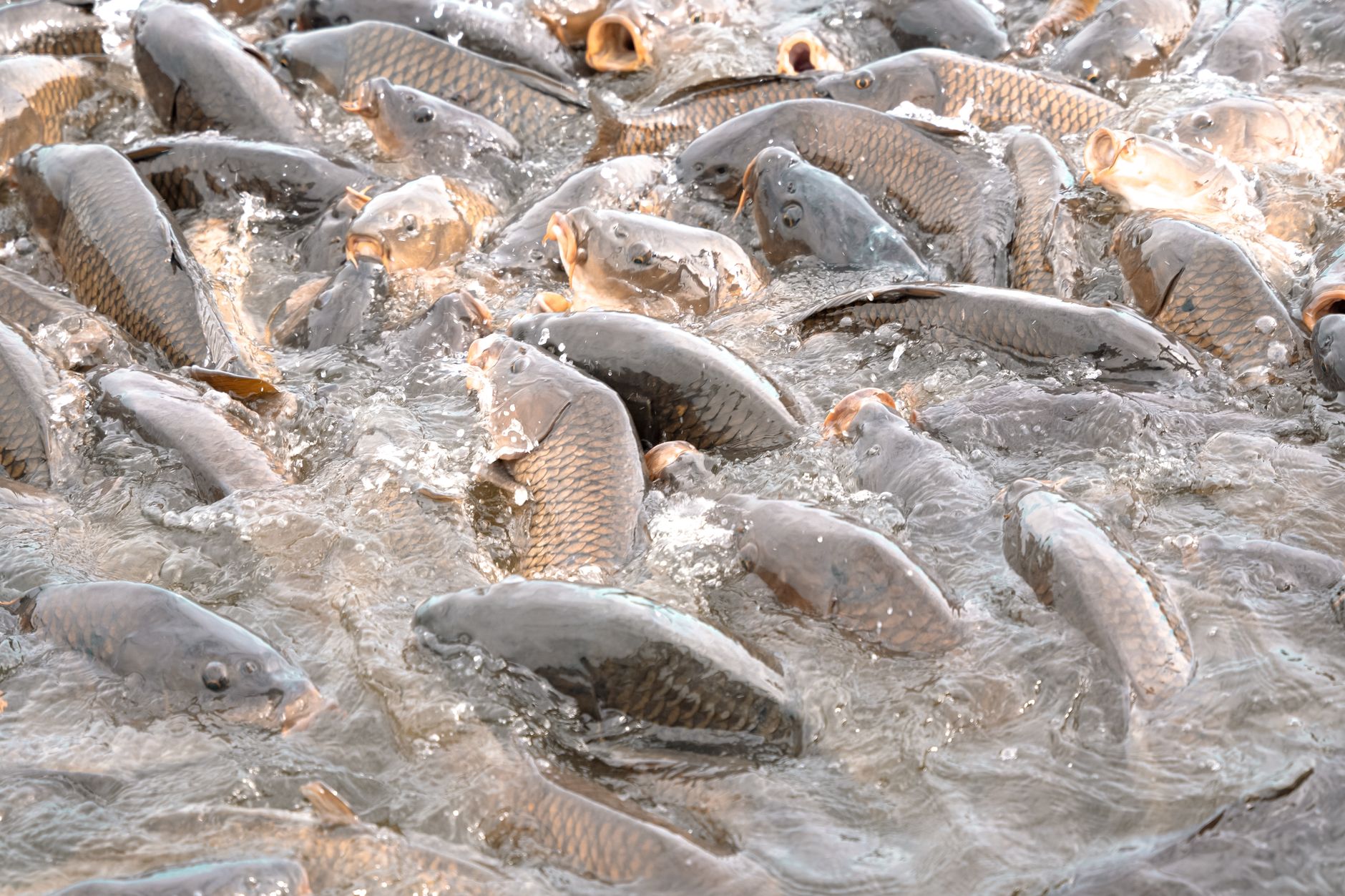
Illinois biologists pulled several hundred juvenile silver carp out of the Marseilles Pool of the Illinois River on Thursday and Friday of last week, and the location is the part that matters. The Marseilles Pool sits roughly 80 miles from Lake Michigan. It is the closest young invasive carp have ever been found to the Great Lakes.
The fish were small — four to six inches — which is precisely why the Illinois Department of Natural Resources treated the find as a change in status rather than a routine catch. Adult silver and bighead carp have been picked up above Peoria before. Juveniles have not.
Silver carp spawn upstream, and the eggs drift downriver for miles before hatching and growing to juvenile size. Finding hundreds of small fish in the Marseilles Pool implies a spawning event somewhere further up the river or in one of its tributaries.
"Flood pulses and water temperatures this summer created conditions that have been conducive to carp spawning," the Illinois DNR said in its release. "Crews are now ramping up additional monitoring in the upper river and tributaries to gather more information that will allow them to assess the scope and significance of the discovery."
Fish biologists consider a carp population established once multiple life stages are present in the same stretch of water. On the Illinois River, that line has sat at Peoria for years, with the lower 240 miles down to the Mississippi written off as carp country. North of Peoria, the juveniles were missing. That is what changed last week.
Crews are now running intensive electrofishing in the juvenile habitat and stepping up surveys in the Dresden Island Pool — about 50 miles from Lake Michigan and upstream of the new find — as a precaution. Contract commercial fishing for adult carp resumes in September, once water temperatures drop enough to make it effective. The captured silver carp will also be studied for microchemistry, which can indicate where they came from.
The timing is what has made this a political story as much as a biological one. In late July, the Army Corps of Engineers issued a stop work order on the Brandon Road Interbasin Project at Joliet, the layered barrier system — electric deterrent, bubble curtain, engineered channel — designed to stop carp moving up the Des Plaines River into Lake Michigan. The Corps said the project was under administrative review.
Joel Brammeier, president and CEO of the Alliance for the Great Lakes, did not hedge.
"Every day we don't have shovels in the ground at the Brandon Road project puts us a day closer to seeing invasive carp cause irreversible harm to the Great Lakes ecosystem and economy that our region depends on," Brammeier said. "With carp spawning in the upper river, we don't have any more time for administrative delay. The Army Corps must allow the construction teams to get back to work now — otherwise, years of bipartisan collaboration and investment to stop the carp will have been for nothing."
Illinois Governor JB Pritzker, who had already clashed with the federal government over the project's funding, framed the pause in blunter terms after it was announced.
"It's clear the Trump administration is literally attacking fresh water, clean water, drinking water for the Great Lakes," Pritzker said.
For anglers, the concern is less about the barrier politics than about what silver and bighead carp do to a fishery once they arrive. Karen Murchie, director of Fresh Water Research at Shedd Aquarium, laid out the mechanism.
"These invasive carp are eating machines," Murchie said. "Two of the species are plankton eaters, and they will outcompete some of our native fish, (including) our walleye, perch, and lake whitefish."
That is the food base of the Great Lakes sport and commercial fisheries. Silver carp reach more than three feet and typically weigh around 20 pounds, though the U.S. Fish and Wildlife Service records fish up to 80. They are also the species notorious for launching out of the water at the sound of an outboard, which makes them a hazard to anyone running a boat.
The four species grouped as invasive carp — bighead, silver, black and grass — were brought into the southern United States in the 1970s to control algae, weeds and parasites in fish farms and wastewater ponds. They escaped into the Mississippi during flooding in the 1990s and have been working north ever since.
Not everyone reads the find as an emergency. The forward edge of adult carp has been held at roughly 50 miles from Lake Michigan, and the agencies involved — IDNR, the Illinois Natural History Survey, U.S. Fish and Wildlife Service, the Army Corps and the U.S. Geological Survey — have protocols that trigger automatically on exactly this kind of detection. Those protocols are now running. Whether the barrier that was supposed to back them up gets built is a separate question, and one nobody at the river can answer.