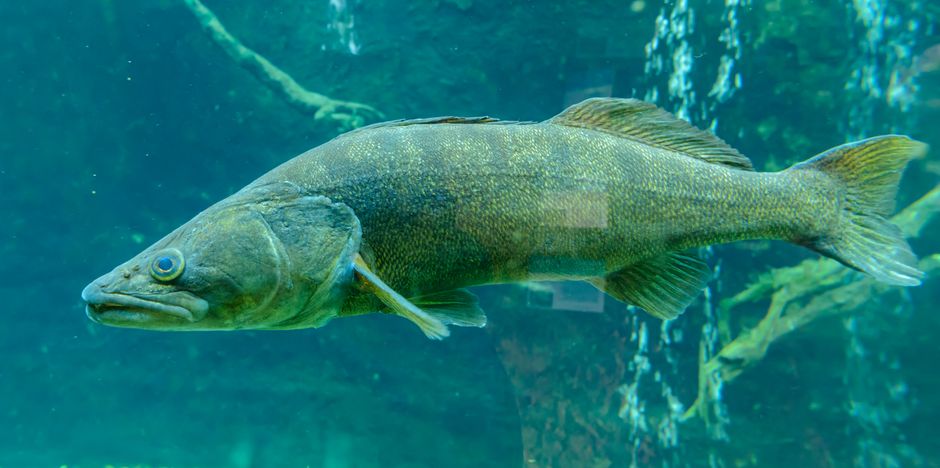
A new study has put a startling number on Minnesota's love of fishing: the state's anglers haul in roughly 80 million pounds of fish a year — more than double the 30 million pounds the Department of Natural Resources last estimated back in 2001. The figure, produced by researchers from the U.S. Geological Survey, the University of Missouri, the University of Louisiana and Memorial University of Newfoundland, has reignited a fight that has simmered across the upper Midwest for two seasons: is forward-facing sonar making it too easy to catch fish?
The technology — live, real-time sonar that lets an angler watch a fish react to a lure metres from the boat — has gone from novelty to near-standard equipment in a few short years. Bud Dusenka of Frankie's Live Bait and Marine put the adoption rate bluntly. "Everybody either wants it or adds it later," he said.
The DNR is not sounding an alarm. Brad Parsons, the agency's fisheries chief, said the harvest data does not point to a population in trouble. "We have been looking at harvest over time, and we don't see over-harvest generally as a problem," Parsons said. "Even with the walleye bag limit change, this isn't a crisis we are trying to address. This is … to be good stewards and to be proactive."
Not everyone on the water is so relaxed. Terry Thurmer, who runs a harbour and boat launch on Mille Lacs Lake, argued the real danger is not the big, well-studied fisheries but the small ones with no buffer. "But it will cause holy hell on smaller lakes," Thurmer said. "Guys can get on a little lake they've never fished before and find panfish right away."
That same split — the tool is fine on big water and ruinous on small water — runs through the tournament world. In competitive bass fishing, forward-facing sonar has become a participation problem. Randy Pringle, a tournament director with Best Bass Tournaments in California, said the electronics have rewritten what a winning bag looks like on his trail. "We've had seven limits over 40 pounds at Clear Lake during our tournaments this year, all shaking a minnow using Forward Facing Sonar," Pringle said. The catch, he warned, is that those eye-watering weights scare people off. "The massive weights have intimidated others from participating," he said.
Pringle's own view is more measured than the headlines suggest. On richer, more varied fisheries, he argued, the gear matters less. "Technology is far less of an advantage at these bodies of water," he said — a nudge to organisers worried about competitive balance to think harder about where they hold events rather than reaching first for a ban.
The major circuits have already moved. Bassmaster and Major League Fishing both introduced restrictions on forward-facing sonar use for the 2026 season, responses aimed squarely at the fairness complaint. The Minnesota numbers add a second front to the argument — not just whether the technology is sporting, but whether, multiplied across hundreds of thousands of anglers, it is quietly pulling more fish out of the water than managers ever counted on.