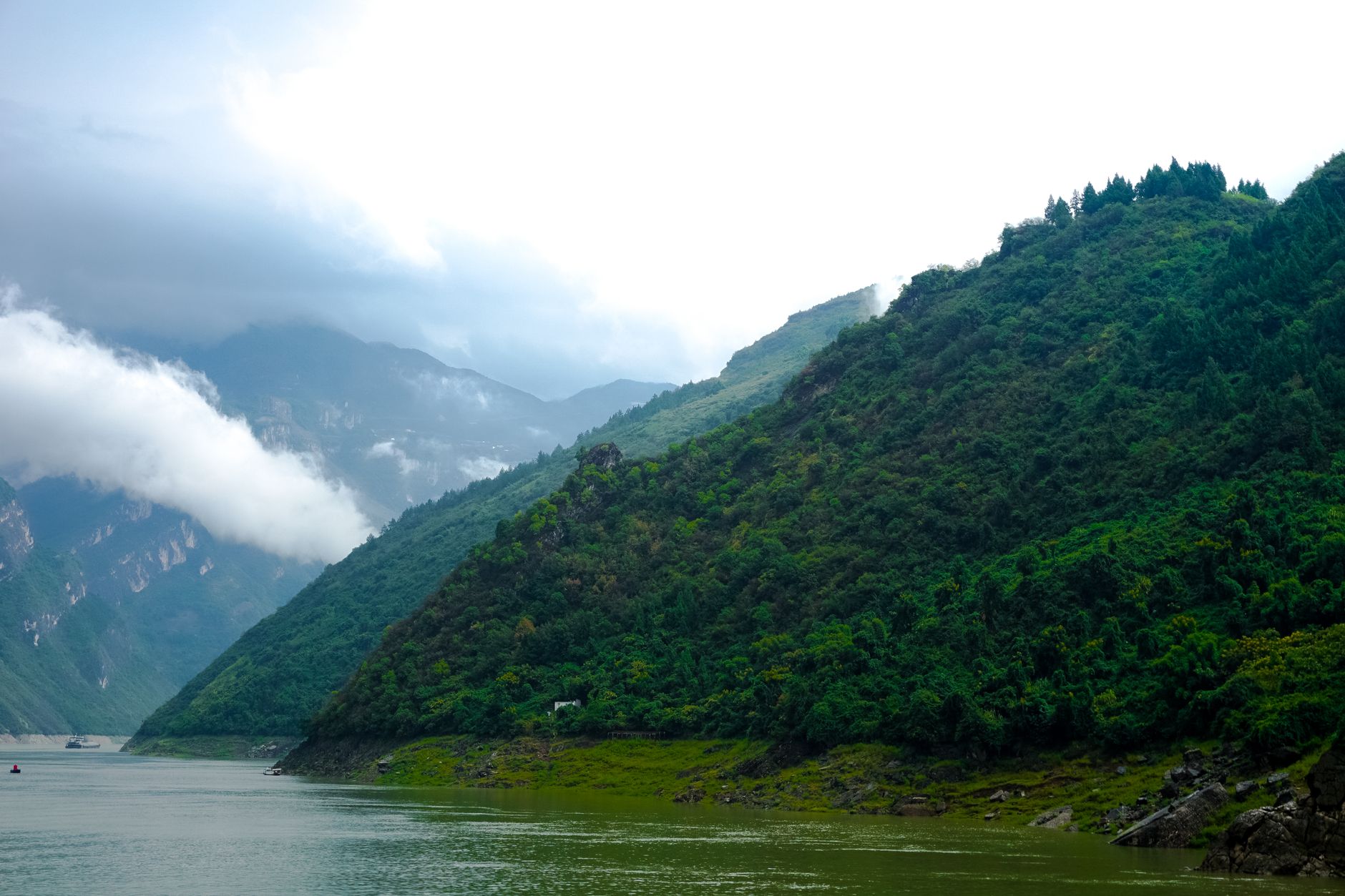
Halfway through the most ambitious freshwater closure ever attempted, the Yangtze is producing the kind of result fisheries scientists rarely get to report.
Monitoring data from the river's main stem, analysed in a 2026 study in Acta Hydrobiologica Sinica, shows eight fish species with statistically significant increases in body size since China's 10-year commercial fishing ban took effect in January 2021. Ten species now show a higher proportion of sexually mature individuals.
Those two measures matter more than a raw fish count. Bigger fish spawn far more offspring, and a rising share of mature adults points to an improving age structure rather than a one-off surge of juveniles. Many Yangtze species need several years to reach breeding size, which is why the signal has only now emerged.

It sits on top of a larger body of evidence. A Science paper published in February compared the two years either side of the ban and found fish biomass had more than doubled, with diversity up 13 per cent; The Economist has since reported the river's total fish weight tripling in recent years. Monitoring reported in The Innovation Water logged 134 endemic species between 2021 and 2025, 25 more than surveys found before the closure.
"It is really fantastic news. It is one of the first times that we can say that government measures have not just worked, but have really improved things," Brosse said.
The study's lead author, Fangyuan Xiong of the Chinese Academy of Sciences, pitched the finding at other governments rather than at China's. "The results reported in this study [...] provide hope that in an era of global biodiversity decline, ambitious political decisions that support large-scale restoration efforts can help reverse the ecosystem damages of the past and lead to a brighter future," Xiong said.
The cost of getting there was substantial. Yangtze fish stocks had collapsed by around 85 per cent across seven decades of overfishing, pollution and dam building on a river of 6,300 kilometres serving roughly 400 million people. Decades of partial restrictions achieved little. The full moratorium, covering the main stem and major tributaries, came with about $3 billion in compensation and retraining for some 200,000 fishers and the scrapping of many of the 100,000 boats involved. Its enforcement structure was designed using evolutionary game theory to anticipate how local communities, local governments and Beijing would each respond to different combinations of penalty and reward.
Some losses are permanent. The baiji, the freshwater dolphin once treated as a river goddess, was driven to extinction earlier this century by pollution, dams, shipping and fishing with electricity and dynamite. The Yangtze finless porpoise has done better, with observed numbers climbing from roughly 400 to 600 according to Brosse.
The caution running through all of this work is consistent. Five years is half a programme. Illegal fishing continues, notably on the Gan tributary. Water quality still needs work. The critically endangered Chinese sturgeon remains cut off from its spawning grounds by hydropower dams. Chen Yushun of the Chinese Academy of Sciences' Institute of Hydrobiology, a co-author on the Science paper, has consistently described the recovery as early rather than established, and a 2022 review in The Innovation argued the ban will not restore the ecosystem on its own without parallel gains in habitat connectivity and river management.