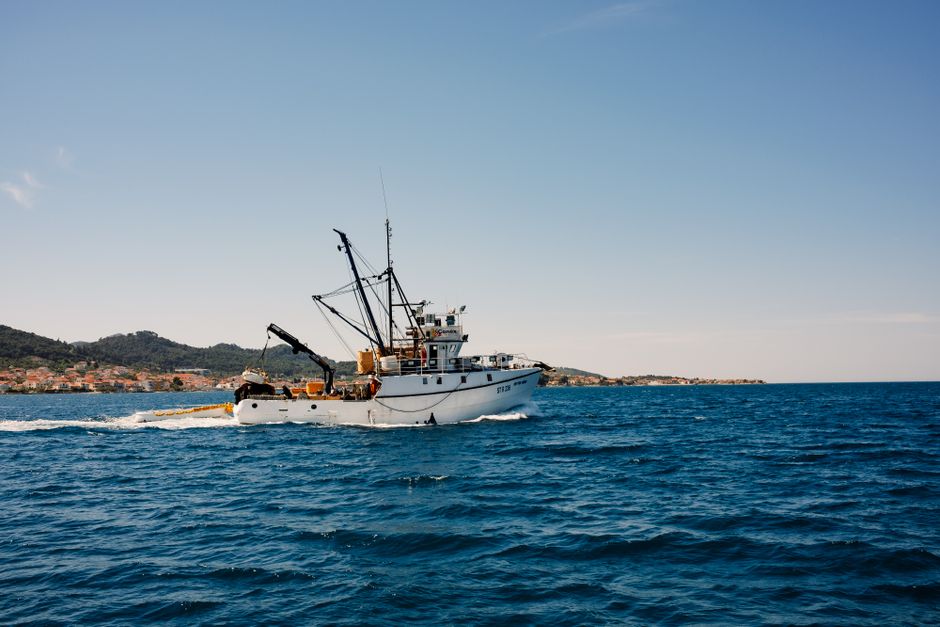
President Trump signed a proclamation on Thursday reopening nearly half a million square miles of the Pacific Ocean to commercial fishing, stripping protections from three of the most remote marine national monuments in U.S. waters.
The order targets the Papahanaumokuakea Marine National Monument northwest of Hawaii, the Mariana Trench Marine National Monument, and Rose Atoll Marine National Monument near American Samoa. At Papahanaumokuakea, commercial vessels will be allowed back into the Mau and Ho'omalu Zones in waters seaward of 50 nautical miles. At Rose Atoll, the band between 12 and 50 nautical miles is reopened.
Trump framed the move as an economic one. "This will support millions of dollars in annual harvest. It will protect small local fisheries and coastal communities that depend on their livelihoods," he said. He argued the change would "increase domestic seafood production to help lower costs for American communities — and you're talking about millions, tens of millions of dollars of income."
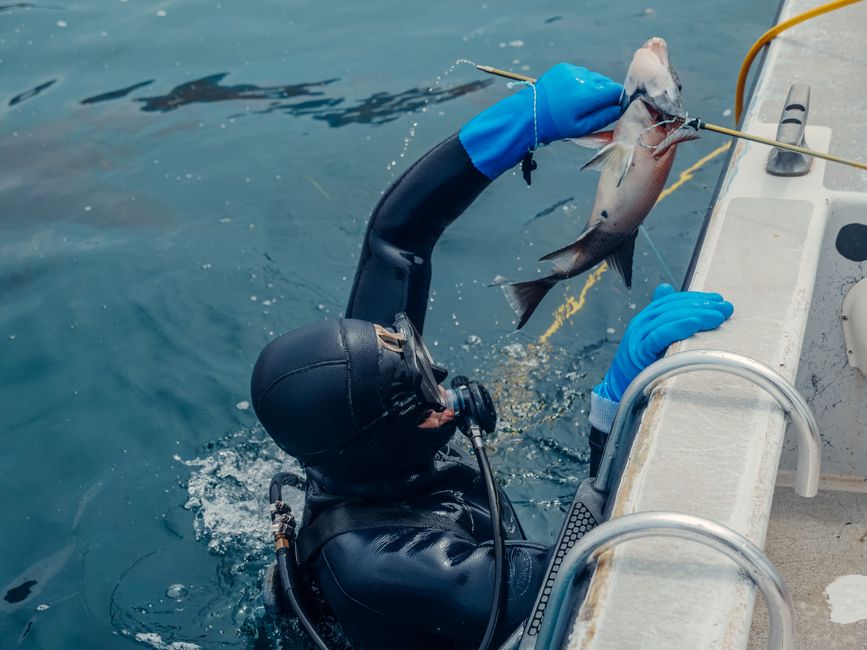
Hawaii's longline fleet, a roughly $125 million industry based in Honolulu, has long pushed for access to the closed grounds, arguing U.S. boats are forced to fish far from home while foreign fleets work the edges of the monuments. But Eric Kingma, executive director of the Hawai'i Longline Association, stopped short of a victory lap. "Any future management decisions should be guided by sound science, respect for cultural and environmental values, and a balanced approach that supports conservation, food security, and the long-term viability of Hawai'i's longline fleet and associated local seafood companies," he said. Kingma also noted that boats will not get immediate access — the change still has to pass through federal rule-making before a single hook goes in the water.
Conservation groups reacted with fury and a promise to litigate. David Henkin, deputy managing attorney at Earthjustice's Mid-Pacific office, rejected the economic case outright. "Commercial fishing in our protected marine monuments would not only be disastrous for the environment, but also does nothing for the fishing industry," he said. "Without fishing in the monuments, U.S.-based fisheries hit their catch limits for tuna every year." His parting line was short: "We'll see the administration in court."
Maxx Phillips, a senior attorney at the Center for Biological Diversity, was blunter still. "This is a reckless attack on the world's greatest ocean sanctuaries," she said. "Papahanaumokuakea is a sacred place and a refuge for endangered wildlife found nowhere else on Earth. We'll fight hard against Trump's short-sighted attempt to plunder these incredibly biodiverse waters."
The legal fight has a recent precedent. In August 2025, a federal district court struck down an earlier attempt to resume commercial fishing in the Pacific Islands Heritage Marine National Monument — a ruling opponents are likely to lean on. The proclamation also runs on a separate track from a House bill, floated earlier this month, that would bar future presidents from closing fishing grounds inside marine monuments altogether.
For now, the practical effect is limited. No commercial vessel can drop a line in the reopened zones until NOAA writes the rules to allow it. What is clear is that one of the largest marine protected areas on the planet is again up for grabs — and headed straight back to court.