
Australia's spearfishing community is grieving after a third fatal shark attack in barely a month, a run of tragedies that has reopened a bitter debate over how — or whether — the country should respond.
The latest victim was Daniel Turpin, a 35-year-old who was spearfishing with family near Michaelmas Island off Albany, on Western Australia's south coast, when he was attacked about 11:20am on June 6. Police believe the shark was a great white. In a statement, his family described him as "an adored husband, son, brother and uncle who had a lifelong love and deep respect for the ocean."
"Our family is devastated by this tragic loss and we are still coming to terms with what has happened," they said. "Daniel brought enormous joy to the lives of those who knew and loved him."
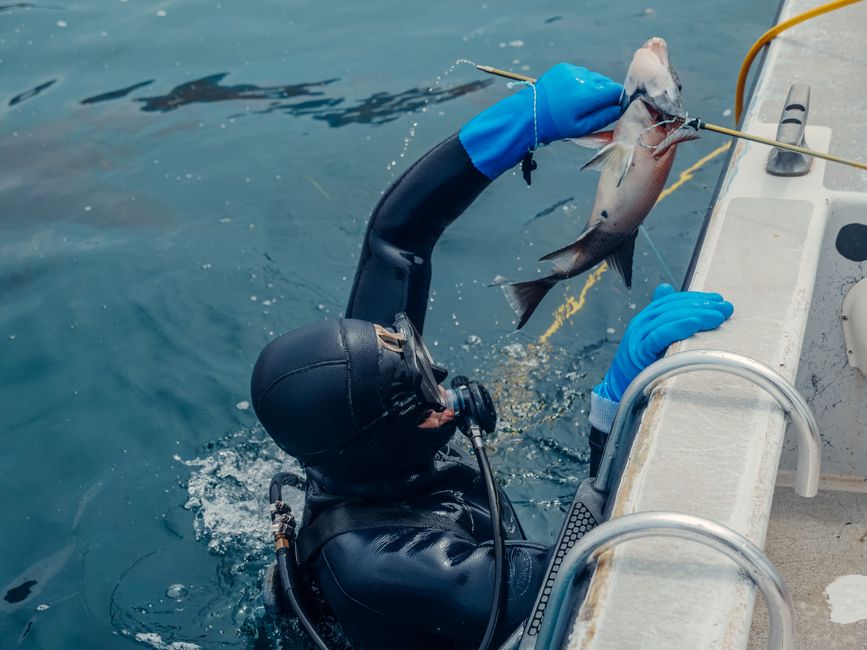
Turpin's death followed two others in quick succession. Steven Mattaboni, 38, was attacked by a roughly 13-foot great white on a reef near Rottnest Island in mid-May. Nine days before Turpin died, 39-year-old Michael Jensz was killed at Kennedy Shoal on the Great Barrier Reef near Cairns. All three men were spearfishers — divers who hunt fish underwater on a single breath, often with a stringer of catch trailing nearby.
The cluster has rattled a tight-knit community. Albany Mayor Greg Stocks said the loss landed hard in a region where everyone seems connected. "For the community of Albany that hits home pretty hard because whilst we're a city there's one degree of separation really," he said. "Nearly everybody would know someone who knows someone from the Turpin family."
What to do about it is where the agreement ends. Albany MP Scott Leary said "selective culling, especially around populated areas, might be a solution." Commercial shark fisherman Brian Sell argued the predators are simply more numerous than they used to be: "there's more and more white pointers around than there's ever been."
WA Fisheries Minister Jackie Jarvis pushed back hard on both points. "There is certainly no data or information that suggests there is increased shark activity," she said, adding: "I don't think there's any evidence that culling sharks close to shore provides any safety." Jarvis pointed instead to monitoring already in place. "We have a world-class shark tagging program and obviously electronic monitoring that will alert people when those tagged sharks are in the area," she said.
Some of the most pointed words came from those who have lived the loss. Marc Muscat, whose son was killed in a 2014 attack, said a cull would not change the maths of the water. "They live in the water, whether they cull them all or not, it's not going to bring my son back, so it doesn't concern me," he said.
Graham Henderson, president of the Australian Underwater Federation, made the same case from a diver's perspective, arguing that "sharks have a function to fulfil in the ocean" and that the answer lies in preparation, not retaliation. "We need to actually make the general public and the recreational divers more aware of what things they can do to mitigate the risks of shark attack," he said.
Researchers point to targeted technology as a middle path. Bond University shark scientist Daryl McPhee described SMART drum lines, already used on parts of the east coast, as a less blunt instrument than a cull. "A SMART drum line is a baited hook, which has a trigger on it which alerts somebody back on land that a shark has been captured," he said.
For spearfishers themselves, the standard advice is unglamorous but consistent: dive in a group rather than alone, dispatch and stow speared fish quickly rather than dragging a bleeding stringer, avoid murky water, and keep eye contact with any shark that approaches. None of it offers a guarantee — and for three Australian families this autumn, that is the hardest part to absorb.