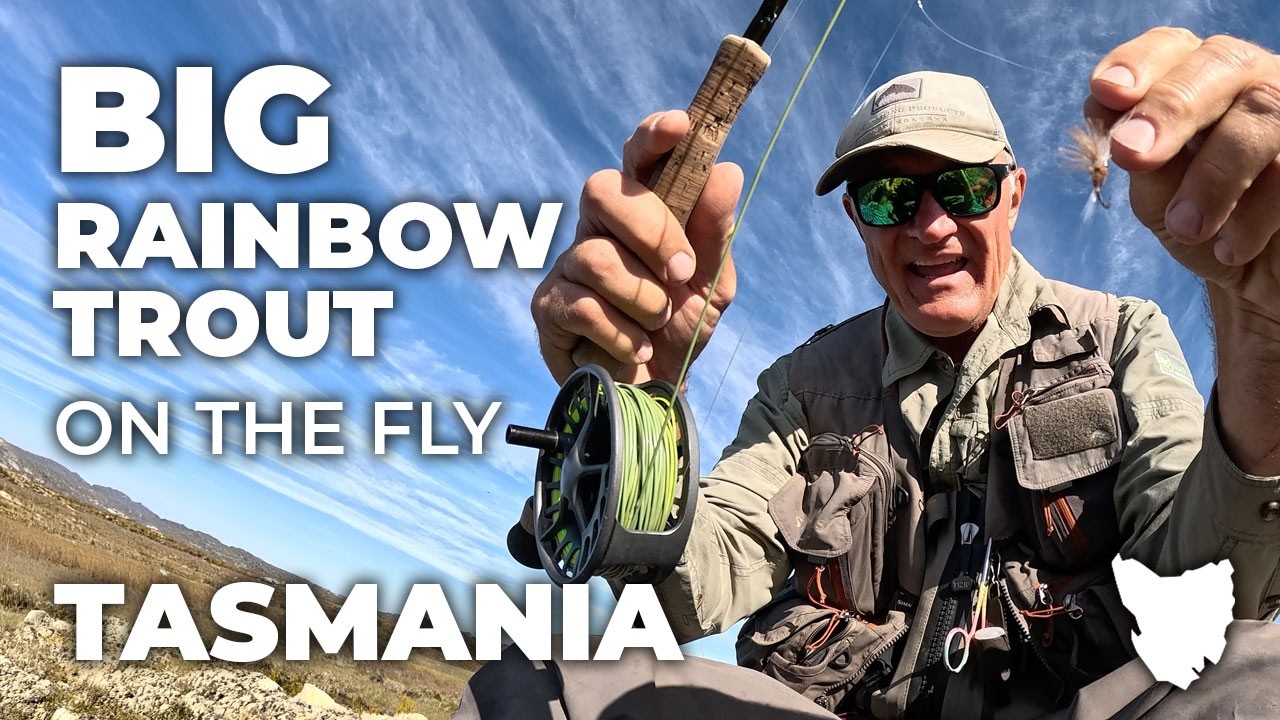
Few places test a fly angler quite like the highland lakes of Tasmania's central plateau, and a recent three-day trip captured on film showed exactly why the region is both revered and feared by trout fishers.
"Welcome to one of the world's greatest wild trout fisheries," the angler said at the outset, standing beside a remote western-lakes lagoon with a raft, his rods and a day's food. The target was wild brown trout in gin-clear water, the kind of sight-fishing where polaroiding a cruising fish is half the battle. The conditions, though, refused to cooperate.
The opening day was a humbling blank. Low cloud killed the visibility he needed to spot fish, and a sudden run of warm weather brought out something far less welcome. "Every tiger snake in the western highlands is out today to play," he said after counting five of the deadly snakes within 100 metres of his raft. He retreated to the water, drifting and blind-casting a team of three dry flies, and raised four fish, but landed none. Day two, a 3-kilometre hike into a tarn that had produced big browns years earlier, ended the same way: beautiful fish spotted tailing in the shallows, then spooked. "I feel like a rank amateur," he admitted.
The trip turned on day three at Talbot Lagoon, where he joined his mate, fly fisherman Craig Carey, in pedal kayaks on a shallow, weedy lake where boats are restricted to foot pedals or oars. The dry-fly action was immediate and relentless, with fish rising to red and orange spinners and dragonfly feeders almost everywhere they looked. The problem was holding on. "That's six fish hooked, six fish lost," he said early on. "They are seriously, seriously powerful fish in this lake."
The fish bullied him into the snags, weeded him solid and straightened hooks, forcing him to keep upping his tippet until he reached 11 pounds and switch to heavier-gauge hooks. The reward, when it finally came, was worth the punishment: a thick, deep-bodied rainbow brought to the net. "Look how fat he is," he marvelled before releasing it. A second big rainbow followed late in the day as the cloud rolled in and a mayfly hatch lifted the fish even higher in the water.
The numbers were brutal by any normal measure, eight hooked and only two landed, with break-offs, weed and a couple of straightened hooks accounting for the rest. Yet the angler was unequivocal about the quality of the fishery. "This is one of the greatest fisheries I've ever fished," he said. "And they're all big. I don't think anything's under 4 lb here."
It was, by his own description, a comedy of errors and costly basic mistakes, but also an unforgettable day in genuinely wild country. With borrowed gear from a mate and the company of a close friend, the trip underlined what draws anglers back to Tasmania's western lakes despite the snakes, the snags and the heartbreak: powerful, sight-fished wild trout in some of the most beautiful and demanding water in the country. "This is one place I'm definitely coming back to," he said.