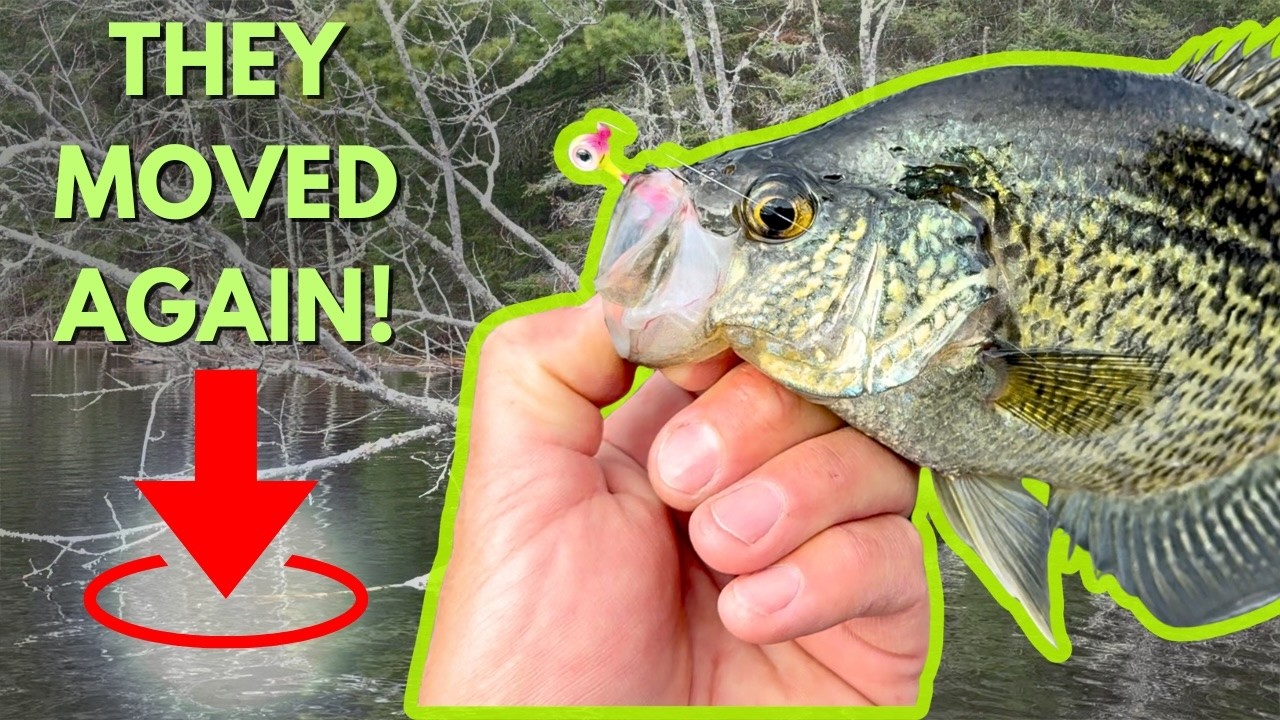
Few fishing windows reward a bit of homework like the spring crappie run, and in a new on-the-water tutorial one Wisconsin angler breaks the season into three predictable phases — pre-spawn, spawn and post-spawn — and shows how to stay on the fish through all of them.
The pre-spawn, he argues, is the easiest time of year to load a livewell, and it all hinges on one thing: water temperature.
"Warm water is everything when it comes to pre-spawn," he said, idling into a stained creek arm he had been tipped off about. Darker, tannin-stained water warms faster than clear water, and on the morning of the shoot it was holding fish in 50 to 51-degree water while overnight temperatures had dropped to freezing.
The result is a concentration that makes even thinly stocked lakes fish well. "That's the beauty of pre-spawn crappies — if you can find the warm water, all the fish in that lake are going to be just jammed into that warm water," he said. He had checked the lake's crappie data beforehand and noted it was actually a low-abundance fishery, yet the fish were stacked along a creek channel edge where stumps in four or five feet dropped into nine or ten feet.
His weapon of choice for cold, sluggish fish is a feather or marabou jig suspended under a slip float — a presentation he rates above soft plastics when the water is chilly. "These feather jigs just cannot be beat for these pre-spawn crappies," he said. The reason, he explained, is movement: the soft hackle "breathes" and pulses with the slightest ripple, looking alive even when the bait is barely moving, whereas plastics need to be worked far harder to draw a strike. He tips the jig head with a dab of scent and watches the float, setting the hook with a gentle lift the moment it dips.
A live minnow on a float is his other reliable method, and where local rules allow two rods — as they do in Wisconsin — he will fish a minnow under a bobber alongside the jig to double his chances, though he admitted the fish were too thick to bother on this trip.
The key to upgrading from numbers to quality, he stressed, is cover. After catching plenty of small fish in open channel, he slid up to a tree poking into the water and immediately found bigger crappies. "Find the warmest water like we did right away, find some sort of cover in that area. You need to find either wood or weeds that are going to hold fish," he said, noting it is a tactic that works just as well without sonar — simply anchor or spot-lock on visible cover.
As the water climbs toward the spawn, he expects the fish to spread out from the warm bays toward the main lake and push into vertical cover at the right depth — weeds, lily pads, bulrushes or cattails. The crucial point, he warned, is depth, not the type of cover. "Just because somebody tells you, 'Oh yeah, crappie spawn in bulrushes' — well, if they're too shallow, they're not going to. They're going to spawn in some kind of other vertical cover." To target bedded fish he simply shortens the leader so the bait hangs about a foot off the bottom, keeping the float because spawning crappies won't chase a lure far from the bed.
Post-spawn, the fish slide back to the first drop-offs and weed lines next to their bedding areas and hang on cover rather than scattering into open water — the moment, he says, to switch to faster moving baits such as plastics and small spinners to cover water and find them again.
The takeaway is a simple progression: chase the warmest water in early spring, lean on cover to find the better fish, then follow them out to the drop-offs once the spawn winds down.