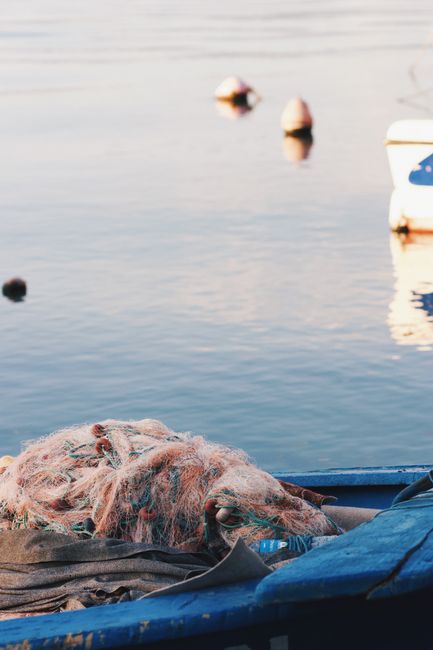
Along the eastern coast of Papua New Guinea's New Ireland Province, fish have been washing up dead since December 2025. Six months on, no one can say why — and in early June local reporting recorded the death toll climbing again rather than easing.
The scale is hard to take in. During a single five-day count at Manggai Village, conservationists logged 3,451 dead marine animals spanning more than 15 species. Around 750 people have reported illness after eating local fish or wading in the water, with symptoms ranging from skin burns to respiratory and gastrointestinal problems. Much of the documentation has been led by local conservation groups rather than government agencies.
John Aini, who founded the local marine group Ailan Awareness, has described reefs turning toxic — fish "gasping for air" with "discolored and bulging eyes and green flesh," and "a sulfuric smell near reefs." His frustration is with the official silence as much as the deaths.
"We rely on coral reefs to sustain our daily livelihoods. The government has literally said nothing," Aini said.
For coastal villages, the crisis is measured in empty dinner plates. Community leader Martha Piwas said the sea that has always fed New Irelanders can no longer be trusted.
"Families can no longer rely on the ocean for food. Mothers cannot feed their children fish anymore. People are getting sick. And we still don't know why," Piwas said. She described residents "going into the water barefoot, not knowing it will burn their skin."
"At this point in time it's really hard for me to tell you what chemical it is because we're looking at all options," Wong said, adding that his office hoped "to come up with a solution within the next week."
Investigators have weighed several possibilities — a harmful algal bloom, agricultural or industrial chemical runoff, and geothermal activity on the seafloor among them. Deep-sea mining has been ruled out as a direct cause so far. None has been confirmed.
The slow pace has worn on the islanders. Rebecca Marigu, a journalist and founder of Siro Media, said national attention faded long before the problem did.
"For us islanders, we've been people who have always depended on the ocean. The ocean is our life," Marigu said. "Now that [the government] thinks attention has moved on, they've gone quiet again. It hasn't moved on. We are all still waiting for answers."
Jessica Vandenberg, an environmental social scientist at the University of Rhode Island, framed the disaster as a familiar injustice for fishing communities.
"The people most affected by pollution are not the ones who are responsible for producing it," she said.
For the recreational and subsistence anglers of New Ireland, the practical message is unchanged from December: the fish are still dying, the water is still suspect, and the reason is still unknown.