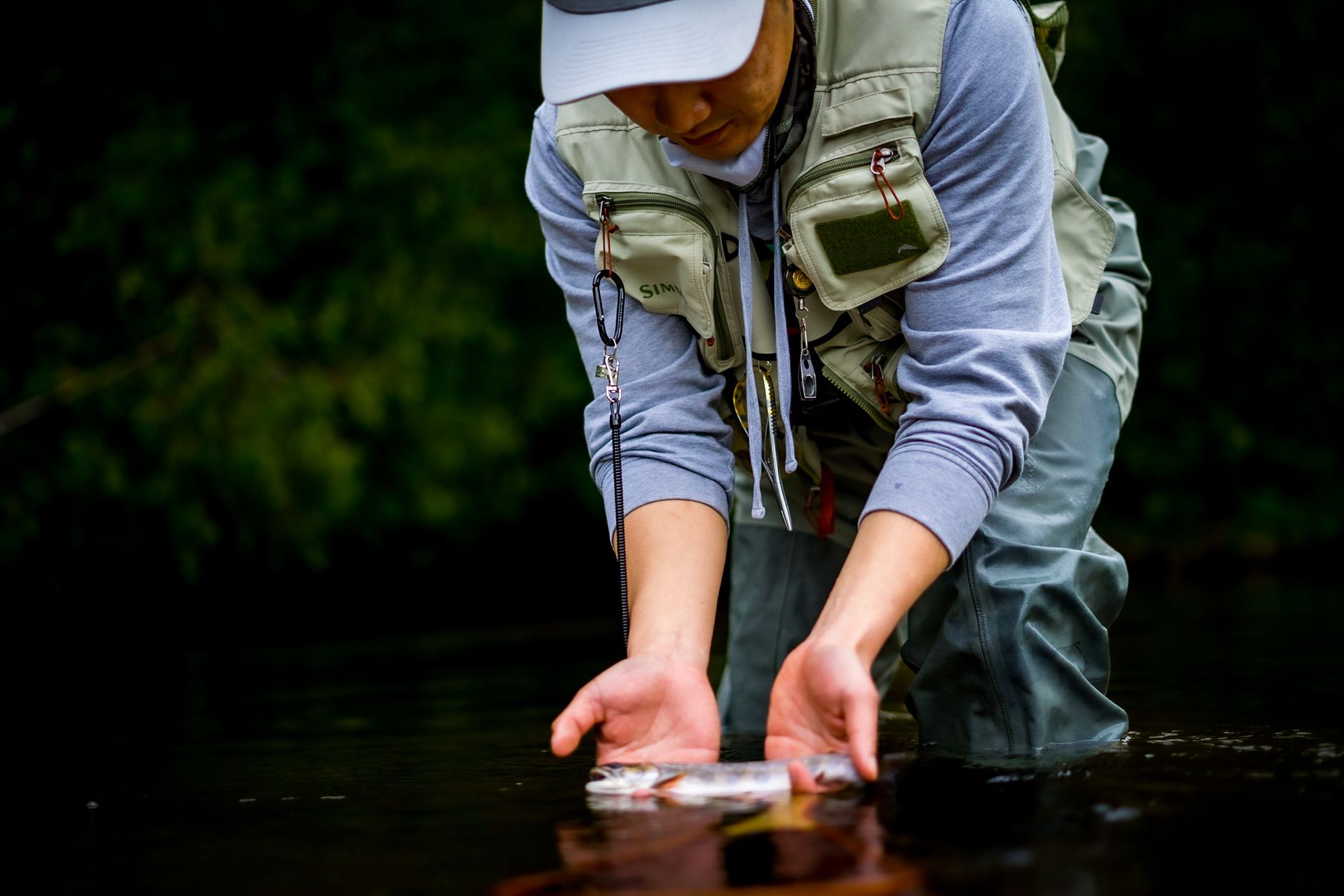
The fishing window in the American West has narrowed to a few hours after sunrise. A thin winter snowpack followed by record summer heat has lifted river temperatures into territory that kills trout, and four states plus Yellowstone National Park have all moved within a week to restrict when anglers can fish.
Yellowstone applied afternoon restrictions park-wide on Wednesday 29 July. Montana Fish, Wildlife and Parks extended its own restrictions the same day to about 1,200 miles of river. Colorado has now restricted 19 rivers covering 635.5 miles, which the state calls unprecedented.
Wyoming acted on the same date, with the Game and Fish Department bringing in its first ever voluntary catch-and-release closure on the Snake River between the Yellowstone park boundary and Palisades Reservoir, and on Flat Creek. Afternoon temperatures on both had topped 70 degrees repeatedly in the previous week. Anglers are asked to stop releasing fish after midday.
"We know Wyoming anglers care deeply about the health of these rivers," said fisheries supervisor Darren Rhea. "By hitting the water early and wrapping up catch-and-release fishing by noon, anglers can enjoy great fishing while ensuring our trout populations remain resilient."
The biology is straightforward: warmer water carries less dissolved oxygen, and an exhausted fish returned to it may not recover. Wyoming advises harvesting within limits rather than releasing once water hits 65 degrees, stopping catch-and-release altogether at 70, and treats anything above 80 as lethal within moments.
Colorado Parks and Wildlife followed on 30 July, reporting late-afternoon readings above 70 degrees on the Colorado, Rio Grande and Arkansas rivers and some tributaries, and warning that conditions are likely to deteriorate. Mandatory closures kick in if maximum temperatures pass 71 degrees, flows fall to half the daily average, fish show fungus or stress, or dissolved oxygen drops under 6 parts per million.
Idaho's action targeted a much older fish. Fish and Game closed sturgeon angling on the Snake River arm of CJ Strike Reservoir from 2 August to 25 September after verifying 16 dead sturgeon, five to nine feet long, inside the closure zone. Idaho's sturgeon numbers are down 15 percent since 2022, and spawning success has been patchy or absent.
Managers in the northern Rockies now treat this as a seasonal fixture. Closures "have become very common over the last decade plus, some might even say very routine from late June through early September," said Adam Strainer, who runs the fisheries division at Montana Fish, Wildlife and Parks. Yellowstone has restricted fishing on temperature grounds in five of the last six years.
The economic edge shows up in the fly shops. Dan Gigone of Sweetwater Fly Shop, near Livingston on the Yellowstone River, says clients are shifting trips into autumn. "People are realizing August is a crapshoot here in terms of whether you're going to be able to fish and how good the fishing will be," he said. "I've been here 22 years and this is the warmest stretch I remember."
Storage that would normally hold flows up is not there. Kirk Deeter of Trout Unlimited notes many reservoirs are near record lows, and that mid-70s water on the Yampa River near his home in Steamboat Springs has already caused a substantial fish kill. "That's a bad harbinger for the trout," he said.
Anglers are largely going along with it. Mike Wever, 62, fishing a side channel of the Yellowstone in shorts on Friday, put his hand in the river and summed it up: "Not very cold." He backed the 2pm cutoff on that water. "It's great for us to have this resource. But we have to manage it."
Academic work points the same direction. Li Li, professor of civil and environmental engineering at Penn State, co-authored a study finding that river heat waves are becoming more frequent in snow-fed systems across the northern US and the Rockies as snowpack shrinks and melts earlier. The study also logged more days at temperatures that stress cold-water fish such as bull trout.
Todd Tanner, 65, has taught at his School of Trout in Bigfork, Montana, across a May-to-October season, and keeps rescheduling around heat, drought and smoke. "The window for those trips seems to be growing narrower," he said. "I've been in Montana full time for the last 34 years. This wasn't something that we even thought about 30 years ago or 25 years ago."