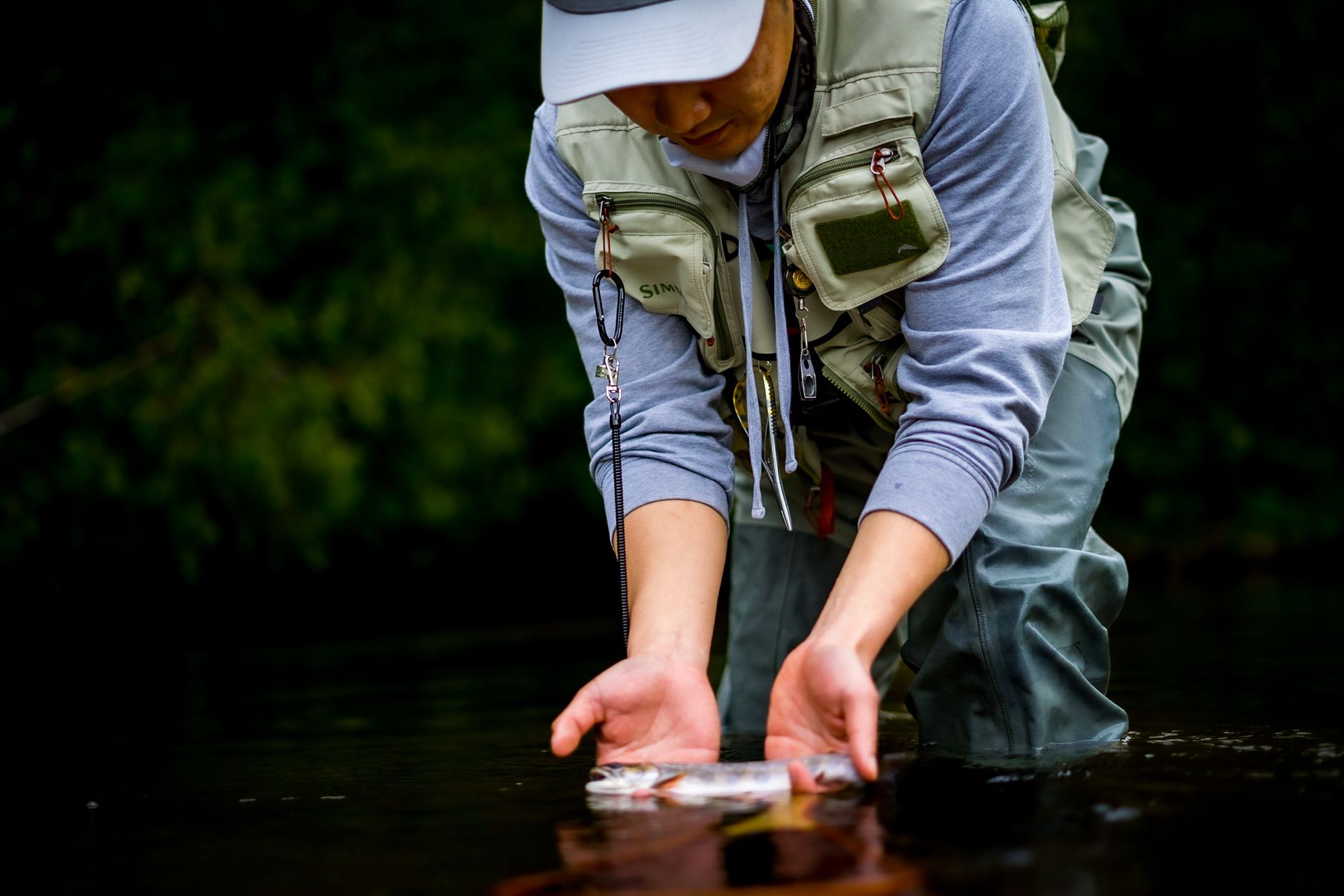
Trout fishing across the American West has been pushed into the early hours of the morning. Record heat and a thin winter snowpack have driven river temperatures to levels that kill fish, and wildlife agencies in at least four states have responded within days of each other with closures, restrictions and pleas for anglers to back off.
Yellowstone National Park extended afternoon fishing restrictions to the entire park on Wednesday 29 July. The same day, Montana Fish, Wildlife and Parks widened its own afternoon restrictions to cover roughly 1,200 miles of river. Colorado now has restrictions on 19 rivers totalling 635.5 miles, a figure state officials describe as unprecedented.
On 29 July the Wyoming Game and Fish Department implemented its first voluntary catch-and-release closure on the Snake River, from the Yellowstone National Park boundary down to Palisades Reservoir, along with Flat Creek. Both waters had run past 70 degrees in the afternoon on multiple days in the preceding week. The department is asking anglers to stop catch-and-release fishing at noon.
"We know Wyoming anglers care deeply about the health of these rivers," said fisheries supervisor Darren Rhea. "By hitting the water early and wrapping up catch-and-release fishing by noon, anglers can enjoy great fishing while ensuring our trout populations remain resilient."
The reasoning is the same everywhere. Warm water holds less dissolved oxygen, so a fish that has been fought and handled struggles to recover. Wyoming's guidance puts harvest ahead of release at 65 degrees, calls for catch-and-release to stop entirely at 70, and warns that brief exposure above 80 is often fatal.
Colorado Parks and Wildlife issued its own appeal on 30 July after late-afternoon readings on the Colorado, Rio Grande and Arkansas rivers and several tributaries went past 70 degrees. The agency said it expects conditions to worsen, and set out the thresholds that would trigger mandatory rather than voluntary closures: daily maximum temperatures above 71 degrees, flows at half the daily average or less, visible fungus or stress on fish, or dissolved oxygen below 6 parts per million.
Idaho went further with a different species. On 31 July the Idaho Fish and Game director closed sturgeon fishing on the Snake River arm of CJ Strike Reservoir from 2 August to 25 September, after staff verified 16 dead sturgeon between five and nine feet inside the closure area. The state's sturgeon population has fallen 15 percent since 2022, with natural reproduction inconsistent at best.
For fisheries managers in the northern Rockies, none of this is novel any more. Closures "have become very common over the last decade plus, some might even say very routine from late June through early September," said Adam Strainer, administrator of the fisheries division at Montana Fish, Wildlife and Parks. Yellowstone has restricted fishing because of water temperature in five of the past six years.
The people who sell the fishing feel it first. Dan Gigone has run Sweetwater Fly Shop on the Yellowstone River near Livingston, Montana, for more than two decades, and says customers are already pushing bookings back into autumn.
"People are realizing August is a crapshoot here in terms of whether you're going to be able to fish and how good the fishing will be," Gigone said. "I've been here 22 years and this is the warmest stretch I remember."
Reservoirs would normally cushion a dry summer by propping up flows. Kirk Deeter of Trout Unlimited points out that many are at or near record lows. In Steamboat Springs, where he lives, water in the mid-70s on the Yampa River killed a large number of fish. "That's a bad harbinger for the trout," he said.
Anglers on the water are mostly taking it. Mike Wever, 62, was wading a side channel of the Yellowstone in shorts on Friday when he dipped a hand in. "Not very cold," he said of the water, and he had no argument with the 2pm cutoff on that stretch. "It's great for us to have this resource. But we have to manage it."
Research is catching up with what guides describe. A study co-authored by Li Li, professor of civil and environmental engineering at Pennsylvania State University, found river heat waves increasingly occurring in snow-dominated regions including the northern US and the Rockies, driven by changes in the size and timing of mountain snowpack. The researchers also recorded more days when rivers were warm enough to stress cold-water species such as bull trout.
Todd Tanner, 65, runs the School of Trout in Bigfork, Montana, and normally schedules classes from May to October. He has been moving them around adverse conditions. "The window for those trips seems to be growing narrower," he said. "I've been in Montana full time for the last 34 years. This wasn't something that we even thought about 30 years ago or 25 years ago."