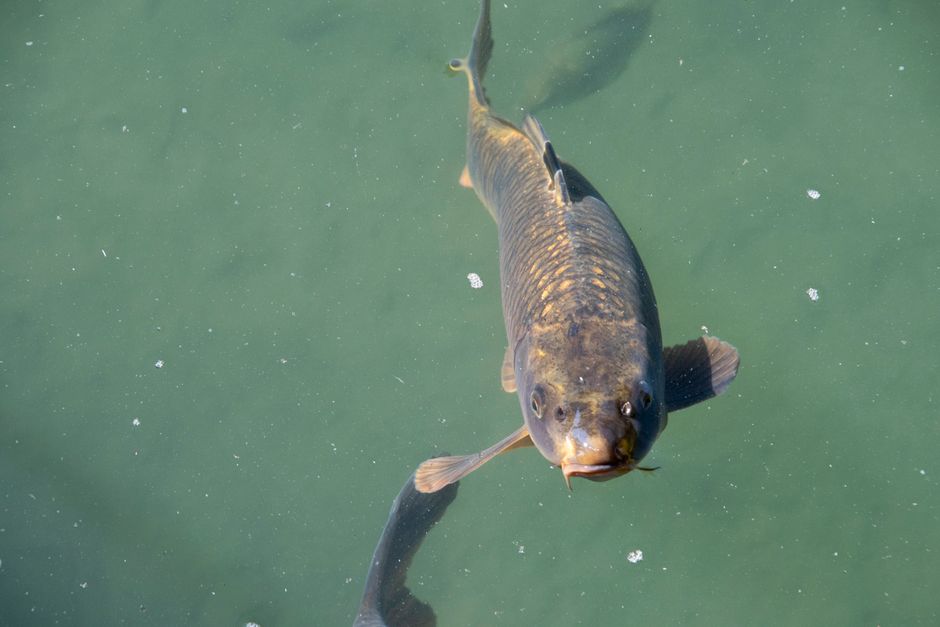
An urban wetland in Perth's north has given up a giant. During a pest-control survey at Careniup Reserve in Gwelup, scientists from Murdoch University's Centre for Sustainable Aquatic Ecosystems netted an 11.9kg European carp — a fish thought to rank among the biggest of its kind ever logged in Western Australia.
The carp measured 823mm. More telling than its length, though, was what researchers found inside: it was a female carrying upwards of three million eggs, a vivid reminder of how quickly a single pest fish can populate a waterway.
Research assistant Cindy Palermo described the moment the fish came up beside the electrofishing boat. "When the fish was stunned by the electrofishing boat, I couldn't believe the size of its head sticking out of the water," she said. Hauling it in was no small task either: "It was so heavy that it took two of us to bring it onboard the boat."

The survey is one strand of the WA Urban Carp and Goldfish Roundup, an effort to map and reduce feral fish numbers across the lakes, drains and wetlands of greater Perth. The team has set itself a long road. "We have an ambitious program operating over the next 3 years over 21 different waterbodies where we plan to demonstrate the benefits of ongoing pest fish control programs on the health of urban wetlands on the Swan Coastal Plain," Palermo said.
The find matters to anglers as much as to ecologists. European carp are a declared pest in much of southern Australia, notorious for stirring up sediment, clouding water and stripping habitat that native fish depend on. Their bottom-feeding churns soft mud into a haze that smothers plants and shades out the food web beneath.
That is why fisheries authorities ask recreational fishers to dispatch any carp they catch rather than slip it back, and to never carry live fish between systems — careless movement of carp has helped them colonise new waters across the country.
Wetlands on the Swan Coastal Plain are valued for their birdlife and native fish, yet their warm, sluggish, nutrient-loaded water is ideal carp territory. Electrofishing lets the Murdoch crew gauge just how entrenched those populations are before deciding where repeated removals will do the most good.
With three years and 21 sites ahead of it, the roundup is built on the idea that steady, year-after-year removal gives native plants and fish room to bounce back. The 11.9kg female grabs the headlines, but the program's success will be judged on the many smaller carp pulled out before they reach that size — and before they spawn the millions of eggs that keep the cycle turning.