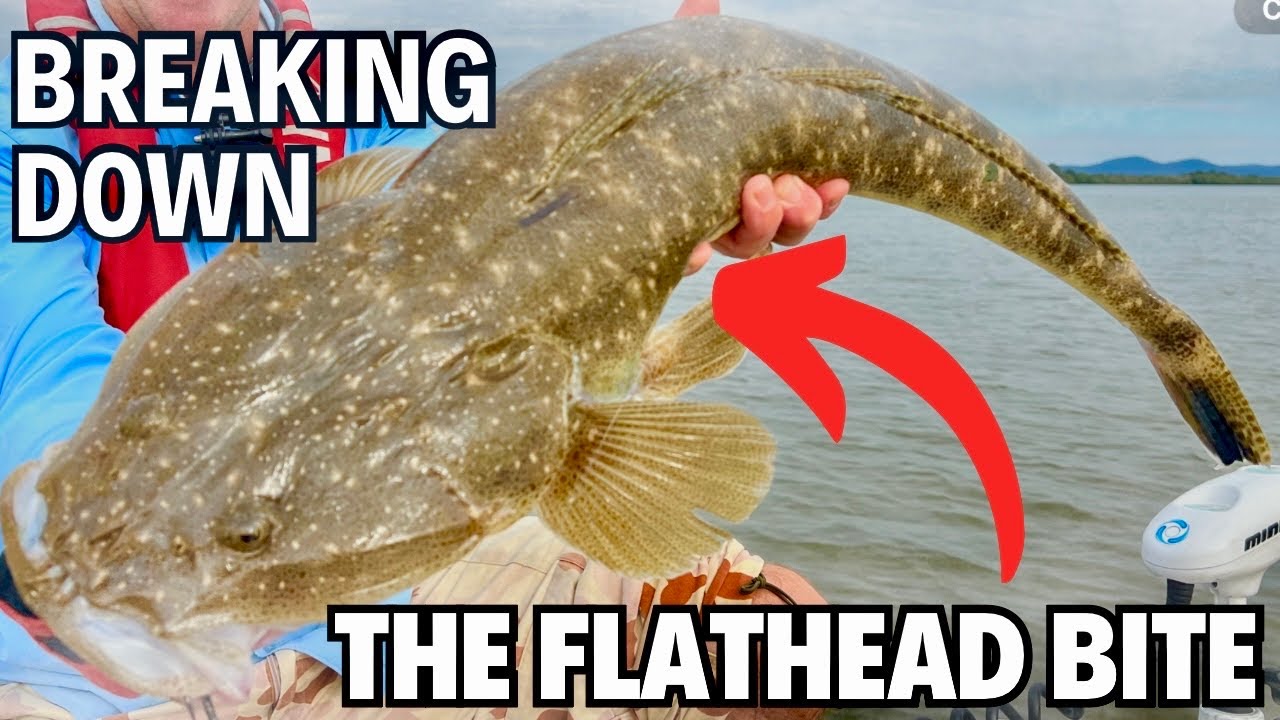
Fresh off a tournament grand final on the Gold Coast, the host of My Lure Box has broken down the school-size flathead bite for anglers who keep losing dinner to lure spook, jig-head over-weighting and the wrong tide-window.
The video is built around footage from the Elite Series Flathead final he and his fishing partner Jai filmed on the flats, and the takeaway is that pan-size flathead are not as opportunistic as the old wisdom suggests.
The centrepiece of the system is reading the surface for sandbank edges with polarised sunglasses. The drop-off where a sand flat falls away into a channel is where the angler wants the lure to land, then sink in front of any flathead pinned to the bottom.
"With flathead, so often that landing is a trigger for them to pay attention to what's landing. The sound of it is like a dinner bell," he said. "As it falls through the water, as you'll see with these soft plastics with their jig head, the flathead really dial into that."
A missed strike isn't the end of a fish - it's the beginning. The host argued for an immediate follow-up cast back into the same bubble, with a specific retrieve. Not lifting the lure high off the bottom, just popping it enough to keep it in the flathead's eyeline.
Timing runs through the whole video, and not just at cast level. The right window for school-size flathead is the falling tide where bait is being washed off the flats into deeper drains, and where there's a clean-water-meets-dirty-water transition. "If you get clean water and then it's about to dirty up, there's often a bite on as the tide's dropping, and that's what we found here," he said.
The number that anglers seem to underestimate, he said, is air time. "The best time is the air time, or time in the water before it hits the bottom. If it's moving really quick up and down because you've got a too heavy jig head, you're doing yourself out of a whole lot of air time for the flathead."
His tournament starting point is a 1/4 oz 3/0 painted jig head on a 4-inch soft plastic, dropped to 1/6 oz in shallower or slacker water. Lure choice is built around two Australian-made plastics: the Gobblers Paddle Shad in 3.75-inch and a Holt Productions Holt Prawn, both rotated through UV, white-spot, motor-oil and red colours depending on water clarity. When neither is on hand, he leans on a Rapala Crush City Suspect on a Crush City Grippa Finesse jig head as the off-the-shelf substitute.
The rod-and-reel package is deliberately downsized - a 2000 Stradic or 2-3000 Vanford on a Zodias 270M, with 8-10 lb braid spooled right to the lip for distance. Stealth on the flats is the silent partner the rest of the rig depends on. He runs his electric motor in pulses, drops a brick on a rope to anchor the boat in shallow water, and fans casts methodically because flathead routinely follow lures in for several casts before committing.
The tournament numbers are the part that should sharpen anglers' attention. "You can rack up 5, 10, even 15 flathead in half an hour, 40 minutes of a bite if you get it right," he said. "It's not by pure luck that that fish has come and coughed up its feed. It has been feeding, and we've positioned ourselves right at the right spot at the right time."
He finished with the obvious but easily forgotten piece: 45-55 cm flathead are exactly the size class most anglers want for the table this time of year, and the system above is built to put a feed on ice without grinding for a once-a-week trophy. Anyone who has been wondering why their soft plastic is getting ignored on otherwise fishy ground might want to check whether the lure is moving too fast, sitting in dirty water, or simply landing in the wrong square metre of the flat.