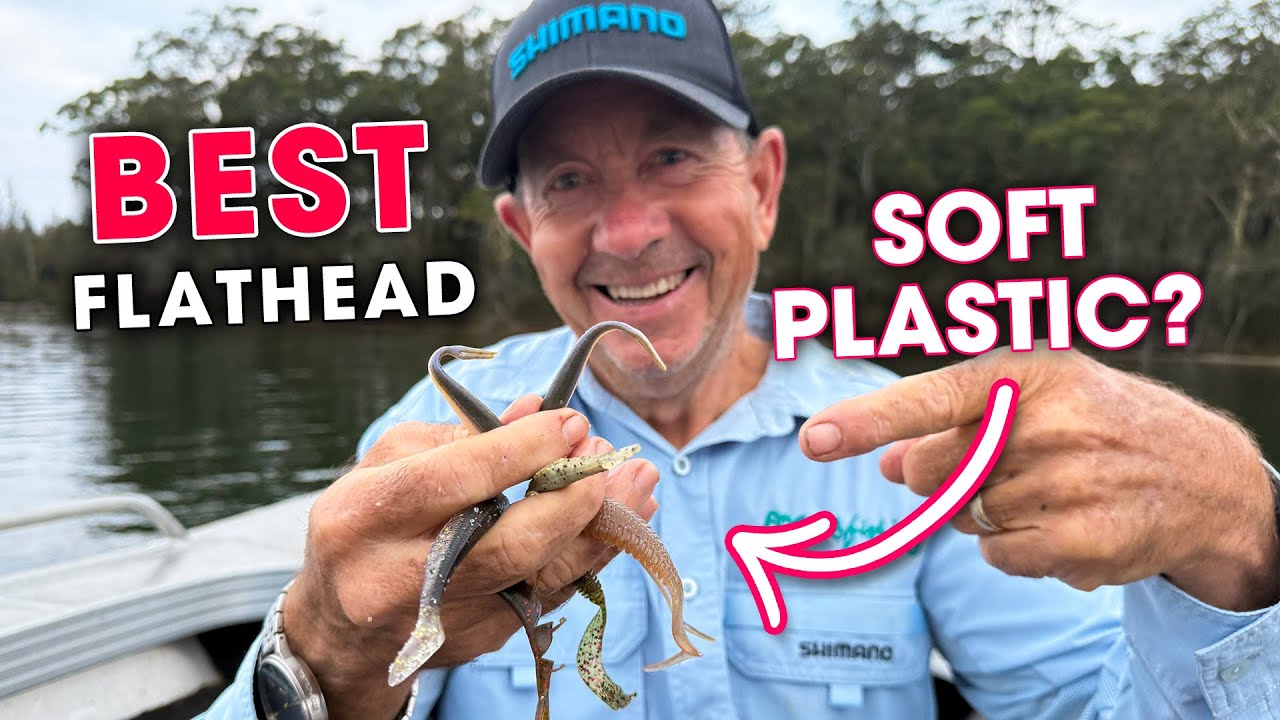
After close to thirty years throwing soft plastics at flathead, Australian fishing identity Roger Osborne reckons the shortlist of lures that actually matter is still only three deep. He laid the case out in a long-form session on his home lake, working a light 2-3 kg outfit, a 1,000-size reel, eight-pound braid and just six-pound leader.
"My three best flathead soft plastics from three decades of soft plastic fishing," he said in the opening minutes. "I'm not actually brand sensitive. I'm just talking about whatever ones I'm using and the particular styles."
The first plastic on the list is the most unassuming. Osborne started with a small minnow profile in a silvery-grey-over-white finish — what he described as "a small mullet" — and rigged it on a 1/8 oz, 1/0 jig head. "It looks exactly like a little mullet. Grey or silvery grey on top and white underneath," he said. "That really does replicate a small mullet, and we know that so many big fish feed on little things like that."
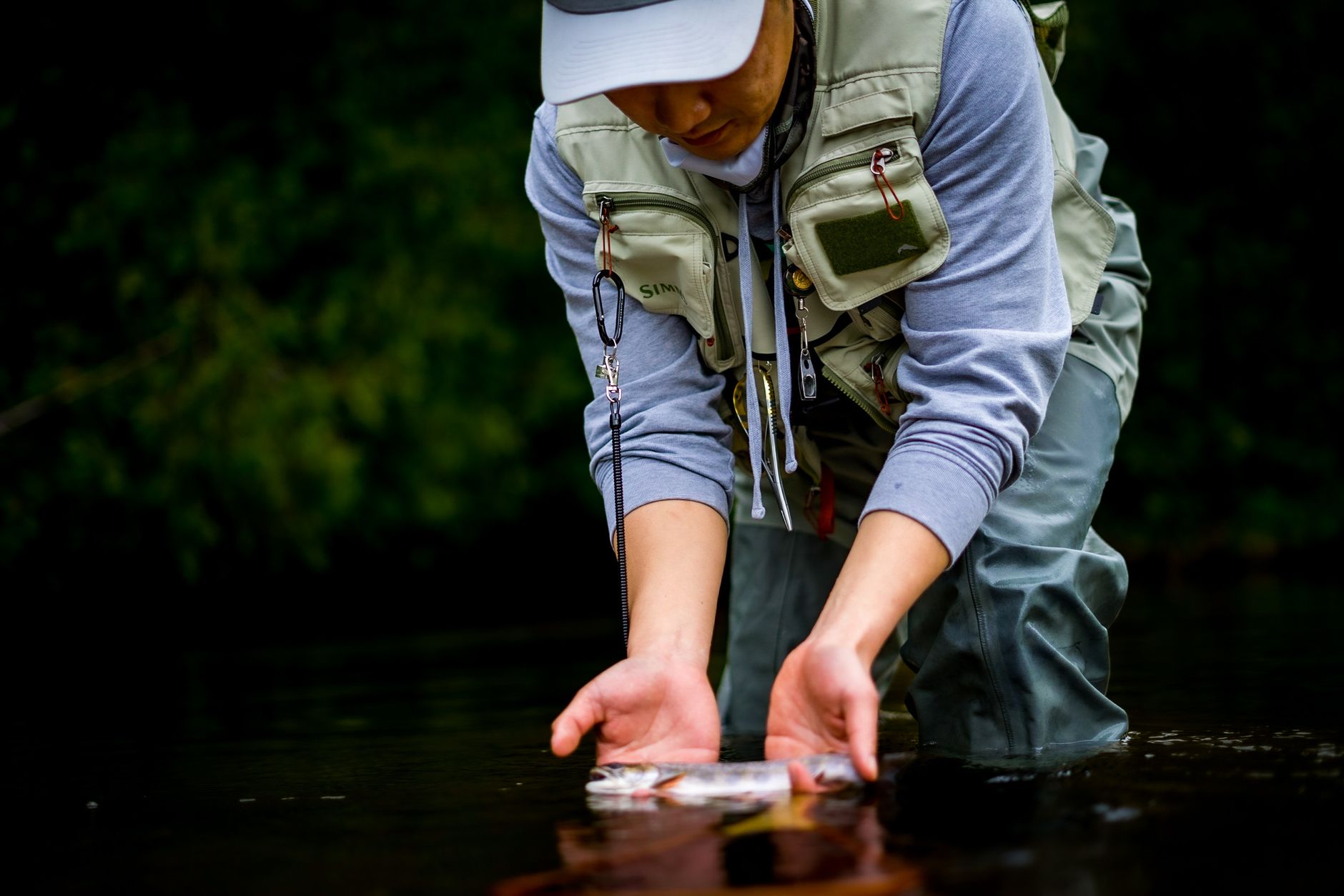
He is a stickler for what happens after the cast. Watch the line, wait for it to relax, and only then work it. "When you wind up the slack line, that means the lure has no choice but to swim towards you as it's going down," he explained. "That's important."
The second pattern is the wriggle-tail grub — what Osborne ran in the deadly bloodworm colour for the camera, and a watermelon-red curl-tail grub later in the session. "This bloodworm wriggle tail is a really awesome lure and it accounts for so many fish," he said. "It's a real classic."
With the wriggler on, Osborne picked off a string of small flathead just inside the drop-offs, plus a welcome bycatch flounder for the kitchen. "That's a cracking little flounder he is," he said as he dropped the fish in the net. "My wife absolutely loves flounder. The legal limit for all flounder in New South Wales is 25 cm — this guy's well and truly over."
The third lure is the prawn imitation, and it earned its keep on the first cast. "Would you believe, first cast with the prawn?" he said as another 30-something flathead clipped the small bronze prawn. "You'll put that in the end of the prawn, try keep it in the centre and squeeze it so the hook comes out the back just far enough along so that when you slide it up onto the plastic it's kind of sitting naturally."
Light gear, he stresses, is the entire point of the system. "I love fishing with light line because you get so many more bites," he said, returning to the topic every time he saw a wind-up. "You can land a big fish even on light line." By the end of the session he had landed five flathead — all undersized — plus the legal flounder and a small snapper that nailed the minnow on the drop. "When you get a snapper on one of these little soft plastics, they hit it so hard," he said. "That was so exciting."
Location, he said, sits underneath the lure choice. Wind dictated where he could fish, and the boat tracked the leeward shoreline at idle to keep him within a soft-plastic cast of the drop-offs flathead like to ambush from. "I want to be in that transitional spot where it goes from the shallow into the deep," he said. "You know that with flathead they're ambush predators. They lie in wait. They wait for their food to come to them. So that's why we cast in all different spots."
The context of the trip is a recent flathead competition on the same lake. "There were about 60 boats just for one day. The winning flathead, just the biggest flathead, was 90.5," Osborne said. "With a friend of mine, we landed one that was 91 cm. So about the same size. But that's a great fish."
For anglers stocking a new soft-plastic kit, the takeaway is short. "You really only need those three types in your bag if you're wanting to focus on catching flathead," Osborne said. "And you will catch flathead — and you'll catch a variety of other species as well."