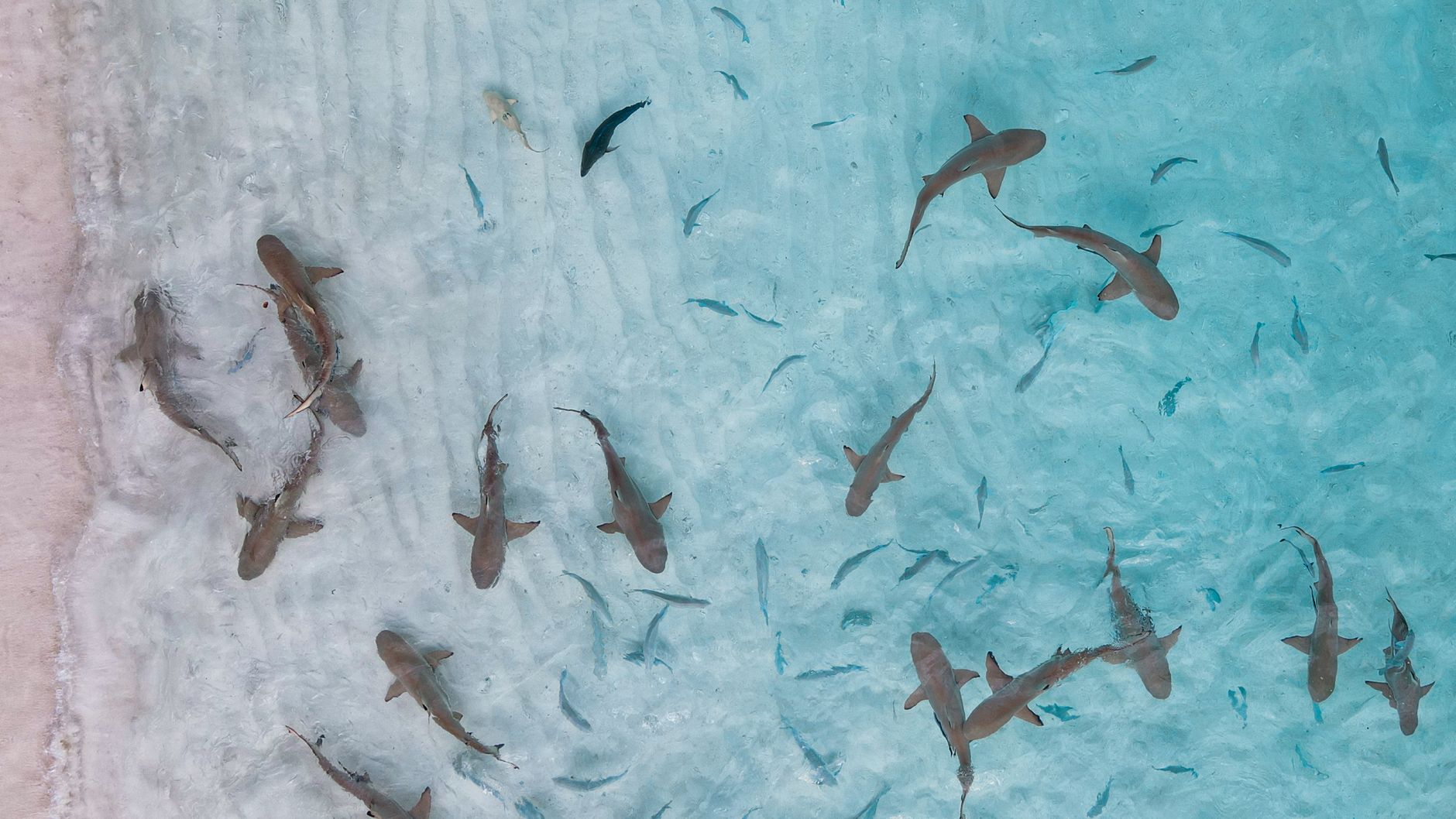
Martin County commissioners spent Tuesday morning being told, in effect, that the beach fishing rules they have enforced for years are no longer theirs to enforce.
The Florida Fish and Wildlife Conservation Commission has ordered the county attorney to repeal local ordinances covering saltwater and shark fishing from public beaches, on the grounds that state law has taken the subject away from local government. Martin is the only Treasure Coast county still carrying such rules. St. Lucie repealed four of its own in 2016 to fall in line with FWC, and Indian River follows the state code.
Senior Assistant County Attorney Melissa Lynn Pietrzyk put it bluntly to commissioners.
"There is a state statute that has essentially preempted the powers from the county to regulate saltwater fishing. That includes shark fishing," she said. "Preemption meaning the state says, county, you can't control this anymore. The state has to control it."
The practical effect of a straight repeal is significant. Anglers on land or in watercraft would be free to fish within 50 feet of guarded beach boundaries during open hours, to shark fish within 1,000 feet of those boundaries at any hour, to use chum or blood in the water, and to disregard a lifeguard or officer warning that the activity is endangering people.
"The statute does however recognize an exception allowing local governments to prohibit saltwater fishing on property owned by the county when necessary to protect public health, safety, and welfare," he said.
That exception is now the whole ballgame. Staff have been directed to draft a replacement ordinance that leans on public safety rather than fisheries management: no fishing inside guarded beaches during guarded hours, and no fishing from boat docks while a boat is being launched or retrieved.
Residents who packed the public comment period were not reassured. Several described the drone and remote-control boats now used to carry bait and chum offshore, a workaround that skirts the state ban on chumming from shore. Chumming from the beach is already illegal in Florida and carries a fine and up to a year in jail.
"Imagine a family at Bathtub Beach inside the tub while a shark fisherman is chumming because your language is taken out," Robert Wolf told commissioners. "Leave it in there."
Surfer Tom John was blunter. "You put chum in the water, you will have sharks," he said. "I am not afraid of sharks, but you will have shark attacks."
Jay Noyes, another local surfer, said the gear itself is a hazard regardless of what it attracts. "I myself have been caught in shark fishing lines, and it is not fun," he said.
Dottie Lanci of the Hutchinson Island Preservation Initiative described watching anglers use drones to drop chum outside her home. "The next morning a family of four put up their umbrellas," she said. "Two young children were playing in the water there, completely unaware of what took place the day before and that some hungry sharks might still be there."
The argument is not one-sided. Local fishermen have pushed back for months, framing the county's beach fishing ban as government overreach, and the state has now agreed with them on the jurisdictional point if not the merits.
One of the more interesting interventions came from Indian Riverkeeper Jim Moir, who argued the conservation case and the angling case point the same direction.
"Speaking for the animals, these animals are incredibly important to our ecosystems. The anglers offshore are complaining bitterly daily about how many of their caught fish are being depredated by sharks," Moir said. "Attracting more sharks to the coast is not only bad for human safety, but it's bad for angling. It's bad for our public awareness. It's bad for the sharks."
Commissioners were sympathetic. "Our beaches are our crown jewels here on Hutchinson Island and Hobe Sound too," Commissioner Eileen Vargas said. "So we have to protect, obviously, our bathers. And if you have this sort of activity going on, I'm certain you can understand people will go elsewhere."
Commissioner Edward Ciampi floated a buffer in time rather than distance. "So if the beach is manned from nine to five, can we say that we don't want shark fishing on the beaches an hour before and an hour after?" he asked.
The stakes are not abstract locally. In August 2017 a three-year-old girl, Violet Veatch, was bitten on the leg by a suspected bull shark in shallow water at Bathtub Reef Beach; her mother has campaigned for tighter beach rules since. Miami Beach passed its own land-based shark fishing restrictions earlier this year, which is the model several speakers want Martin County to copy — assuming the state leaves it room to.