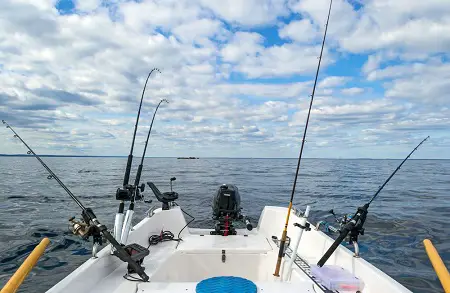
As fishing season reaches its peak, experienced anglers are sharing advanced trolling techniques that can dramatically improve trout catch rates for both novice and seasoned fishermen. These methods, which involve dragging fishing lines from slow-moving boats, are proving increasingly effective in reaching the deeper waters where trophy trout often reside.
"Trolling involves dragging fishing lines off the back or sides of a slow-moving boat," explained an experienced angler who has spent years perfecting these techniques. Unlike traditional casting methods, trolling allows anglers to cover significantly more water, making it easier to locate elusive trout in large bodies of water.
"Trolling involves dragging fishing lines off the back or sides of a slow-moving boat,"
The success of trolling operations heavily depends on sophisticated equipment that goes far beyond basic rod and reel setups. Modern trolling operations typically employ an array of advanced tools including downriggers, temperature probes, depth-sounders, and chart-plotters. "Downriggers, temperature probes, depth-sounders, and chart-plotters are essential for effective trolling," stated a seasoned guide, emphasizing how these instruments enable precise monitoring of underwater conditions.
"Downriggers, temperature probes, depth-sounders, and chart-plotters are essential for effective trolling,"

Line selection proves critical for different trolling scenarios. While many anglers default to monofilament in the 8 to 12-pound range, experts often prefer more specialized options. "I prefer braided lines for flat line trolling or wire line and dacron backing, or lead core for deep trolling," shared one trout fishing expert. The choice of reel is equally important, with medium-capacity spinning or baitcasting reels being the preferred option, particularly models that can hold sufficient line for extended trolling sessions.
"I prefer braided lines for flat line trolling or wire line and dacron backing, or lead core for deep trolling,"
Rigging techniques vary depending on conditions and target behavior. Live bait rigs have gained popularity among experts, with methods similar to those used in walleye fishing proving effective. "Live bait rigs are similar to those used in walleye fishing and work effectively with night crawlers and small minnows," noted experienced practitioners. The three-way rig emerges as particularly suitable when trout are suspended in the water column rather than holding near the bottom.
"Live bait rigs are similar to those used in walleye fishing and work effectively with night crawlers and small minnows,"
Fluorocarbon leaders attached to the mainline with micro swivels represent another preferred rigging method. "This technique is excellent for trolling flies and lures," an angler stated, highlighting the versatility of this setup. The integration of downriggers and planer boards further enhances trolling effectiveness by allowing anglers to cover broader areas and present lures at multiple depths simultaneously.
"This technique is excellent for trolling flies and lures,"
Championship Implications
Location selection requires understanding both trout behavior and underwater structure. Temperature monitoring at various depths proves far more valuable than surface readings. "A temperature probe that measures water temperature at various depths is far more efficient than a surface gauge," observed one expert. Successful anglers focus on structural elements such as points and humps in lakes, which typically harbor the baitfish and invertebrates that attract feeding trout.
"A temperature probe that measures water temperature at various depths is far more efficient than a surface gauge,"
Seasonal strategies play a crucial role in trolling success. During summer months, the thermocline becomes a critical factor in trout location. This layer, where water temperature changes dramatically, creates ideal habitat conditions. "The thermocline creates an ideal habitat for trout due to its balanced temperature and oxygen levels," remarked an avid fisherman. "If you can find trout in the right temperature range – typically between 50°F and 60°F – you're likely to reel in some impressive catches."
"The thermocline creates an ideal habitat for trout due to its balanced temperature and oxygen levels,"
Maintaining bait or lures just above the thermocline during warmer months has proven particularly effective, as this zone provides the optimal combination of temperature and oxygen levels that trout prefer.
Lure selection and presentation techniques continue to evolve based on seasonal conditions and water clarity. "I use lures like Hammered Pennies, Mother of Pearl spoons, and Original Rapalas, adjusting my selection based on the time of year," shared one experienced angler. Bright, flashy lures typically perform well during spring months, while more subtle presentations are favored as summer progresses.
"I use lures like Hammered Pennies, Mother of Pearl spoons, and Original Rapalas, adjusting my selection based on the time of year,"
Trolling speed represents another critical variable that skilled anglers adjust based on fish activity levels. "I typically troll around 1.8 to 2.3 MPH but will adjust my speed based on the fish's activity level," noted one practitioner. This speed range generally mimics the natural movement of prey species that trout target.
Race Results
Summer fishing and stained water conditions call for specific techniques, with trolling baits behind cowbells proving highly effective for attracting fish in these challenging conditions. "In the summer months, deep-diving crankbaits or spoons trolled behind downriggers produce excellent results," advised one experienced fisherman.
"In the summer months, deep-diving crankbaits or spoons trolled behind downriggers produce excellent results,"
Clear water conditions or areas with high fishing pressure require different approaches. Planer boards become particularly valuable in these situations, enabling better lure visibility and improved depth control. "This is particularly effective when trout are feeding near the surface," noted an experienced angler.
"This is particularly effective when trout are feeding near the surface,"
These advanced trolling techniques represent a significant evolution from traditional trout fishing methods, offering anglers the ability to adapt to changing conditions and consistently locate fish across diverse lake and river systems.