Drifting Tuna Gear Reaches Half the World's Marine Reserves
A new Science Advances study tracked 88,359 tuna-fishing buoys and found drifting fish aggregating devices have reached 53% of the world's marine protected areas — stranding in 174 reserves, smashing coral and entangling wildlife the parks were built to protect.
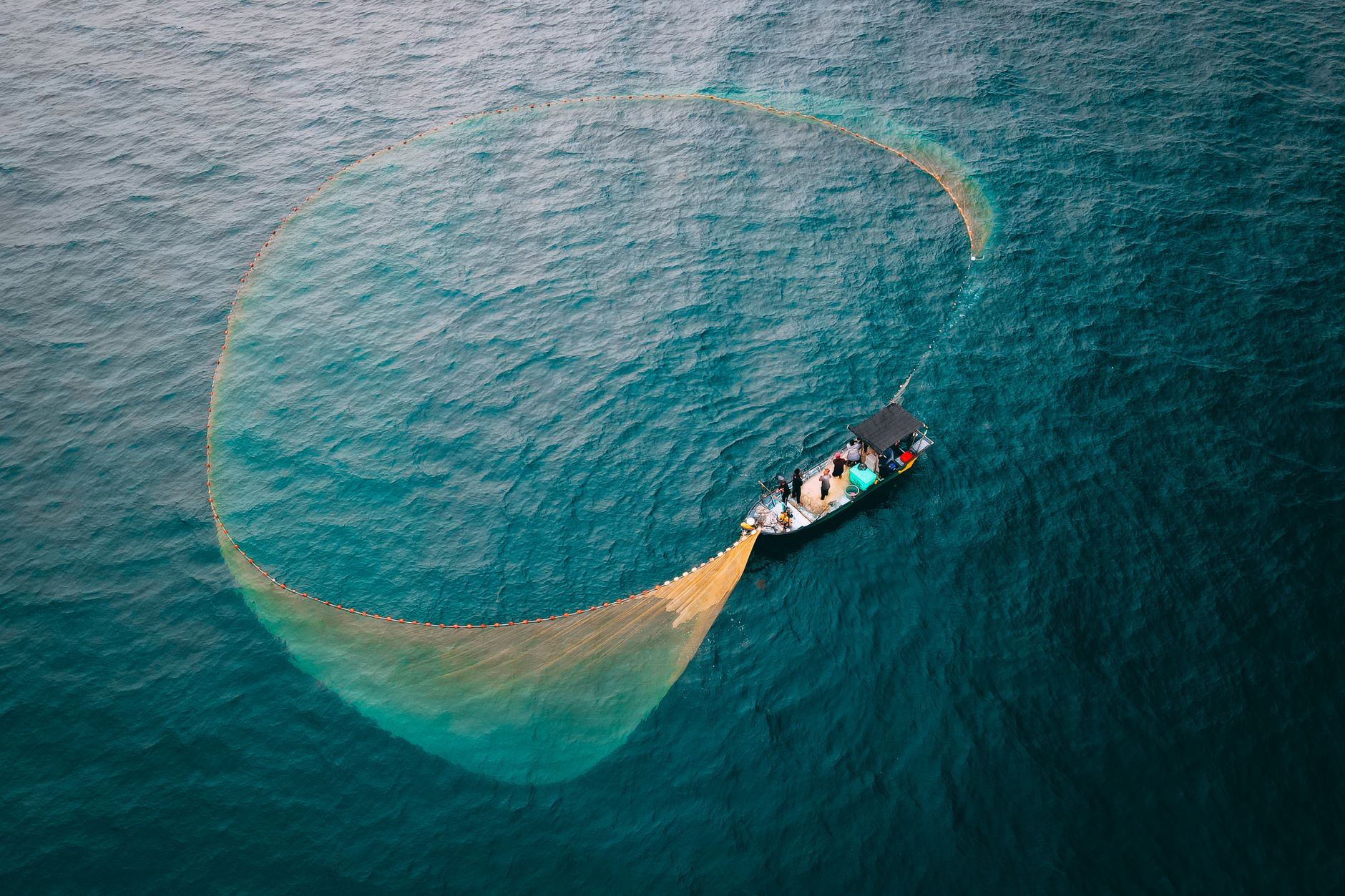
The world's tuna fleets set them loose by the tens of thousands, and ocean currents carry them where no fishing boat is allowed to go. A study published in Science Advances has for the first time mapped how far drifting fish aggregating devices — dFADs, the floating rafts industrial tuna vessels use to concentrate fish — end up inside protected waters. The reach is far greater than managers assumed.
Tracking 88,359 dFAD buoys, the research team found the devices have likely interacted with 53% of the global marine protected area network by area, stranding in 174 protected areas across 53 maritime jurisdictions that together shelter nearly 500 at-risk species. The authors documented at least 6,300 individual strandings, concentrated in the central Pacific, western Indian Ocean and Caribbean.
The problem is jurisdictional as much as ecological. A reserve can turn away fishing vessels at its boundary, but it has no way to stop the gear those vessels release hundreds of kilometres away from drifting in on the tide.
"Marine protected areas are designed to safeguard ocean ecosystems, but drifting fishing devices do not recognize those boundaries," said John Lynham, a professor of economics at the University of Hawaiʻi at Mānoa and a co-author of the study.
The damage is not abstract. Lead author Laurenne Schiller, a marine conservation scientist at Carleton and Dalhousie universities, said people who work inside protected areas described the rafts "hitting corals and just shearing off large chunks of coral in many protected areas or getting stuck and … going back and forth and just breaking corals."
Nowhere shows the problem more clearly than the Galápagos Marine Reserve, where at least 277 FADs have been logged drifting into protected water since 2017 — a figure officials say badly undercounts the real total. Inti Keith, a researcher with the Charles Darwin Foundation, said scientists routinely find sharks, turtles, sea lions, seabirds and other wildlife entangled in the netting, or worse, dead.
Galápagos National Park staff are candid about the limits of what they can do. "This modality of fishing … is not going to stop," said Leonardo García, a quality-control manager at the park's Isabela unit, who said the challenge is making the industry "aware that there's a responsibility to recover" the gear it loses. His colleague Jenifer Suárez put the task more plainly: "What we are trying to look for is a way to find out how to prevent these [FADs] from entering the reserve."
The tuna industry says it is already moving. Guillermo Morán Velásquez, who directs the industry group TUNACONS, said the goal is "to close the loop: to design better, recover more and recycle or reuse as much as possible," and rejected the idea that the devices themselves are the villain. "The problem is not the use of the FAD per se — it's gear that improves the efficiency of fishing," he said. TUNACONS says it recovered roughly 60 FADs over three years.
Not everyone believes the cleanup pledges hold up. Alberto Andrade, director of the conservation group Frente Insular, dismissed industry recovery programs outright: "That idea of plantado recovery is just a greenwash."
Real reform is under way. Every tropical-tuna regional fisheries body now bans netting in dFADs, the International Seafood Sustainability Foundation has trialled a fully biodegradable "jelly FAD" built from bamboo and cotton, and in 2026 the Indian Ocean Tuna Commission becomes the first to require a registry tagging every raft and buoy back to the vessel that deployed it.
Lynham argues the map should be a starting point, not an indictment. "Our findings show there is an opportunity for the fishing industry, governments and conservation groups to work together on practical solutions that better protect these important places," he said.