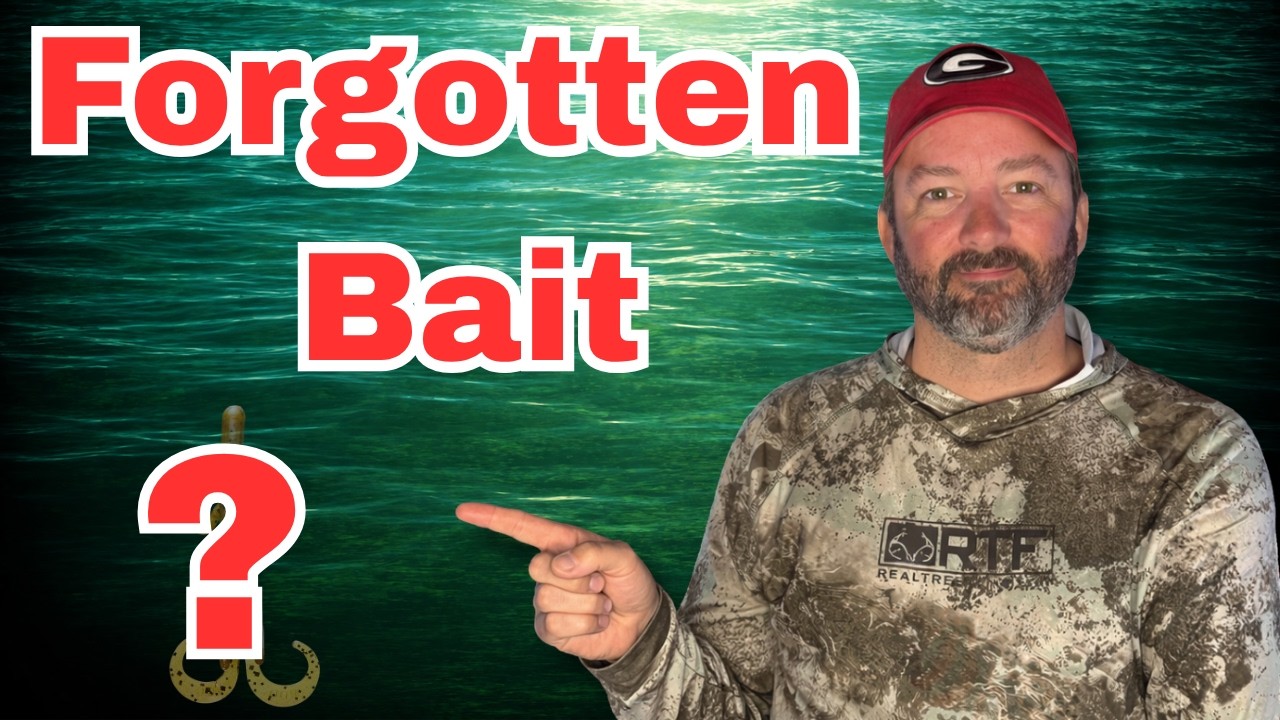
Veteran American bass-fishing coach Flukemaster is using his latest tutorial to push a distinctly old-school pick back onto the front of anglers' boxes: the Baby Brush Hog, a soft-plastic creature bait he says has been quietly written off despite still being one of the most effective big-bass lures in thick cover.
"Nobody talks about this bait anymore, but it still catches big bass better than most of the new stuff that's coming out today," he tells viewers at the top of the episode. "This bait used to dominate. Tournament anglers railed on it. Everybody had one tied on, and then it just disappeared. Not because it stopped working, but because anglers moved on."
The case he builds is that the Baby Brush Hog's looseness is its weapon. "It doesn't look like one specific thing. It's not a perfect craw. It's not a perfect bait fish, not even really a worm. It just — it's just something alive. And to a bass, that's all that matters." That impressionistic profile, combined with legs and appendages that barely kick, produces a falling action that — to bass in cover — reads as an easy, low-effort meal. "Those little appendages, they don't kick aggressively. They don't create a ton of vibration. They just move naturally."

Flukemaster positions the bait against the modern wave of high-action creature plastics. "A lot of modern baits try too hard. Too much action, too much movement. This bait does the opposite, and that's exactly why big bass love it." His rigging is deliberately simple. He fishes the bait Texas-rigged and scales the weight to depth and cover — a 3/16 ounce for shallow or slow conditions, heavier for punching matted cover and drawing reaction bites.
Retrieve, he says, is where most anglers sabotage themselves. "A lot of people fish this bait way too fast. They don't give it time to actually work once it hits the bottom. This is not a bait you rush. You let it fall, and then you watch your line, and let the bait do what it's designed to do."
His preferred strike zones are brush piles, laydowns, grass edges and other structure where a subtle fall can be picked off by bass sitting tight. And he has a story to back it up: on a day he describes as "nothing was working," he stopped retrieving altogether and let the Baby Brush Hog do the selling. "I just started to slow down with it, and immediately started getting bites. The same area, the same fish, they just wanted something more natural."
The framing — that the bait didn't lose its edge, but the attention economy around it did — is blunt. "Bass didn't forget about this bait, anglers did. And if you bring it back into your rotation, you're going to start catching fish other people are missing."
For anglers who have rotated through the last several seasons of beefed-up creature baits looking for an edge, Flukemaster's pitch is a rare one: go backwards in the catalogue, not forwards.