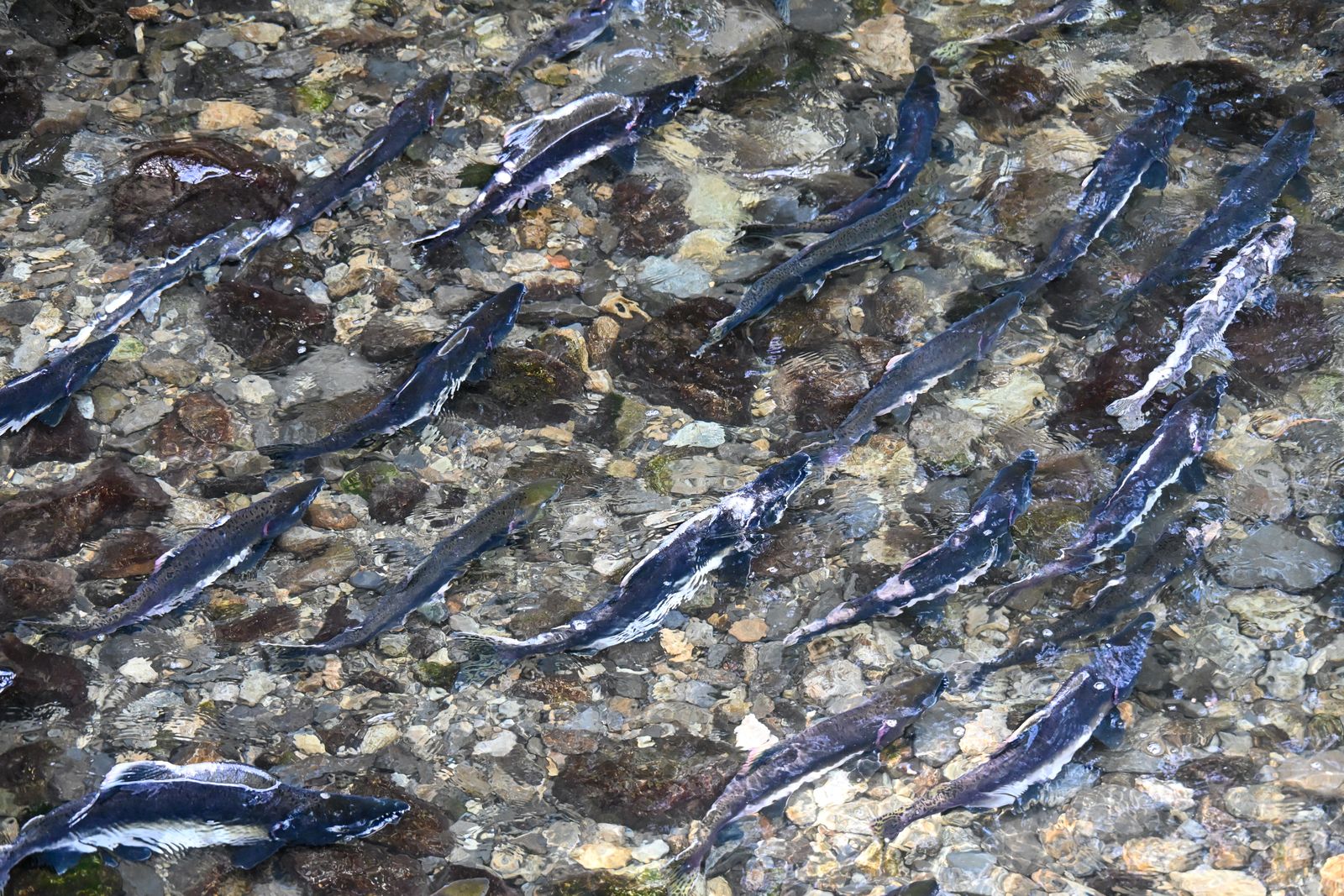
Silver salmon fishing is finished for the season across nearly all of Alaska's Knik Arm Management Area after state managers escalated a harvest ban into an outright closure that also bars catch-and-release.
The area-wide order kicked in at midnight Friday and applies to the Little Susitna River, Wasilla Creek, Cottonwood Creek and Jim Creek. Talkeetna's KTNA reported that the Alaska Department of Fish and Game cited below-average weir counts, poor catch rates and angler reports. Two fisheries were spared: Fish Creek, which has already made its escapement goal, and the hatchery-fed Eklutna Tailrace.
Days earlier, an emergency order issued Monday 17 August had closed coho harvest in the Susitna and Little Susitna drainages for the remainder of 2026, effective 12.01am on Wednesday 19 August. Bait remains prohibited in all flowing waters of both drainages.
The weir arithmetic explains the escalation. The Mat-Su Sentinel reported 1,385 coho past the Little Susitna weir through 17 August, with a projected season total of 2,104 against a sustainable escapement goal of 9,200 to 17,700 fish. KTNA reported the department projecting closer to 6,000. Neither number gets near the goal.
Managers were also flying partly blind. The Deshka River weir, the drainage's primary abundance indicator, flooded out on 15 July before counting a single coho and has stayed offline. Department biologist Samantha Oslund told the Sentinel that crews ran creel observations at several Susitna locations ahead of the closure, and that the fish still present ought to be left to spawn rather than harvested.
Guides carry the cost. Jim Tilton of Deshka Landing Charters and Lodge told the Sentinel the closure wiped out salmon charters he had on the books for the week ahead, though the earlier one-fish limit and bait ban had let him keep most bookings up to that point. Four straight seasons of mid-season restrictions have changed how he sells trips: he no longer accepts salmon reservations past the first fortnight of August. Tilton added that he could not remember seeing more than six sport boats at once this summer around the Deshka-Susitna confluence, a fraction of what the spot drew a few years back.
The warning was on the record months ago. Larry Engel, a retired state sport fish biologist and former Board of Fisheries member, told the Sentinel in late June that Northern Cook Inlet coho returns were on course to repeat the failures of 2023, 2024 and 2025 unless Commissioner Doug Vincent-Lang used emergency order authority to manage the Upper Cook Inlet drift gillnet fishery more cautiously. In Engel's reading, the authority is not in doubt; the willingness to apply it to commercial fleets is.
Meanwhile, coho conservation measures the Board of Fisheries adopted for Upper Cook Inlet in March 2026 are still not law. Vincent-Lang has attributed that to an extraordinary delay in the state's legal review of new regulations, which has stalled the lieutenant governor's signature, with another 30 days to run once it is signed. Area M and Bristol Bay board decisions were caught in the same jam.
For context on how entrenched the problem is, guide and columnist Andy Couch quoted the department's 2025 justification in the Frontiersman: "As of August 18, only 2,960 coho salmon had passed upstream of the weir and the escapement is projected to be 4,239 fish. Therefore, it is warranted to conserve the remaining coho salmon returning to the Little Susitna River." This year's count at the same weir is running at about half that.
Sockeye and chum harvest continues in the Susitna drainage. Silvers do not.