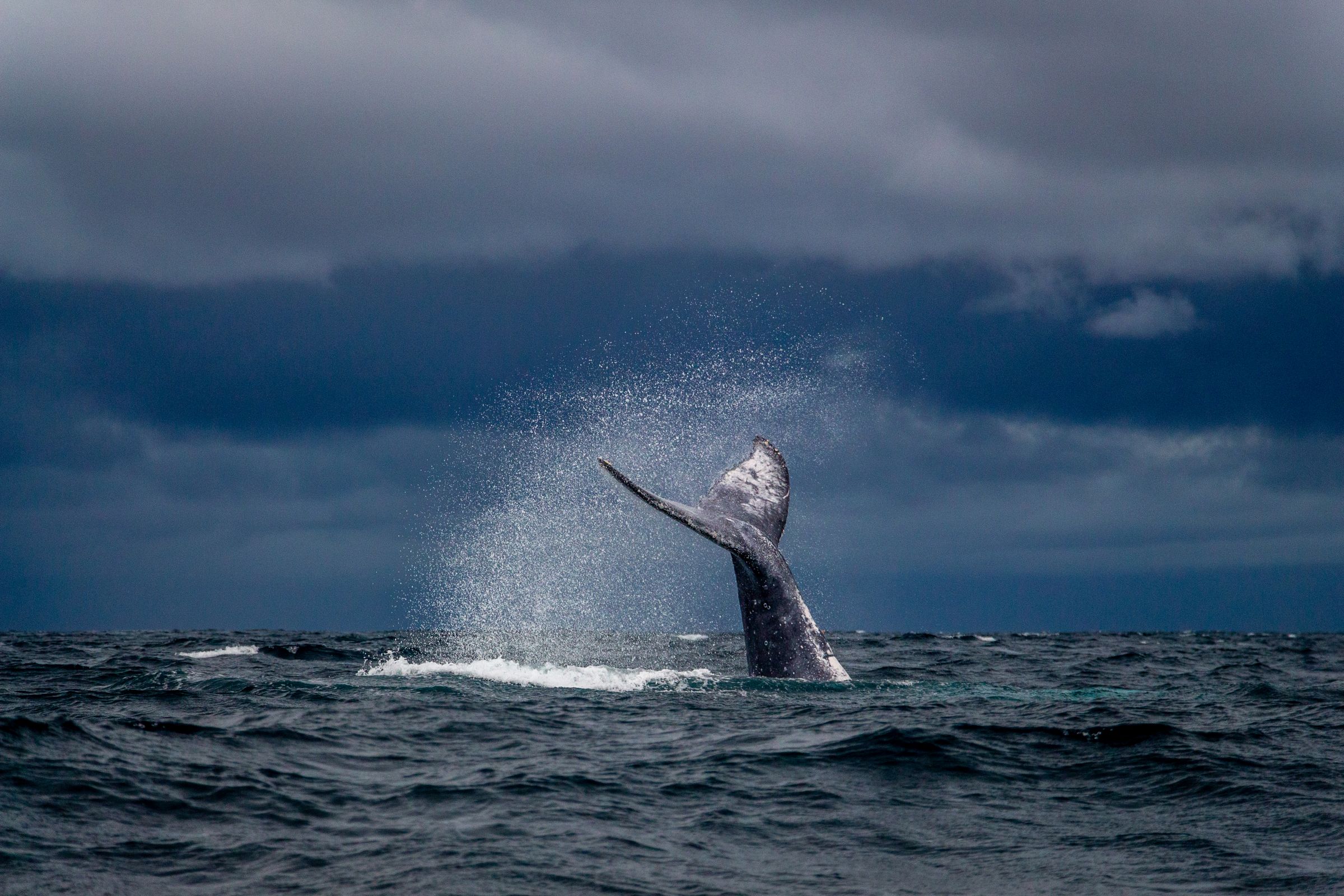
A humpback whale freed from fishing line off the New South Wales Central Coast this week has put a number on a problem marine scientists have been warning about for months: this is shaping up as one of the worst entanglement seasons on record along Australia's east coast.
The scale is stark. Researchers documented 48 separate humpback entanglements in recent months, up from about 45 in 2024 and only around 20 as recently as 2017. The migration corridor that makes Australia's coast one of the best whale-watching stretches in the world is also, twice a year, a gauntlet of rope, net and pot lines.
"We documented 48 separate entanglements of humpback whales in the past few months on the east coast," said Olaf Meynecke, a research fellow in marine science at Griffith University. "Fishing gear such as nets and crab pots accounted for around 70 per cent of these reported entanglements." The timing is not random. "The highest numbers of entanglements were during the peak northern migration in June and peak southern migration in September," Meynecke said.
For the animals, an entanglement is rarely a clean escape. Whales that survive the initial snag often drag gear for weeks. "More whales will be entangled, and we will see more emaciated carcasses wash ashore," Meynecke warned, describing animals that "often lose more than half their body weight, develop infections and become covered in sea lice." The rescue statistics are sobering: only about a third of entangled whales are ever sighted again, and fewer than a quarter are successfully freed. Roughly 18 have been released by Australian teams this season.
The pressure is not confined to whales, and it is where recreational anglers come into the picture directly. Rescue group ORRCA reports a sharp rise in fur seal entanglements along the state's Far South Coast, much of it from discarded or snagged recreational tackle. "Unfortunately, ORRCA has seen an unprecedented spike in fur seal entanglement incidents across the Far South Coast region," said spokesperson Pip Jacobs, after a seal was cut free at Tathra Wharf when line and tackle wedged into surrounding rocks left it unable to move. Part of the problem, Jacobs said, is behavioural: "We're seeing seals in certain areas become habituated to relying on humans for food."
The advice to anglers is practical rather than preachy: dispose of line and tackle responsibly, avoid feeding marine animals, move spots if seals start working your bait, and consider biodegradable tackle and non-lead sinkers. Crucially, rescue groups say, never try to free an entangled animal yourself — "if the wrong lines are cut, it can accidentally tighten others," and a panicked whale or seal is dangerous. The call is to report it to trained crews such as ORRCA instead.
Longer term, scientists are pushing for coordinated fixes: a centralised reporting system across state jurisdictions, satellite trackers fitted to trailing gear so entangled animals can be relocated, better forecasting of whale movements, and wider adoption of ropeless fishing technology. None of that is cheap, and much of it needs government backing. But with the numbers climbing each season, the argument that entanglement is just an unavoidable cost of sharing the water is getting harder to make.