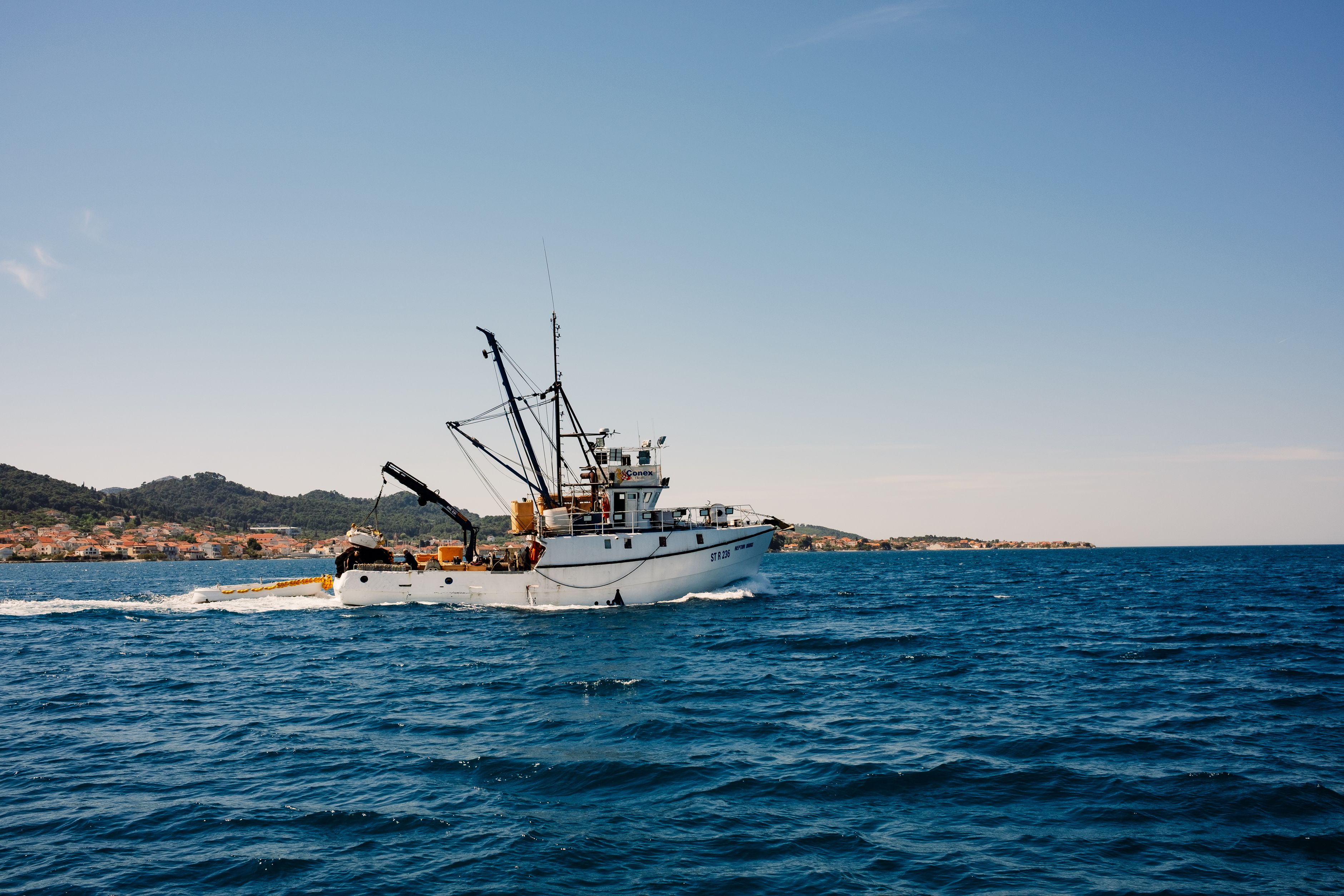
Fifteen governments signed the Mombasa Declaration on Tuesday, committing to lift the veil on one of the world's most opaque industries and choke off the illegal fishing that drains an estimated $50 billion from the global economy every year.
The pledge was adopted on June 17 at the 11th Our Ocean Conference in Mombasa, Kenya, the first time the event has been hosted on African soil. Belgium, Cameroon, Chile, the Dominican Republic, France (on behalf of its overseas territories), The Gambia, Ghana, Guinea, Liberia, Panama, Papua New Guinea, Peru, the Republic of the Congo, Somalia and South Korea put their names to it.
At its core the declaration is about transparency. Signatories agreed to modernise vessel registries, publish the fishing authorisations they hand out, and share information across the seafood supply chain so that the ownership and movements of fishing boats are no longer hidden from view.
Ghana's Minister for Fisheries and Aquaculture, Emelia Arthur, framed the stakes in stark terms for coastal nations.
"In my country, our very existence depends on fish," Arthur said. "We continue to wage war on IUU fishing. We have not won yet due to lack of transparency."
She described the agreement as a rare moment of collective resolve. "The Mombasa Declaration provides a platform for all of us, the different governments, to come together and declare on an international platform that we are working together and fighting together for transparency in the fisheries sector," Arthur said, adding that the goal was practical rather than symbolic: "We are not doing transparency for its own sake, we are doing it to achieve better social and environmental outcomes."
France's Catherine Chabaud, an ocean envoy who signed on behalf of the country's overseas territories, said the logic was straightforward. "This initiative is based on a simple conviction: We will not be able to effectively combat IUU fishing without greater transparency and international cooperation," she said.
The numbers behind the pledge are sobering. Roughly one in five fish consumed worldwide is connected to illegal fishing, and the global fishing industry, worth more than $400 billion a year, remains among the least transparent sectors on the planet. More than 120,000 fishers are estimated to be trapped in modern slavery at sea, an abuse campaigners say flourishes precisely because so much of the fleet operates beyond scrutiny.
Ryan Orgera, director of the Coalition for Fisheries Transparency, which helped broker the declaration, said the secrecy is the common thread running through the worst practices on the water.
"Hidden vessel ownership, unregulated fleets, unreported catches, forced labour, human rights abuses and untraceable supply chains are all enabling illegal and destructive fishing practices," Orgera said. "Without transparency, we don't have accountability, and without accountability, we do not have sustainability."
Conservation group Oceana, which has long pushed for public vessel-tracking data, welcomed the move. "For too long, fisheries have operated far from shore, with inadequate oversight and opaque supply chains," said Beth Lowell, the organisation's vice president.
For host nation Kenya, the conference doubled as a statement of intent. In a video address, President William Ruto said the country was not waiting for others to act. "Kenya is already at work. We are restoring mangroves, cleaning our waters, reforming fisheries, and strengthening ocean governance," he said.
Deputy President Kithure Kindiki cast the effort as a generational duty. "The ocean is key to Kenya's economic growth, hence the interest in guarding it against destructive activities," he said. "We have an obligation as the current generation to return the ocean to our children cleaner, richer, and more resilient than we found it."
The declaration is non-binding, and turning its promises into modernised registries and published licence data will take years. But with the Coalition for Fisheries Transparency, the Environmental Justice Foundation and Oceana lined up behind it, backers argue the agreement gives campaigners a yardstick to hold the 15 signatories to account.