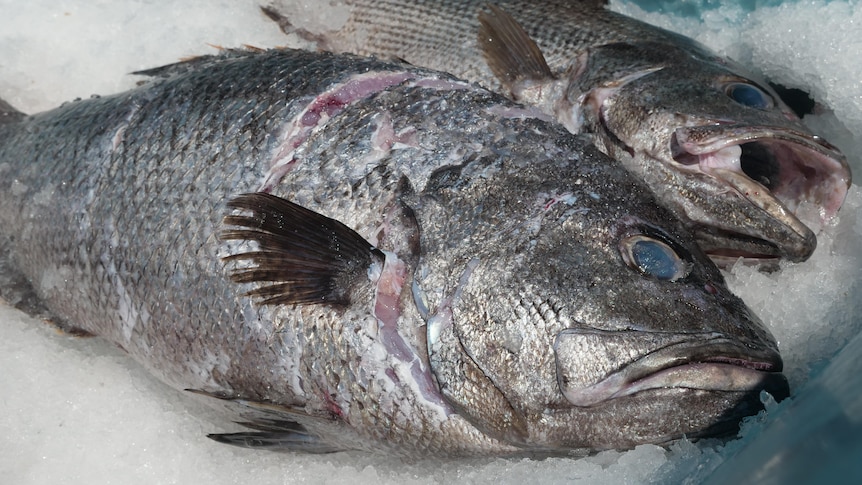
Four months into Western Australia's permanent ban on commercial demersal fishing, a family-owned business in Bunbury has crowdfunded more than $25,000 in a weekend to take the state government to court.
Southwestern Fresh Fish, run by long-time commercial fisherman and seafood retailer Brian Scimone, launched the online fundraiser at the weekend with a $35,000 target. The funds will be placed in a trust to bankroll legal advice on challenging both the ban and the Cook Government's compulsory buyback scheme. Commercial licence holders along the West Coast bioregion now have just six weeks left to apply for compensation under the $20 million package.
The ban, in force since January 1, blocks all commercial demersal fishing along roughly 900 kilometres of the West Coast bioregion, from Kalbarri in the north to Augusta in the south. Fisheries Minister Jackie Jarvis has previously said the closure is needed to rebuild stocks of dhufish, pink snapper and red emperor that scientists rate as on the verge of extinction in parts of WA. The decision has triggered protests, including the now-infamous incident in which shark heads were dumped at the minister's office.
For the Scimone family, the buyback is not a soft landing.
"We're not seeing any progress," Brian Scimone said. "We're not getting any further advanced on whether we can reopen the fishery and the compensation is nowhere near enough for a lifetime of loss. This is a life ban."
"It doesn't even enter the millions and we're one of the biggest holders on the coast," he said. "The compensation offered is not good enough. We have boats that are purpose-built, equipment that's purpose-built, factories deemed unusable, nets and fishing gear deemed unusable."
The collateral damage is bleeding into the wider marine economy. Bunbury-based marine engineer Nathan Boyce, whose business services commercial vessels between Broome and Augusta, said the day after the ban was announced he lost a $150,000 motor sale.
"Once a commercial fisherman doesn't have a business, he's not going to spend any money with me," Boyce said. "Business with commercial fishermen has just dropped right off."
Seafood companies in WA's north have already filed in the Supreme Court to overturn the decision, and the Bunbury action raises the prospect of a second front from the South West.
In response to the prospective legal challenge, a state government spokesperson defended the closure. "While these have been difficult decisions to make, they had to be made," the spokesperson said. "Urgent action is needed to save them for the future generations of fishers."
The spokesperson said the buyback amounts had been determined using market value methodology in line with industry feedback.
For the South West fleet, that line is wearing thin. With the legal trust now standing at more than $25,000 and climbing, Scimone has framed the fight as existential rather than commercial. The compensation, he argues, cannot replace decades of purpose-built infrastructure, generational know-how, or the right to fish a coast his family helped supply.
The court, not the Fisheries Minister, may now have the final word on whether the West Coast demersal fishery ever reopens to commercial boats.