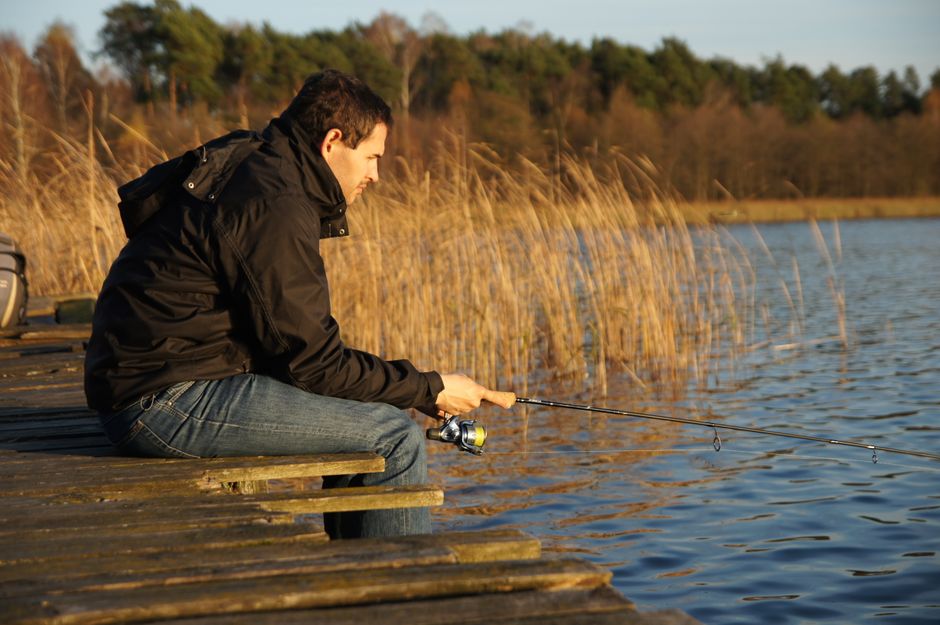
Recreational anglers in the United States are hauling in vastly more fish than official figures suggest — by one new estimate, somewhere between 17 and 48 times more than the numbers the country reports to the United Nations.
A study led by fisheries scientist Matthew Robertson, of Memorial University of Newfoundland's Fisheries and Marine Institute, set out to measure the true scale of America's recreational catch. Working with researchers from the U.S. Geological Survey, the University of Missouri and Louisiana State University, the team pulled together more than 15,000 surveys spanning 40 states, then combined fishing-hours data with catch and release rates to build a nationwide picture.
The result dwarfs the official record. Anglers across the lower 48 states catch an estimated 2 billion to 6 billion fish a year. After accounting for the large share of fish released, the team calculated that between 230,000 and 670,000 metric tons are actually kept and taken home annually.

By comparison, the figure the United States had reported to the UN's Food and Agriculture Organization was just 13,388 metric tons — a fraction of the new estimate. Put another way, recreational harvest may account for roughly 20 percent of all fresh fish consumed in the country, a catch the researchers value at around 3 billion US dollars a year.
The point is not that anglers are doing anything wrong. The concern is that fisheries managers have been working with a badly incomplete number. When the recreational slice of the harvest is invisible in the official accounts, the total pressure on a fish population is underestimated — and so is the risk of pushing it too far.
As Robertson's team warns, without that information officials may overestimate fish population size, which could lead to unexpected population collapses and new fishery regulations and closures. In other words, a stock that looks healthy on paper might already be under far more strain than the data shows, leaving managers to react with sudden restrictions once the problem becomes obvious.
The scale becomes easier to grasp at the state level. A separate analysis highlighted Minnesota, where anglers were found to take home some 80 million pounds of fish a year — far beyond what experts had previously assumed for the state alone. Multiply that kind of gap across the country and the national mismatch starts to make sense.
For everyday fishers, the findings are a double-edged message. On one hand, they confirm just how significant recreational angling is — economically, culturally and as a genuine source of food for millions of households. On the other, they make a strong case for better catch reporting, more angler participation in surveys, and a willingness to accept that good data is what keeps a fishery open for the long haul.
The study, published in early May 2026, is likely to fuel debate among managers and angling groups alike. But its core message is hard to argue with: you cannot manage what you do not measure, and for decades the United States has been measuring only a sliver of the fish its anglers actually catch.