
Three spearfishers have died in Australian waters in the space of four weeks, and the run of fatal shark attacks has pushed a long-simmering argument about culling back into the open.
The most recent was Daniel Turpin, 35, attacked about 11:20am on June 6 while diving with family near Michaelmas Island off Albany, on Western Australia's south coast. Police believe a great white was responsible. His family remembered him as "an adored husband, son, brother and uncle who had a lifelong love and deep respect for the ocean."
"Our family is devastated by this tragic loss and we are still coming to terms with what has happened," they said. "Daniel brought enormous joy to the lives of those who knew and loved him."
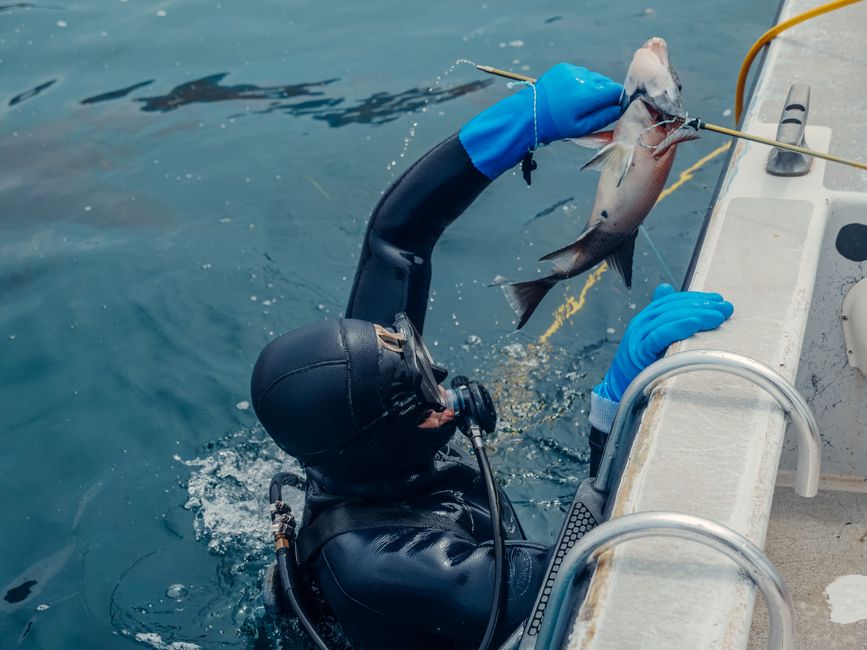
Turpin was the third spearfisher killed since mid-May. Steven Mattaboni, 38, was taken by a roughly 13-foot great white on a reef near Rottnest Island, and 39-year-old Michael Jensz died at Kennedy Shoal on the Great Barrier Reef near Cairns on May 24. The three deaths, all involving divers hunting fish on a single breath, have shaken communities far beyond the dive scene.
In Albany, the grief is personal. Mayor Greg Stocks said the tragedy reverberated through a region where almost everyone is connected. "For the community of Albany that hits home pretty hard because whilst we're a city there's one degree of separation really," he said. "Nearly everybody would know someone who knows someone from the Turpin family."
The response is far less settled. Albany MP Scott Leary said "selective culling, especially around populated areas, might be a solution," and commercial shark fisherman Brian Sell said the animals are simply more common now: "there's more and more white pointers around than there's ever been."
WA Fisheries Minister Jackie Jarvis rejected that reading. "There is certainly no data or information that suggests there is increased shark activity," she said, and "I don't think there's any evidence that culling sharks close to shore provides any safety." She pointed to existing measures: "We have a world-class shark tagging program and obviously electronic monitoring that will alert people when those tagged sharks are in the area."
Marc Muscat, who lost his son to a shark in 2014, said a cull would change nothing. "They live in the water, whether they cull them all or not, it's not going to bring my son back, so it doesn't concern me," he said.
Graham Henderson, president of the Australian Underwater Federation, argued the same from the water's edge. Insisting "sharks have a function to fulfil in the ocean," he said the priority should be education: "We need to actually make the general public and the recreational divers more aware of what things they can do to mitigate the risks of shark attack."
Bond University shark researcher Daryl McPhee offered a targeted alternative in SMART drum lines. "A SMART drum line is a baited hook, which has a trigger on it which alerts somebody back on land that a shark has been captured," he said — a tool designed to remove or relocate a single animal rather than thin a population.
The practical advice for divers, meanwhile, has not changed: stay in a group, dispatch and stow speared fish fast rather than towing a bleeding catch, steer clear of murky water and keep watching. It reduces risk without erasing it — and for three families this season, that gap is everything.