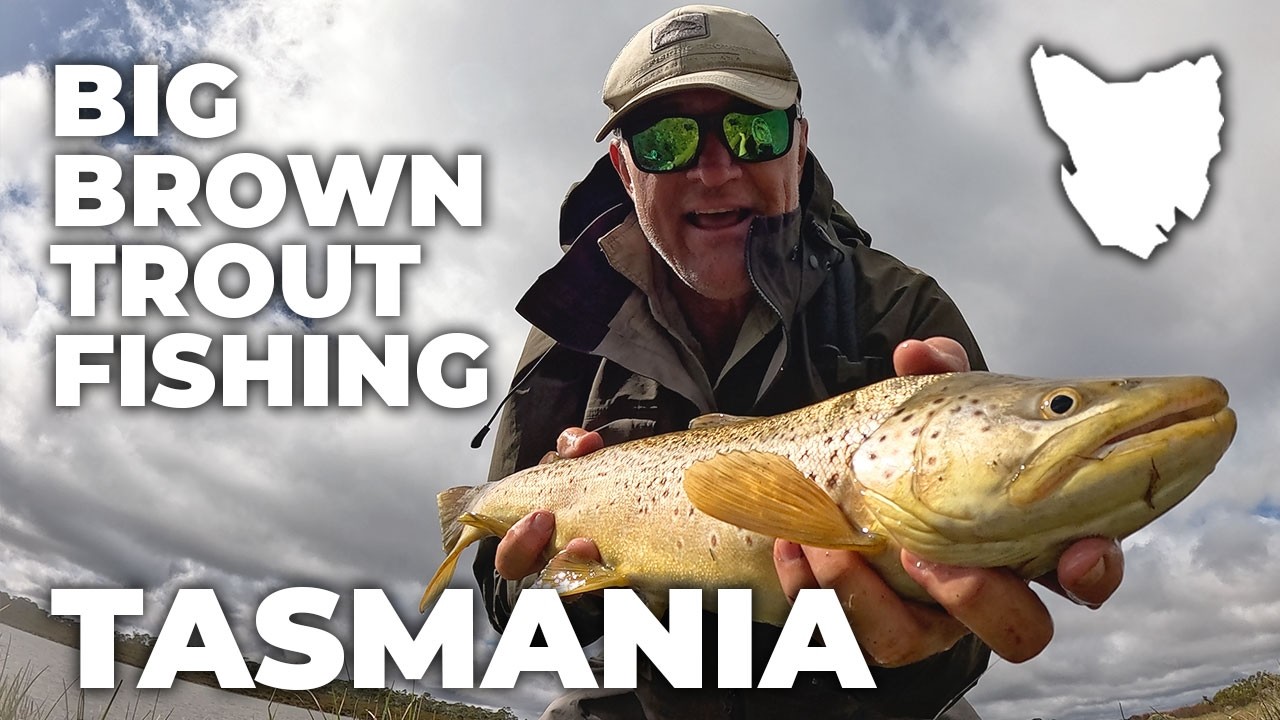
A solo fly-fishing expedition into Tasmania's 19 Lagoons country has delivered the kind of trophy brown trout day that justifies every step of the hike in - two big fish on dry fly in 40 km winds, with a broken camera brace and a stranded net adding the comedy.
The angler, who introduces himself as 62 and travelling alone, drove from Melbourne to Geelong, boarded the Spirit of Tasmania and pushed straight up to the central plateau on landing. "I am packed like the Beverly Hillbillies. I am going to Tasmania for the fishing," he said. The plan from Devonport: a short raft across a smaller lake, then a two-kilometre walk in to a tarn rumoured to hold genuinely big fish.
The weather had different ideas. "Terrible conditions today," he said as the wind ripped the rod tube around. "The day is not really good. You normally fish blue sky days up here. However, I'm going to hike in. I can't control the weather, but I'm here for the fish." His rationale was simple: "Nothing like a good hike at 62 to blow the arteries out."
The weather worsened as he climbed. "It is blowing a gale," he said at the trophy water. "The temperature's dropped from when I left this morning. This is Tasmania. You got to be prepared for everything. It's not four seasons in one day. It's about 12." Two big browns spooked from the edge within minutes - a self-inflicted mistake he immediately owned. "That was bad angling on my part. I was walking too quickly. So I've backed off and just going to take it slowly. I need to maximise every chance."
His setup was a three-fly dry rig adapted from English fly angler John Horsey: an orange carrot fly as a strike indicator, two mayfly emergers behind. "Short cast John Horsey seven-second dry fly method of searching the water," he explained. "It tells me roughly where my flies are behind it, and the trout actually like the carrot fly."
The first take exploded under overcast skies on one of the emergers. The fight nearly turned into a disaster when his camera brace snapped and the net detached. "This is hard work trying to get this fish in," he muttered as he closed on the fish. "Got him. Oh, have a look at this. That is a great brown trout."
His pride in the result was unmistakable. "This is why you hike in in Tasmania, to remote water, because you want to catch trout like that. Have a look at that. Oh, that's what I walked for. This is why I walked kilometres to come in and catch. The best part is on the dry fly."
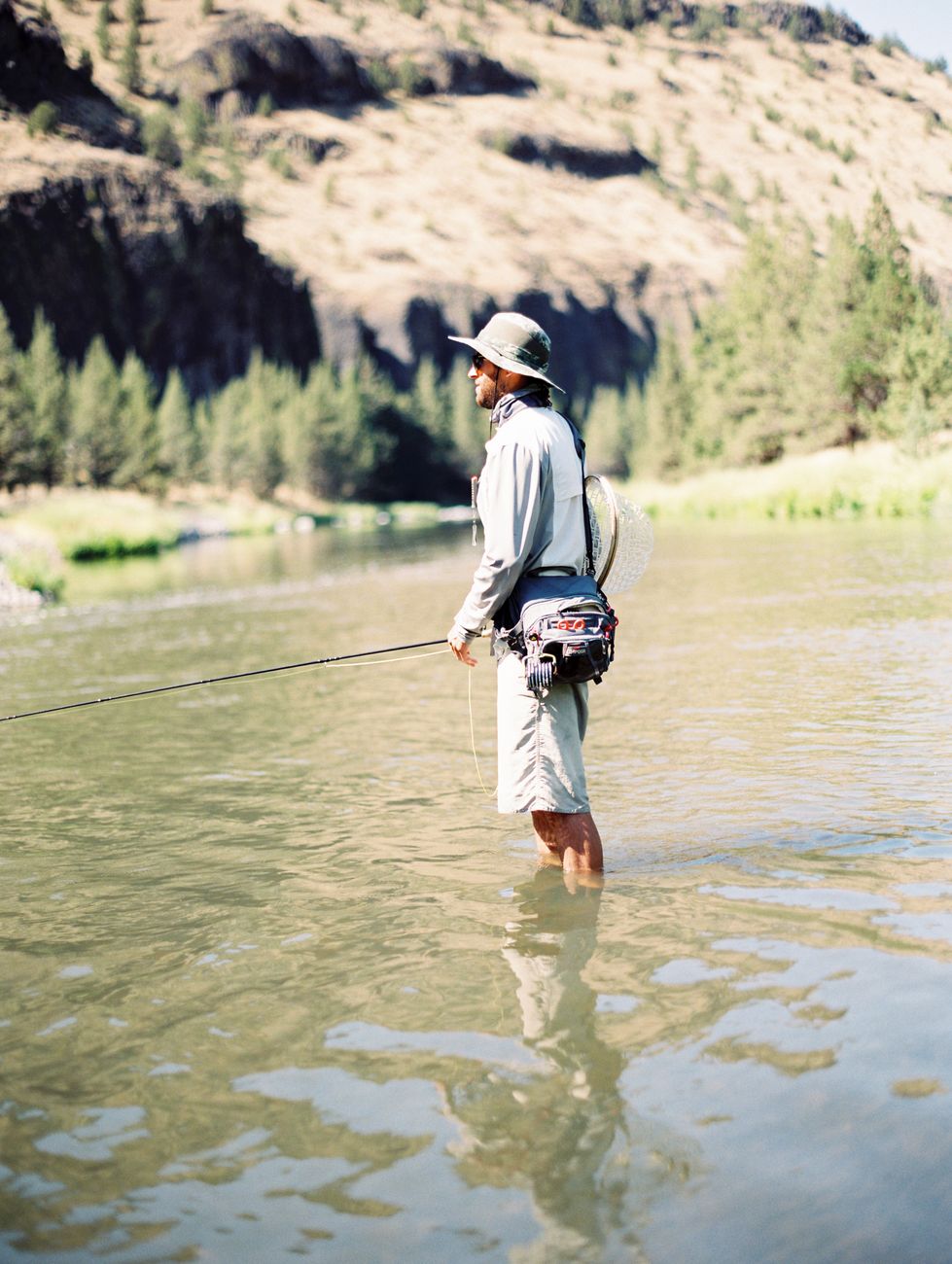
The second trophy came at lunch. Sitting down with his backpack and net off, he spotted a large brown cruising the edge and could only fish one-handed. "Just got to try and land him without the net. Comedy of errors here." He still got the fish in - a slabbier old male he described as "on the way out". "In his day he would have been a great fish. Absolutely beautiful fish, but he's on the way out."
His post-mortem on the day was unconditional. "It was a really hard day. You know what the best part is? The best part was I got them all on dries. That is fly fishermen. It just doesn't get any better when you see them come up and take that dry and go down and you just strike and you've got them."
Tasmania's pitch, from someone who has hiked into the central plateau in a gale and still walked out smiling, is straightforward. "It doesn't matter where you go in this state. The north, the south, the east, the west, the rivers, the lakes, the scenery. It is world class. It is spectacular. This is one of the world's greatest gems for wild brown trout fishing."