Starlo's Spinner Masterclass: Catching Trout on Light Spin Tackle
Veteran presenter Steve 'Starlo' Starling breaks down trout fishing with inline spinners and spoons - lure weight, the steady retrieve, structure, light braid outfits and the ball-bearing swivel trick that beats line twist.
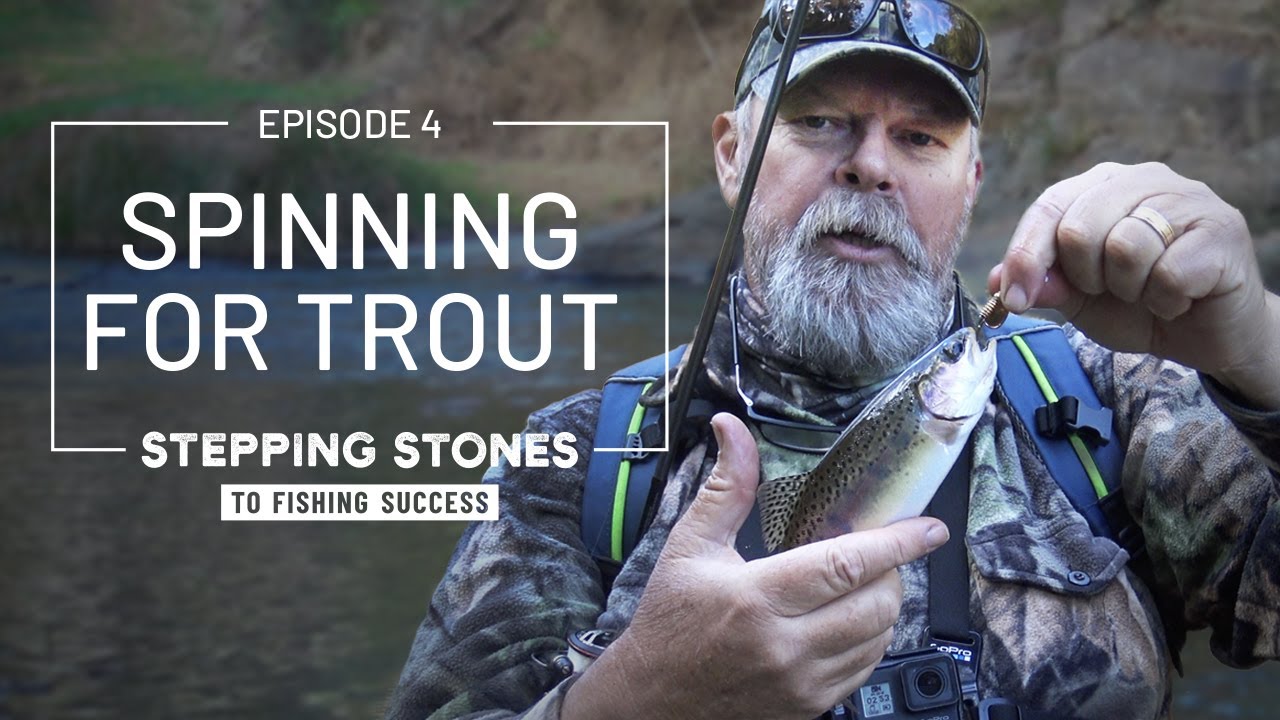
Few lures have stood the test of time like the humble spinner, and few anglers explain them better than Steve "Starlo" Starling. In a back-to-basics lesson on chasing trout with hardware, the veteran presenter makes no secret of where the species sits in his order of priorities.
"Trout were one of the first fish I ever caught in my life," Starling says. "Even after all these years and all the species I've targeted around the world, they remain one of my absolute favourites."
The appeal starts with the tools. Starling breaks spinner fishing into two families: the inline spinner, with "a blade that revolves around a central shaft or wire" to create "flash and vibration that the fish home in on," and the spoon, "simply a curved piece of metal that wobbles through the water." Both have endured for one simple reason - they work.
Lure weight is the first decision, and Starling ties it to water size and fish depth. On a small stream or creek he leans on a light lure of around two to three grams; on a big lake or wide river he steps up to five to seven grams or more, reaching for extra weight again when fish are holding deep.
The retrieve is where many anglers undo themselves. According to Starling, trout "will often follow a lure for quite a long way before they decide whether to eat it or not, so you want to keep your retrieve nice and steady and consistent." Stopping and starting can spook a committed follower - but not always. "Sometimes a little pause or a little twitch can be just the thing to trigger a strike from a following fish," he adds, urging anglers to experiment until they find what the fish want on the day.
Location matters as much as presentation. "Trout love structure," Starling says. "They love things like fallen trees, rocks, weed beds, undercut banks - anywhere that provides them with shelter and an ambush point." In flowing water he casts up and across, letting the lure swing down naturally with the current to where fish sit waiting for food.
His tackle recommendation is deliberately light: a two-to-four kilo outfit, a rod of six to seven feet with a soft tip to load light lures, braid for casting distance and feel, and a rod-length of three-to-four kilo fluorocarbon leader for shy fish in clear water. A small quality snap speeds up lure changes and frees up the action.
One often-overlooked detail can ruin a session - line twist from a constantly rotating blade. Starling's fix is a quality ball-bearing swivel set a little way up the line, and a retrieve that starts the instant the lure lands so the blade is always turning.
He also fishes barbless. "It makes it so much easier to release the fish, and it does a lot less damage to them," Starling says, encouraging anglers planning to release most of their catch to crush their barbs at the very least. The reward, as a string of brightly coloured rainbows proved, is a fish that "hits that lure really hard" - the essence of light-tackle fun.