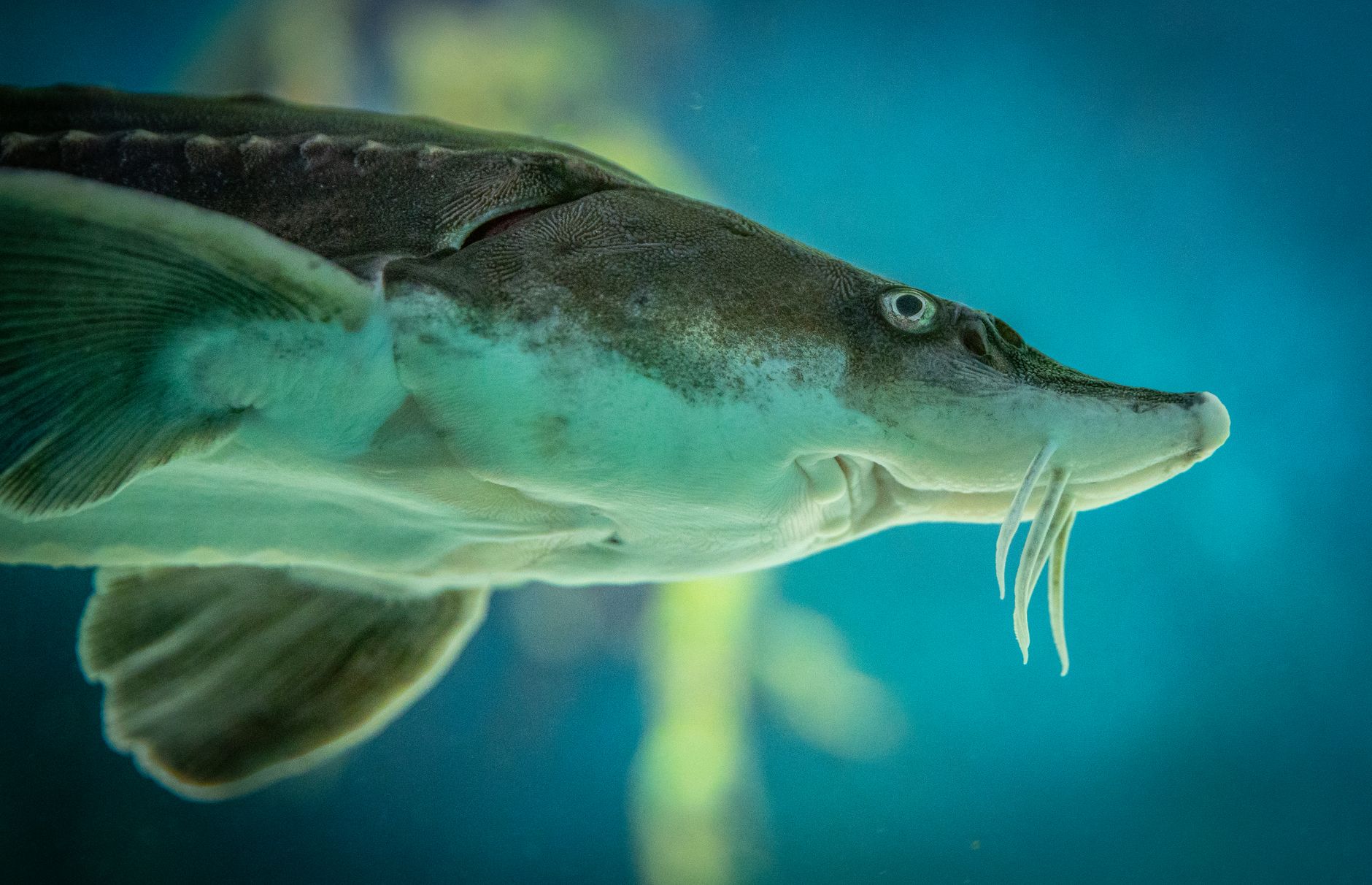
For most of the last century, fisheries biologists put the ceiling on a lake sturgeon's life at somewhere between 80 and 100 years. The oldest specimen anyone had on record, taken at Lake of the Woods in 1953, was pegged at 152. A new peer-reviewed study says those numbers were not close.
"I feel pretty comfortable saying that lake sturgeon can live to be 400 years old," Edward Baker, research station manager at the Michigan Department of Natural Resources' Marquette Fisheries Research Station and a co-author of the study, told the Detroit Free Press.
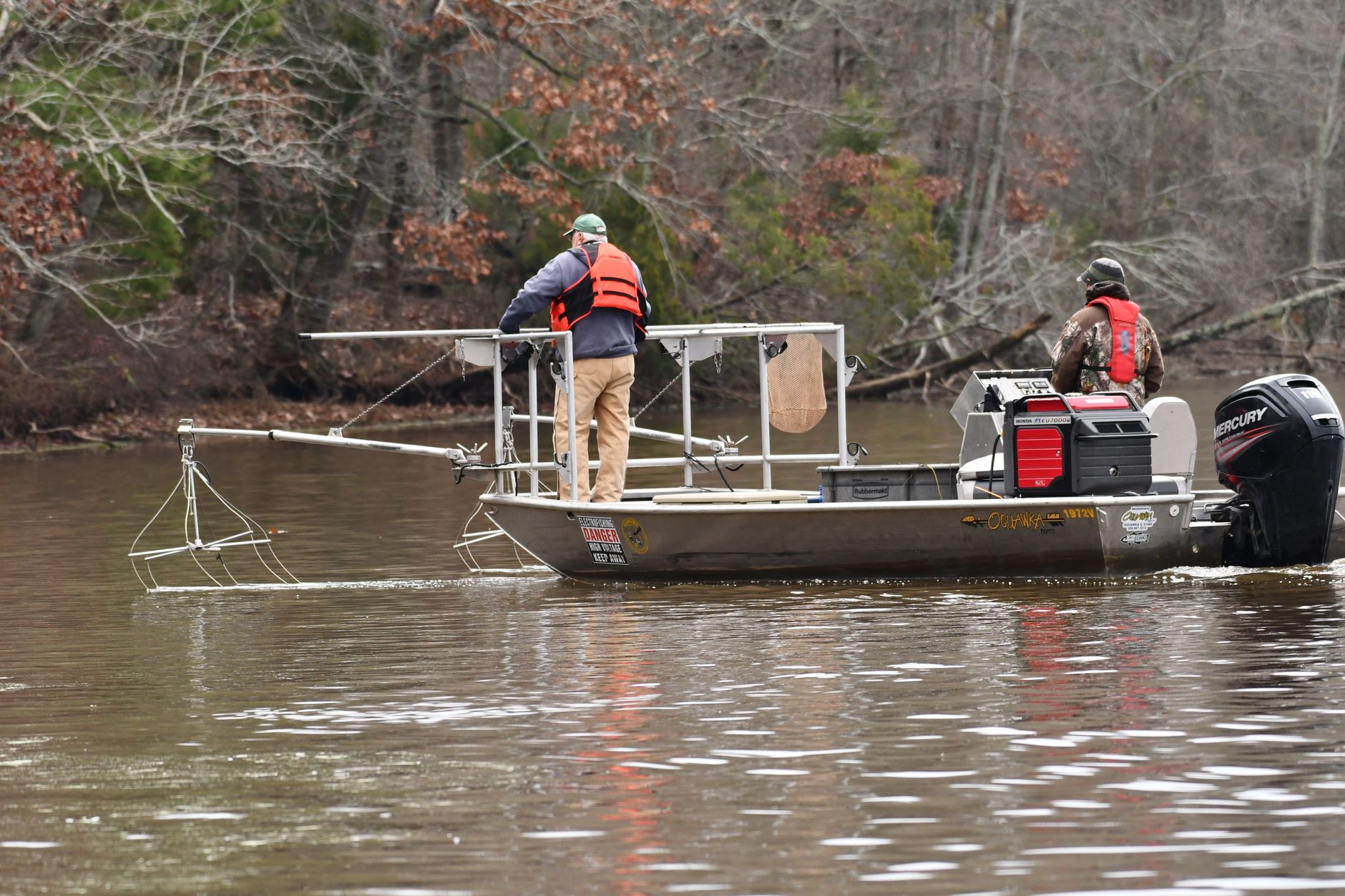
The paper, published in the Journal of Fish Biology, was written by researchers from the Michigan DNR, Michigan State University, Michigan Technological University and the Wisconsin DNR. It leans on 44 years of catch-and-release data from five populations in the upper Great Lakes: Black Lake and the Sturgeon River in Michigan, the Menominee River on the Michigan-Wisconsin line, the St. Clair River, and Lake Winnebago in Wisconsin.
The reason the old numbers were wrong comes down to method. Ageing a fish normally means counting annual growth rings on a fin ray or an otolith, the small bone in a fish's inner ear.
"The older a fish gets, the harder it is to accurately determine its age using those growth rings," Baker told WWMT. "As fish age, they tend to grow slower and those rings become very indistinct essentially. They're too close together to accurately count."
So the team went at it from the other direction. Instead of counting rings, they used decades of tag-and-recapture measurements to build a growth-rate equation, then asked how long a fish would need to reach a given length. Baker has said he borrowed the approach from work on Greenland sharks, the longest-lived vertebrates known at 272 to 512 years.
The margins involved are tiny. "Some of the fish we have, were growing two millimetres a year," Baker said. "That's hard to measure if you're catching fish three or four years apart. We really needed that 10, 20 or 30-year difference between initial marking and recapture to have measurable change in length and be able to estimate the growth rates that are that slow."
The results put male lake sturgeon at 90 to 279 years and females at 99 to 427. The oldest individual, a large male from Black Lake, came out at 427 years. Even at the low end of the model's variability, co-author Scott Colborne said, that fish was more than 300 years old.
Colborne, an assistant professor in Michigan State's Department of Fisheries and Wildlife, described the moment the numbers landed.
"It was definitely one of those goosebump moments of, wow, it does make sense that sturgeons live a very long time, but to this level, it was unexpected to me," he told the Free Press.
Baker was harder to convince, and said so plainly.

"I kept questioning, am I doing the math right? Is everything adding up? But when you add in Scott's expertise and the expertise of all of the other coauthors, and then you run it through peer review, it's legitimate for sure."
Not every population reads the same way. On the St. Clair River, the data still points to fish living roughly 80 to 100 years, the figure the field had assumed all along. The extreme ages cluster in Black Lake and the Sturgeon River flowing into Lake Superior.
"Here we were using modern analytical approaches, and they were pointing us toward something that indigenous communities had long understood," he said.
Nancy Auer, emeritus research professor of biological sciences at Michigan Technological University, framed it in career terms.
"When I began studying lake sturgeon in the late 1980s, I never thought I'd live to see their success and persistence after being listed as threatened," Auer said. "Let alone actually handle fish much older than I was - or am now, 30 years later - and that will be here after I am gone."
The management consequence is the part the authors keep returning to. A fish only reaches 300 or 400 years if almost nothing kills it in an average year - annual survival for lake sturgeon is estimated at 96 to 98 percent - and the species reproduces slowly on top of that.
"One of the other things we know about lake sturgeon is that their natural reproductive rate is very, very low," Baker said. "So it's not surprising that what did the sturgeon in across the Great Lakes around 1900 was harvesting them indiscriminately. We clearly can't do that. Because they are living so long and their survival is so high, we have to be very, very cautious about how much harvest we allow."
Less than one percent of the historic Great Lakes lake sturgeon population remains. Michigan listed the species as threatened in the mid-1990s and has been managing for recovery since. The Black Lake winter harvest, which sometimes lasts only minutes, ran to a limit of six fish total last season - not six per angler.
"It's not a fish that we just allow anybody to go out and catch as many as they want," Baker said.