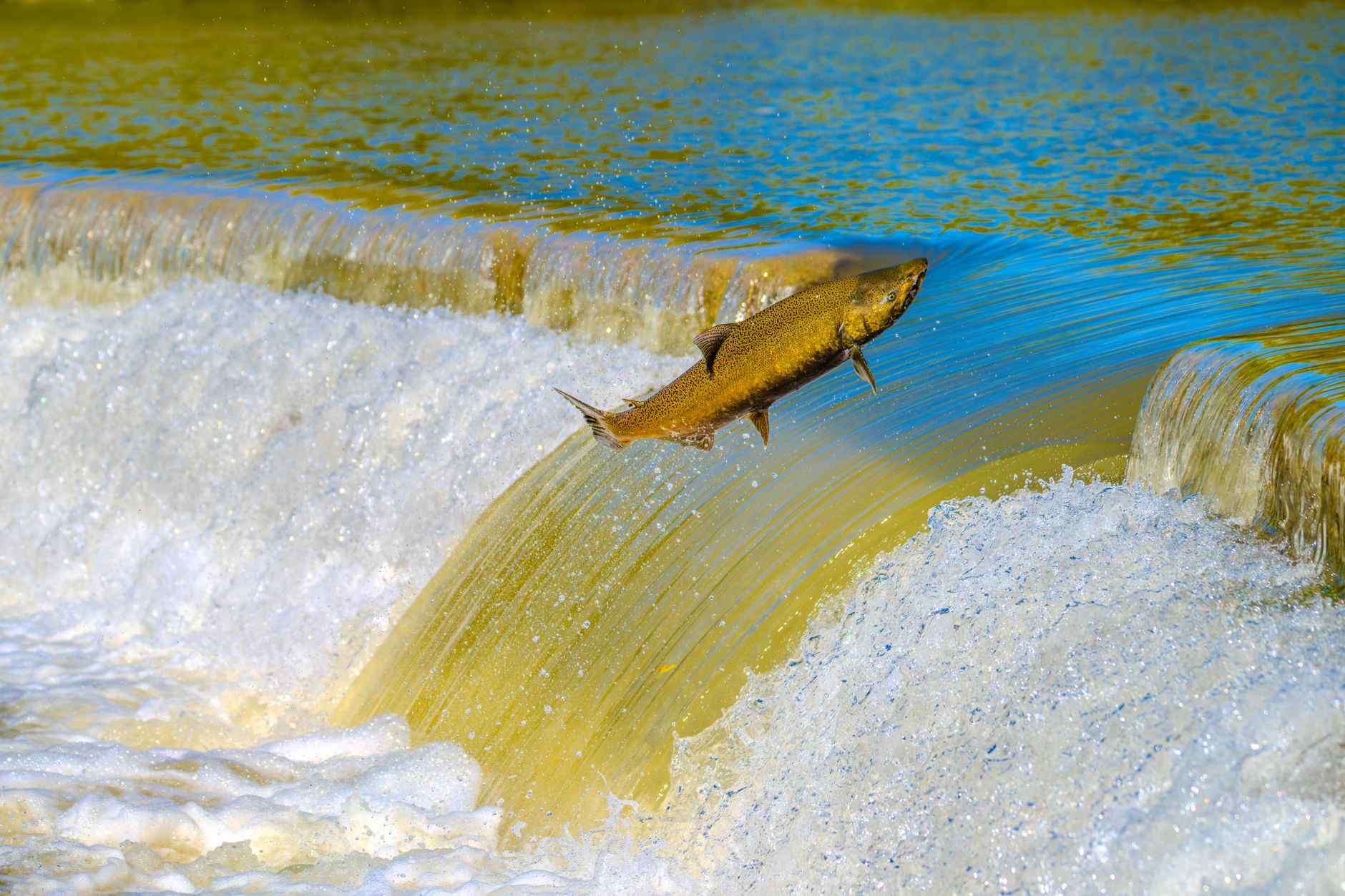
Three states, three separate rule-making processes, one identical answer: on the Snake River this fall, an angler may keep three adult Chinook a day and no more than one of them may be wild.
The fall Chinook season opened Tuesday, August 18 in Idaho and Washington, with Oregon's regulations matching. Behind the uniformity is a forecast of roughly 21,000 fall Chinook returning to the Snake, of which fewer than 5,000 are expected to be wild fish carrying an intact adipose fin.
Kyle Bratcher, district fish biologist with the Oregon Department of Fish and Wildlife, was candid that the restriction is a budgeting exercise as much as a conservation one.
"We're looking at a smaller return of wild fall Chinook this year, and that means we need to be cautious," Bratcher said. "By tightening the retention of wild adults, we stay within ESA impact limits and help ensure we have enough allowable take to keep our popular steelhead fisheries open."
Steelhead anglers hook fall Chinook whether they are trying to or not, and those incidental encounters come out of the same federally set impact allowance. Burn through it in August and the autumn steelhead fisheries close early.
"Anglers depend on these fisheries throughout the fall, and protecting wild Chinook now is key to keeping steelhead seasons viable," Bratcher said. "These steps allow us to maintain opportunity while upholding our conservation responsibilities."
"It will probably be a decent run," Donley said.
Washington's two upper sections opened August 18 with a three-adult daily bag, closing October 31 between the Washington-Oregon and Washington-Idaho borders and October 15 from the Idaho line down to West Evans Road below Clarkston. The Lyons Ferry bubble fishery — 1.4 miles of water — runs Thursday through Sunday from September 3 to October 25 with a two-adult bag. Jacks are unlimited above a 12-inch minimum; adults are fish of 24 inches or more.
Nobody is promising fast action. Bratcher expects catch rates to stay modest until later in the fall when the bulk of the run shows up.
Early counts favour the optimists on Chinook. The fall run is tracking ahead of the 10-year pace at both Bonneville and Lower Granite, albeit off a run only about a week old by official counting metrics as of last Thursday.
Steelhead are the problem, and the reason for the caution. Bonneville has passed a little over 28,500 steelhead since July 1 against a 10-year average north of 50,000, with wild fish at roughly half of average. Lower Granite has counted 1,256 against an average of 1,931.
"We have the second lowest cumulative counts at Bonneville going back 20 years," Sullivan said. "That is certainly not encouraging."
Only 2021 came in lower. These are A-run fish bound for the Snake, Salmon, Grande Ronde and Imnaha. Oregon has already shut steelhead fishing on the Deschutes to protect wild fish there.
Sullivan is not ready to call the season, though, because the Clearwater's B-run fish return later on a preseason forecast of about 40,000.
"It's still too early to say anything about the Clearwater Basin return," he said. "Typically, we are just starting to show up at Bonneville this time of year and that run will build into the early part of September."
The composition of what has arrived is also unusual, following a pattern Sullivan has seen in recent even-numbered years rather than the typical one-ocean-dominated A-run.
"Of the early returning fish we are seeing, about three-quarters of them have been two-ocean fish," Sullivan said.
Coho offer some steadiness. The Nez Perce Tribe forecasts around 8,200 back to the Snake and its tributaries — effectively the same as the 2025 forecast, and a shade under the roughly 9,000 that actually returned.