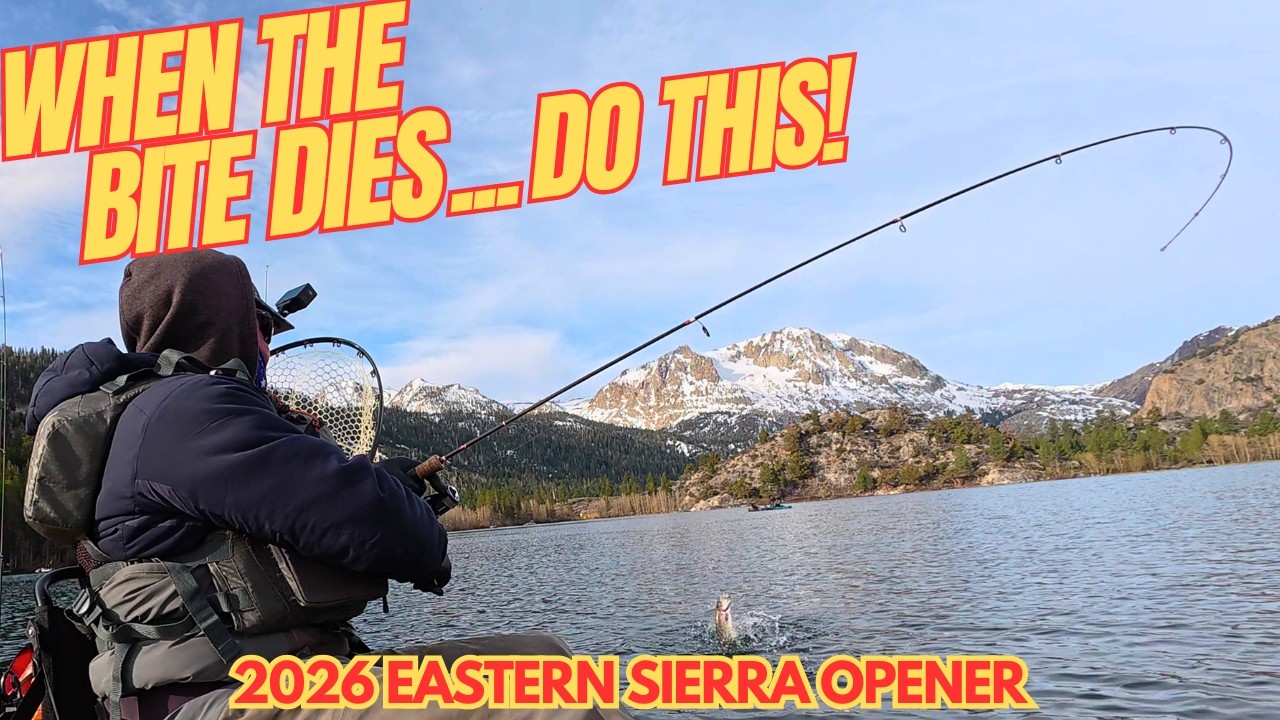
California's Eastern Sierra trout opener is normally one of the easiest weekends on the calendar to put a stringer together. The 2026 edition wasn't, and YouTuber SeaSpanker spent most of the long weekend re-rigging until he found a presentation that broke through.
In a mid-trip break to camera, his read on the bite was matter-of-fact. "I'm using a 16th ounce mini jig as you saw, getting some very few bites, very few followers, and we're not seeing a lot of activity from the fish," he said. "It is tough compared to years past. Usually opening morning it's on like it's fish after fish, at least for a good long while. But on this trip it is very, very slow."
The first turn of the trip came on a slow side covert of Lee Vining Creek near Aspen Campground. Casting was short — a 1/80-ounce ball head from Trout Bit Tackle paired with a Golden State Fishing inchworm in black galaxy doesn't fly far — but the slow water suited a near-suspending presentation. "I wanted something that can give me a really slow presentation and something that looked as natural as possible," SeaSpanker said. "I'm just reeling and bouncing the rod tip, but extremely slow because that thing is so light." Several of the fish ate on a true pause.
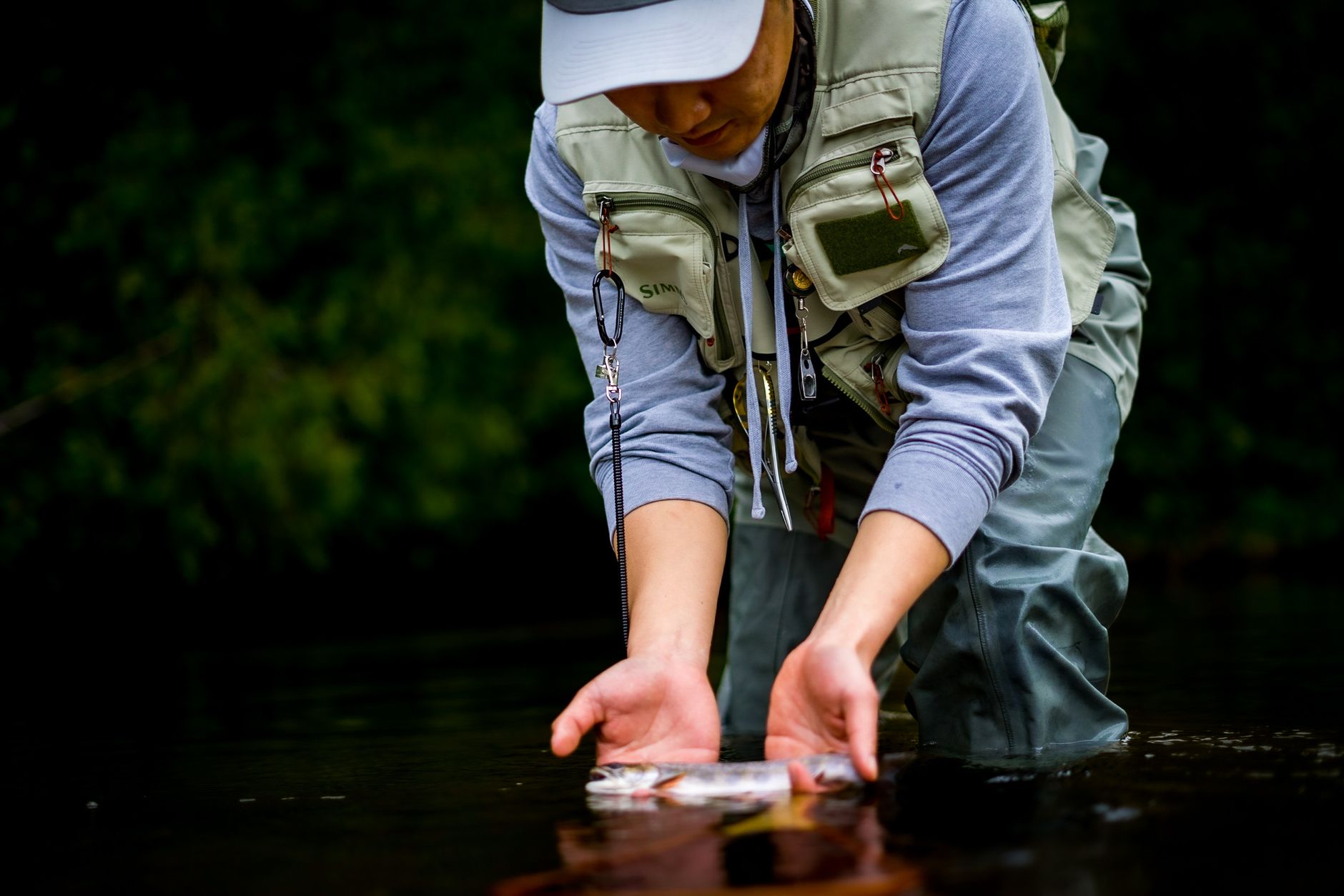
When the local fish read the act, he stepped out of the covert and up to a 1/32-ounce mini jig in desert locust to extend his cast and keep the slow swim. "First bow of the opener," he said as a small Sierra rainbow came over the rod tip.
The lesson of the weekend came at Grant Lake. Sounder shows held fish in 15 to 30 ft of water, but normal Sierra mini-jig presentations couldn't draw a strike. He shrugged and went the other way — back to a 1/32-ounce ball head with a small minnow, fished with the wind at his back from an anchored kayak, and dead-sticked all the way to the bottom. "Three light pops up and reel in the slack. Three light pops up, reel in the slack. And just continue that process," he said. The first fish on it was a brown trout that ate on the fall.
Why was the opener slow? SeaSpanker is openly puzzled. He fished Crowley, Gull Lake and Grant alongside fellow pro-staffers Josh and "SD," and the consensus on the boats was that pre-opener stocking might not have happened the way it usually does. "They didn't look like they were freshly stocked. They looked like they'd all been in the water for a very long time," he said of the fish that did come in. "Almost full fins, like their fins had started to grow back." Crowley produced one fish for him — "I hooked up one and it broke me off, decent fish, and that was it" — and the sounders elsewhere were quieter than he could remember.
The bigger takeaway, the one he leaves anglers heading to Bishop, Mammoth and Bridgeport with, is the line he repeats every time the bite goes off-script: "Don't stick to one style of fishing. Change it up. Change your baits, change your presentations. Because the fishing was tough and you had to if you wanted to get bit." On opener weekend 2026, the change that paid was a smaller jig, a slower retrieve, and the willingness to dead-stick a minnow to the bottom of a Sierra lake.