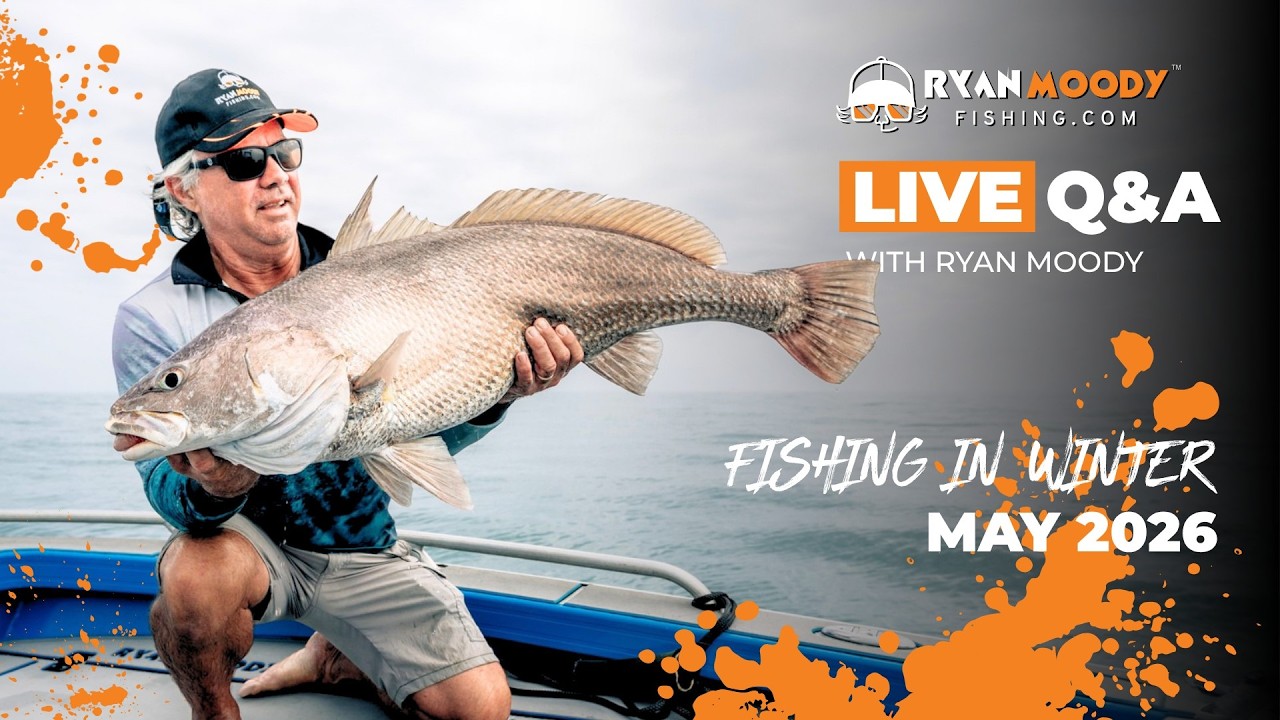
CAIRNS, QUEENSLAND — Thirty-plus years of running charters off Cairns and the Whitsundays show up in the way Ryan Moody talks about winter fishing. In his May 2026 live Q&A, the long-time charter operator and online-course coach laid out the seasonal switch happening right now along the North Queensland coast — and slipped in a warning about ciguatera that, by his account, very nearly killed him.
The headline change is the inshore Spanish mackerel run. Moody splits the population into two distinct schools of fish: the migratory Spaniards that drop down from the Torres Strait as juveniles, and the bigger resident fish that take up year-round addresses around headlands.
"By the time they get to the Townsville area, around mid-May, June, July, they're usually around that 6 to 8 kilos," Moody said. "These are big schools of mackerel and they're out in the shipping lane sort of halfway between the mainland and the reef. By the time they reach Brisbane and sort of November, December, they're generally larger fish up around 13, 14, 15 kilos."
The larger inshore fish are a different proposition. Moody said two- to four-year-old Spaniards in the 15-to-20-kilo bracket are starting to lock onto pressure points along the inshore coastline, especially anywhere bait aggregates.
"They will come into areas around headlands and different pressure points, especially where bait aggregates," he said. "Even in Hinchinbrook channel, you'll find all the herring schools coming in there. It's not uncommon to find them in a clean-water estuary as well. And we see them spearing out of the water there on the northern end of Hinchinbrook — 20-kilo fish spearing out of the water."
Moody also flagged what most coastal anglers in southeast Queensland and northern New South Wales already know: golden trevally, queenfish, GTs and the underrated diamond trevally all move into headland eddies and island spits during the cooler months. He suggested vibes, sinking stickbaits, soft plastics on heavier jigheads, and metal slices for the macks instead of the older live-bait-behind-a-log-head troll.
On barramundi, Moody warned that the seasonal switch makes them harder to find before it makes them easier. "While you've got dropping water temperatures and sudden changes in water temperature — like with cold snaps overnight — especially in the shallows, it'll send them into deeper areas, and sometimes they'll just sulk for a week or two or more," he said. "Once they get used to the cold, they will start moving into more predictable situations and start biting a little bit more freely."
The segment that stopped the chat dead, however, was Moody's ciguatera warning. He said he caught the toxin 29 years ago while working on the marlin boats and eating a lot of mackerel and coral trout. He told viewers to be cautious of any really big inshore Spaniard.
"I'd concentrate on maybe the 15-kilo ones," he said. "If you do get a monster, well, just make sure that you eat it in small portions. Don't have a massive meal night after night after night, because that will accumulate the — if they do have any ciguatoxin in them, that will accumulate in your bloodstream, and you do not want that reaching the trigger level where it triggers a ciguara reaction. I had it 29 years ago and it nearly killed me. I was paralysed for two weeks and 9, 10 weeks in bed trying to recover."
Moody said the toxin originates with blue-green algae growing on dead reef, working its way up through damselfish and banana fish into bigger predators that show no symptoms themselves. Larger reef-edge coral trout, China-fish (nannygai), red bass and even some flowery cod can all carry it to varying degrees. His take-home for anglers heading offshore this winter: don't stop chasing the big fish — just don't stockpile fillets from one in your freezer.