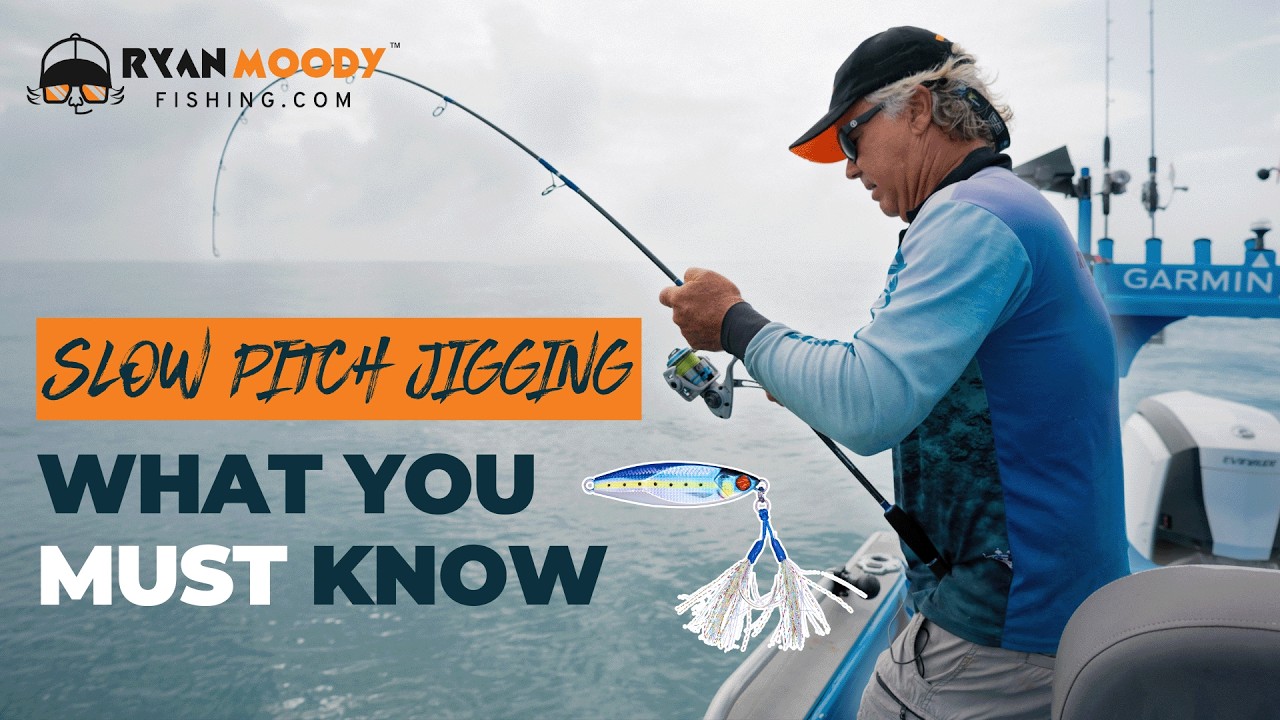
Queensland-based offshore fishing educator Ryan Moody has published a full walk-through of his preferred slow pitch jigging technique for chasing demersal species in moderate-depth offshore waters — a method he says consistently triggers bites from fish that have refused conventional bait.
Released on the Ryan Moody Fishing YouTube channel, the ten-minute instructional video opens with an unambiguous endorsement of the technique. "Hey guys, welcome to this video about slow pitch jigging. It's my favourite form of fishing in offshore waters cuz you can get fish to bite when they're not biting on bait," Moody said.
The tutorial carefully separates slow pitch jigging from the more aggressive mechanical jigging practised with 200-to-400-gram pencil jigs and heavy tackle for pelagics such as kingfish and dogtooth tuna. "Mechanical jigs are much longer, much heavier, bigger hooks, which requires bigger rods and reels. It's meant for deep water jigging for things like kingfish, dog tooth tuna, all those kinds of things," Moody explained. "Whereas these guys, they stay down near the bottom."
The distinctive flutter action of the slow pitch jig — which causes some models to fall sideways like an injured baitfish and others to shoot off with the assist hooks trailing like a squid — is what separates the technique from its more physical cousin. Moody is running levitator-style jigs with a keel, attached via loop knot directly to the solid ring on the assist hooks. Connecting to the split ring, he warned, carries a risk of the split ring unseating from the solid ring mid-fight and losing the fish.
Jig weight selection is built around two variables: water depth and tidal flow. "I like to use 80s as to their maximum. Some people will say, 'Oh, you only use these as deep as 30 m.' But I will use these as deep as 50 or even 60 if the tidal run allows cuz the fish just get them in their mouth so much easier," Moody said. When run strengthens, he steps up to 100 or 120 grams, and when flow becomes excessive he switches entirely to drifting the spot rather than anchoring.
The core retrieve, demonstrated in 50 metres of water with a steady tidal run, consists of tiny upward jigs of a couple of metres above the bottom while maintaining slight slack on the fall. "It's up like that. A little bit of slack between you and the lure because if you hold it up like that, like that, the jig is not fluttering on the fall. So, it doesn't look appealing," Moody said. "So, it's all about letting the lure do its own thing by maintaining a bit of slack."
Strike detection depends on feel. "By using the braid over a good jig rod, nanoarbon, what happens is you'll feel that jolt even though you've got slack line. So you'll know to come tight on the fish straight away," Moody said. He emphasised that if the line goes dead slack and fails to come tight during the fall, anglers should crank anyway because it usually means a fish has taken the jig and swum forward.
Moody demonstrated the technique by landing a gold band snapper, explaining that while slow pitch jigs are primarily engineered for bottom-dwelling demersal species, rapid surface retrieves can convert the jig into an ad-hoc metal slice for trevally, mackerel and tuna if pelagics are encountered on the way up.
For anglers fishing in strong current that overwhelms a 120-gram jig, Moody walked through a drift strategy: observing the current line on the GPS, motoring 30 to 50 metres up-current of the target spot, then dropping the jig vertically while the boat drifts naturally across the bottom structure. "So, the jig is remaining pretty much straight up and down below us. And that's what we want," he said.
Slow pitch jigging has spread rapidly through the Australian reef-fishing community in recent seasons as a counter to the refusal patterns that develop during heavy recreational pressure. Moody's tutorial provides the technical foundation for anglers who want to put the method into rotation in the coming cooler months when bait bites frequently slow.