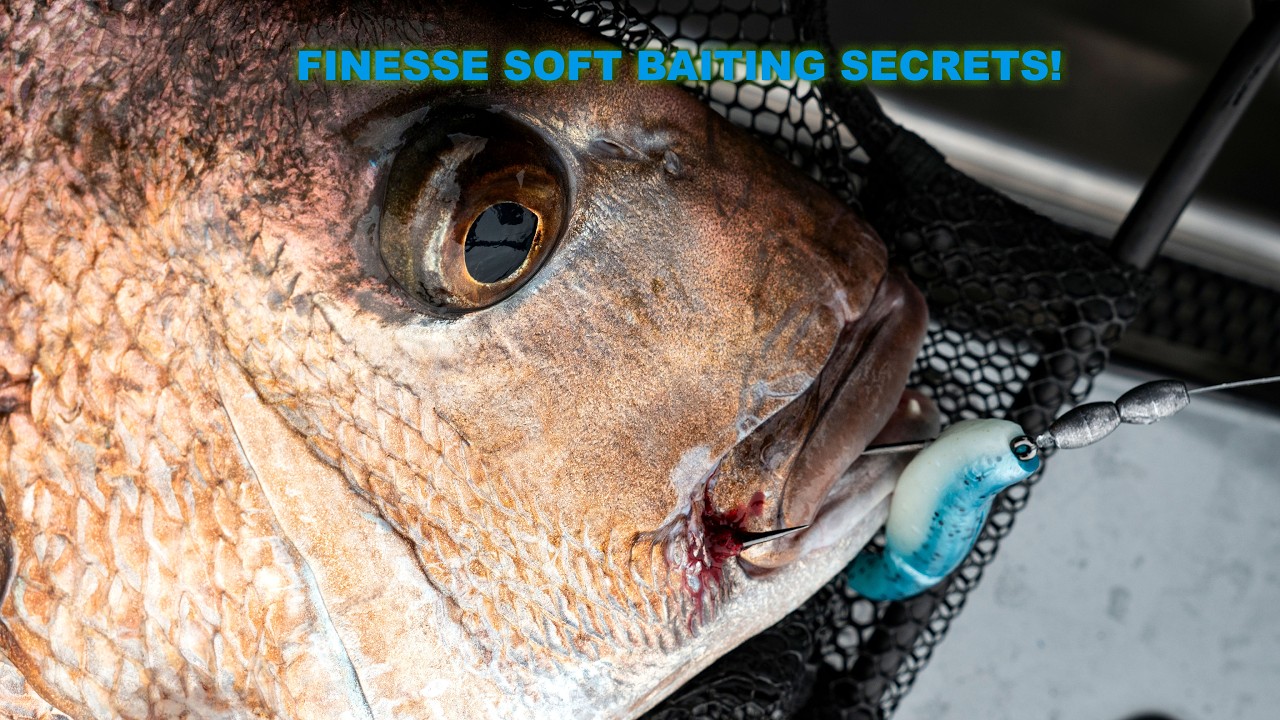
Light line, tiny jig heads and a stealthy electric motor — that is the recipe a host on the Fishing NZ YouTube channel laid out while picking apart snapper in a shallow North Island harbour, a session built entirely around sight-casting soft baits to surface-feeding fish.
"Today, we're soft baiting," he said. "What I'm going to do is share some of my little tips and tricks for finessing soft baits." The conditions were ideal: water at 15 degrees and snapper sitting just below the surface. "It's 15 degrees and they're pretty active," he noted as fish boiled at the back of the boat.
The finesse starts with the tackle. "I'm only using six-pound J braid here. It's a chartreuse, so highly visible," he explained, paired with a four-inch paddle-tail on a very light, hollowed jig head. "It slides along the sand," he said, "and this paddle tail hardly has to get any action for it to move in the water." Balance, he stressed, is everything. "The real trick to finesseful soft bait fishing is to have your rigs balanced. Make sure your rod and reel, line, leader, lures and jig heads are all balanced. Too light or too heavy can make the difference between catching and not catching fish."

Getting the lure in front of the fish without spooking them is the next piece. "When I'm casting to working fish, I try and cast past the school and slightly ahead of them, so when I retrieve my lure it comes right through their path," he said. "This also avoids spooking them when the lure hits the water."
Boat control did much of the heavy lifting. "The use of electric motors on boats is becoming commonplace, and they're a real asset when you're chasing fish in shallow water, because they're very quiet and you can really sneak up on the fish," he said, demonstrating the anchor-lock function that holds position over a school while you keep casting.
His fishing partner, Eden, ran a weed-friendly variation for the seagrass flats. "It's a five-inch jerk shad — a Bait Junkie jerk shad — and we've put two little barrel sinkers on it," the host explained, "and a worm hook. A worm hook is good for weedless fishing." In a harbour thick with seagrass, the rig slid through the cover while sitting just under the surface for the surface-feeding snapper to hit.
Reading the water sealed the deal. Birds and bait were a start, but the host trusted the bigger signs. "Those big bell waves, they're unmistakable," he said, while flat, grey cloud cover gave the anglers room to move. "These conditions are absolutely perfect for this sort of fishing, because we've got a low flat cloud cover. It gives you good cover when you're moving around."
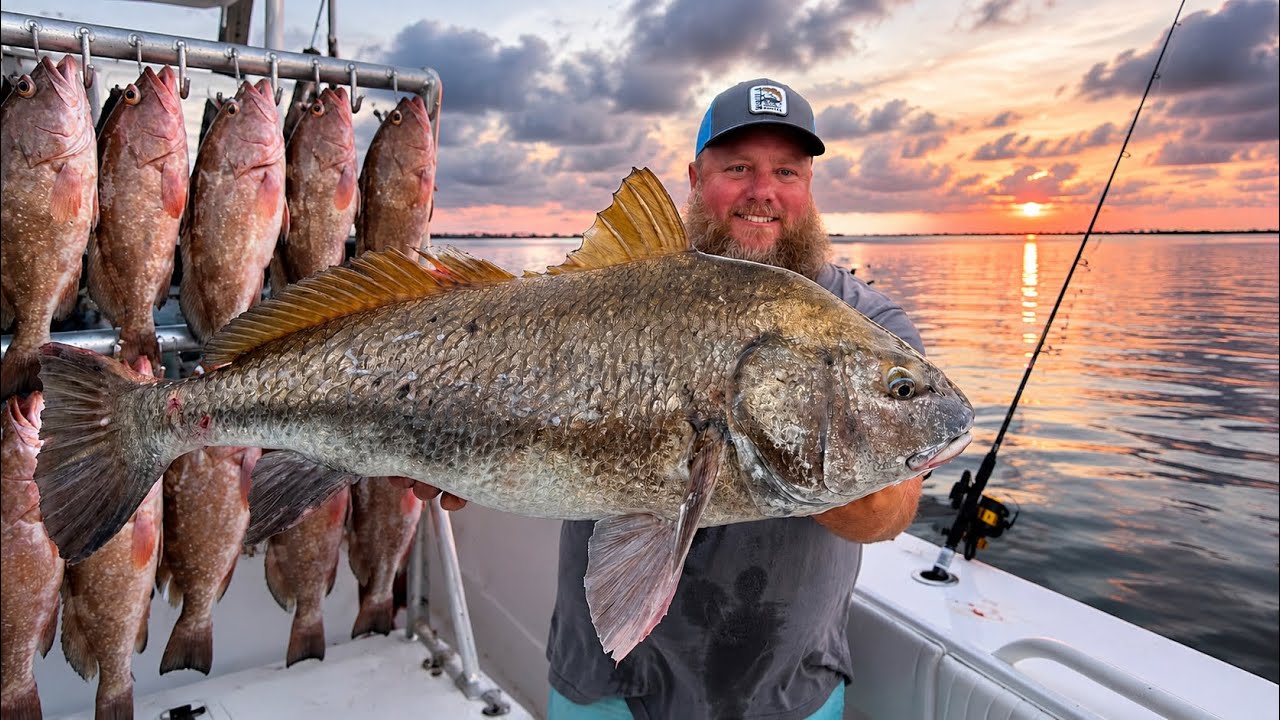
The reward was a steady mix of snapper and trevally, including one fish the host called early on a hunch. "This is my trevally spot," he said. "I love it when you say to someone, 'I catch trevally here.' First thing we catch is a trevally." Eden landed the snapper of the day in the shallows, and with a glassy, empty harbour to themselves, the pair finished with a few fish kept for the table — including trevally bound for sashimi.