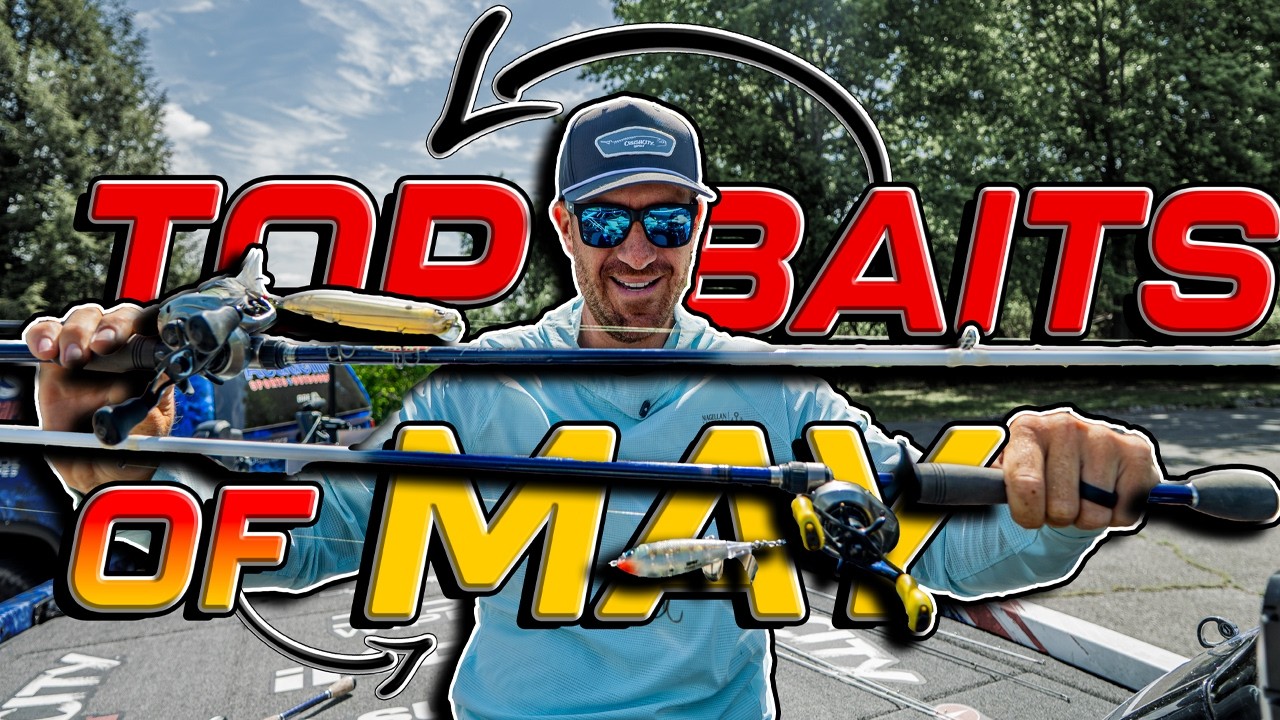
Jacob Wheeler is on Beaver Lake the week before stage six of the Bass Pro Tour heads to Grand Lake, and the Ozarks scenery makes a fitting backdrop for what he calls one of his favourite months on the calendar. May, in Wheeler's reading, is the moment the food chain inverts.
"The biggest thing that changes overall this month is that the bass become the hunter, not the hunted," Wheeler said. "All April these bass are up there. They're spawning. They got to deal with these pesky bluegills. Now the bluegill start to spawn and the bass become the ones that are going to hunt them."
In the lower United States, April handles the bass spawn. May, Wheeler argues, is for everything else. "May is where every other kind of species typically will spawn," he said. "That's your shad, your forage spawn. That's your bluegill." The result is a month with several overlapping windows - fry guarders shallow, bluegill bedding in the pockets, shad and herring blowing up at first light - and a bait box that has to cover all of it.
Wheeler's first bait this month is the new Rapala Clap Tail in a bluegill colour, fished on a 7-foot medium-heavy with braid where confidence allows and 17-pound monofilament for anglers who tend to snap-set. The plopping topwater is built for run-and-gun, cast-and-cover work along half-moon pockets, secondary points and dock walls. "Bluegill will spawn at secondary points and the bass will be on those areas," he said. "I'm imitating a bluegill, but if a bass happens to think this is a shad, great. He's that opportunistic feeder."
When fish blow up but won't commit, Wheeler downsizes. The wacky-rigged Pig Stick on a 6-foot-10 medium-light and 8-pound braid is, by his own admission, the highest percentage bluegill-spawn bait in his rotation, despite the fact "it does not look like a bluegill." A 5mm crossover ring keeps the worm parallel or perpendicular to the line and lets him slip in a nail weight when the bedding fish are deeper than three feet.
The shad spawn flips Wheeler's clock. "You only got an hour to make hay," he said of the morning blitz that switches off about five minutes after sunup. He covers points with a Jowler walking topwater, a Rapala Maverick jerkbait when the fish won't come up, and a white skirted jig swum around bushes and dock pilings - cleaner whites in stained water, more subdued shad patterns when the lake clears. "The more water you cover, the better you're going to find them. And when you do find them, it is magical."
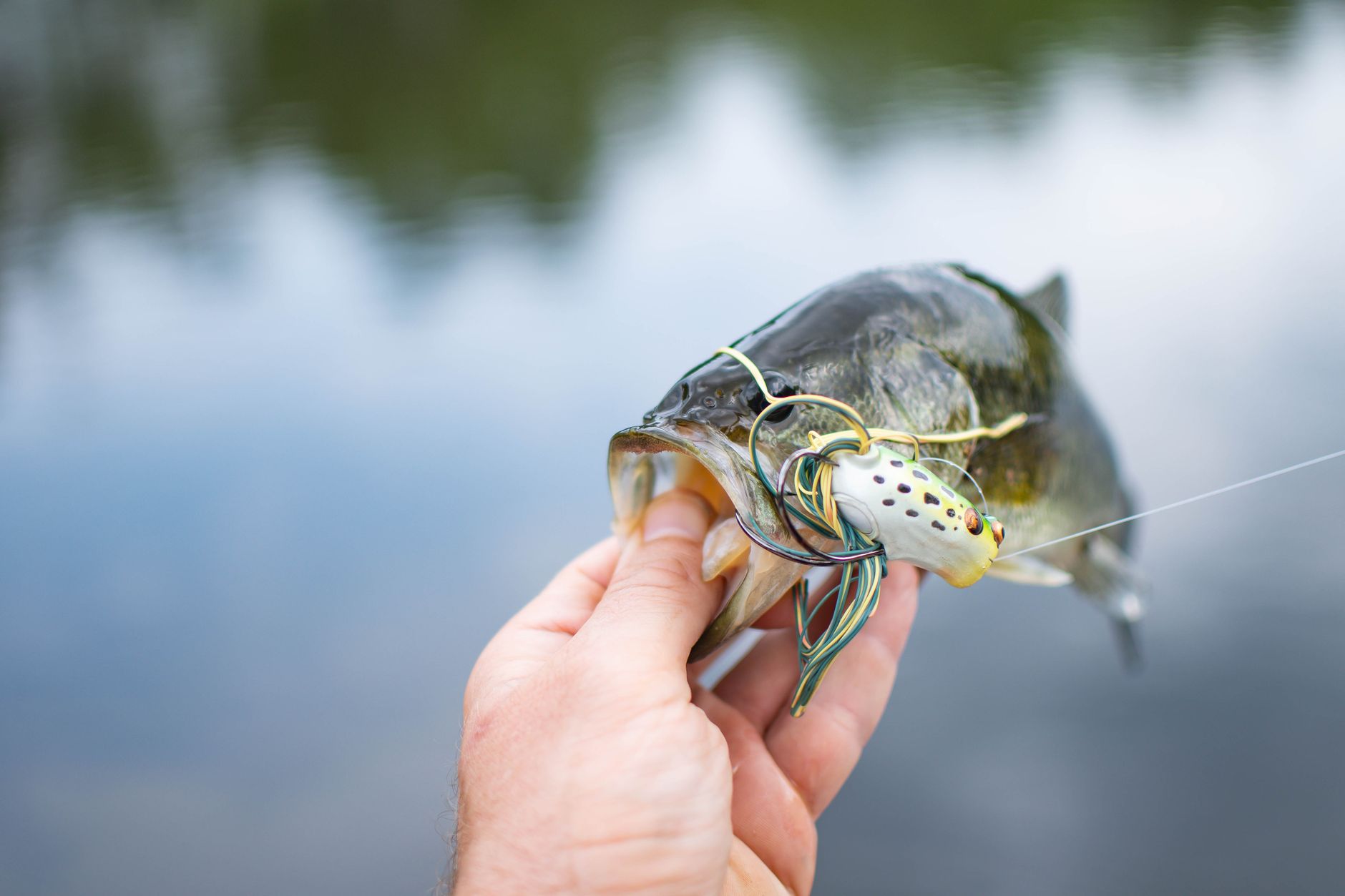
With forage spawning so close to cover, the frog earns a permanent place on the deck this month. "Don't leave home without a frog, especially if there's a lot of cover in your lake," he said. He pairs a bluegill-pattern frog with 50-pound braid on a 7-foot-3 heavy. The trophy bait, he conceded, is the glide - and a yet-to-launch new Rapala Glide gets a sneak preview in the video. Wheeler's expectation is realistic. "Your ratio of how many fish follow the bait and how many fish actually commit to it - if you can get to where it's 10 per cent, you're doing really good."
The payoff comes when offshore schools stack on the ledges. Wheeler is unapologetic about how much he loves it. "When they get out there and you're the first one to find a group of them and there's a hundred of them there, and you cast that crankbait out there and you wind it down, and it just locks up cast after cast after cast, there is nothing better," he said. He runs DT16s on 12-pound fluorocarbon and a 7-foot-6 medium-heavy cranking rod, dropping to a DT10 when the school is shallower than eight feet. When the crank stops working - or only a few fish are home on a waypoint - he switches to the bait that started his career, the 5.25 or 6.25-inch Freeloader minnow. "That's where it really started. That's where we kick this whole thing off," he said.
Wheeler's parting advice is older than any bait in the box. "Take your kids out. Take a kid that's out there on the bank. Take them fishing. If I did not have people in my life that did that to me, I would not be in this position today."