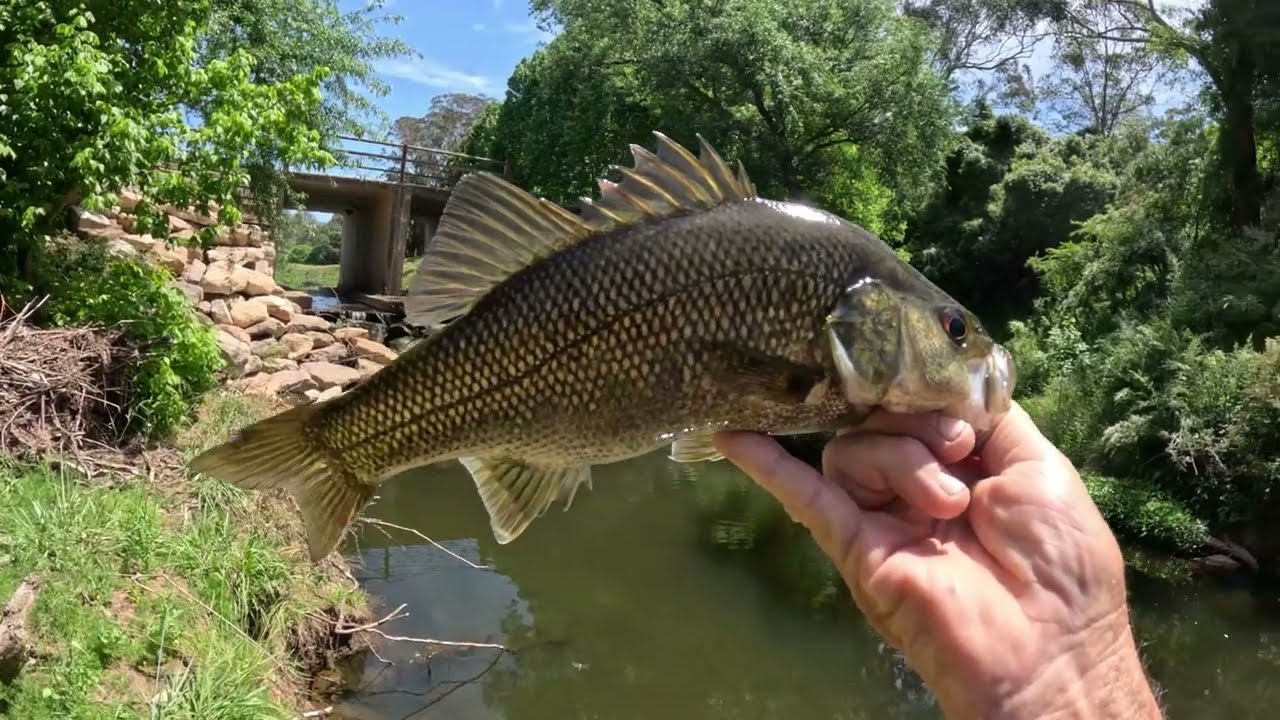
Five flood years left the Hawkesbury system in rough shape. Suburban Sydney's Aussie bass anglers spent half a decade fishing chocolate water, navigating debris, and watching small upstream creeks empty out as floodplain run-off pushed downstream. The 2025-26 spring is the first signal that the recovery may finally be on.
The verdict on the season comes from one of the best-positioned operators in the catchment — Windsor Bait & Tackle, the long-standing Western Sydney shop sitting almost exactly on top of the back-creek system. Their latest beginner-focused lure walkthrough doubled as a state-of-the-system check-in.
"It's exceptionally warm this spring and we've had what — three, four, five years of heavy rain, floods. We're finally getting a very dry, hot spring and the fish are moving in," the shop's host said in the video. "This has probably been the best start to a bass season on the Hawkesbury for the last five years. The water's clean as it's been."
The upstream signal is the part that matters. Aussie bass move into the small back-creeks above the main river when conditions allow, and their presence high in the system has long been treated as a freshwater health indicator.
"As long as these bass keep swimming up these creeks, they're like the canaries of the river," he said. "It's a good thing when there's bass in your system. It's a good thing."
The tactical lesson the video built around is one anyone with a Western Sydney postcode and a $20 lure box can run — small water gets educated fast, so it pays to step through three lure types on a single hole rather than smashing one offering until the fish stop biting.
"Beautiful little Aussie bass, mate," the host said over the first fish. "They get a lot bigger than this, but if you catch one this size, you're going to have a lot of fun."
The shop's defence of the beetle spin against younger anglers who tend to skip it was philosophical.
"Years ago, a young gun fisherman I knew said to me, 'I don't use them. I'm above that.' And I'm like, well, I'm still yet to master everything. I'm still learning tricks with this. Wouldn't you want to know all its tricks?"
With the same hole still active, the host moved through a slow-sinking diver — used to cover surface and subsurface with rip-pause retrieves — before finishing with a basic Atomic paddle-T plastic on a small ball sinker and straight-shaft hook.
The paddle-T pulled another bass first cast.
"I ran half a dozen diving lures across this hole before I switched and they definitely got educated on the beetle spin. But then straight away just hit the water and I had a big bass on. So it's three fish in that little hole."
The key small-water management lesson — repeated through the video — was that today's bass spot is tomorrow's spooked pool unless an angler manages the fish carefully.
"Working out how to retrick these fish — if I come down tomorrow, that fish is here. He's not that stupid. He probably won't take this spinner again. But I'm sure he'll take something. A couple more flicks and we'll go for a little wander."
The broader takeaway for any angler within a 90-minute drive of Windsor is that the back-creek system is currently fishing as well as it has done since the start of the 2020s, and that the cost of entry remains absurdly low — small lures, small spool of leader, sensible footwear and a willingness to walk past the obvious holes everyone else is hitting.