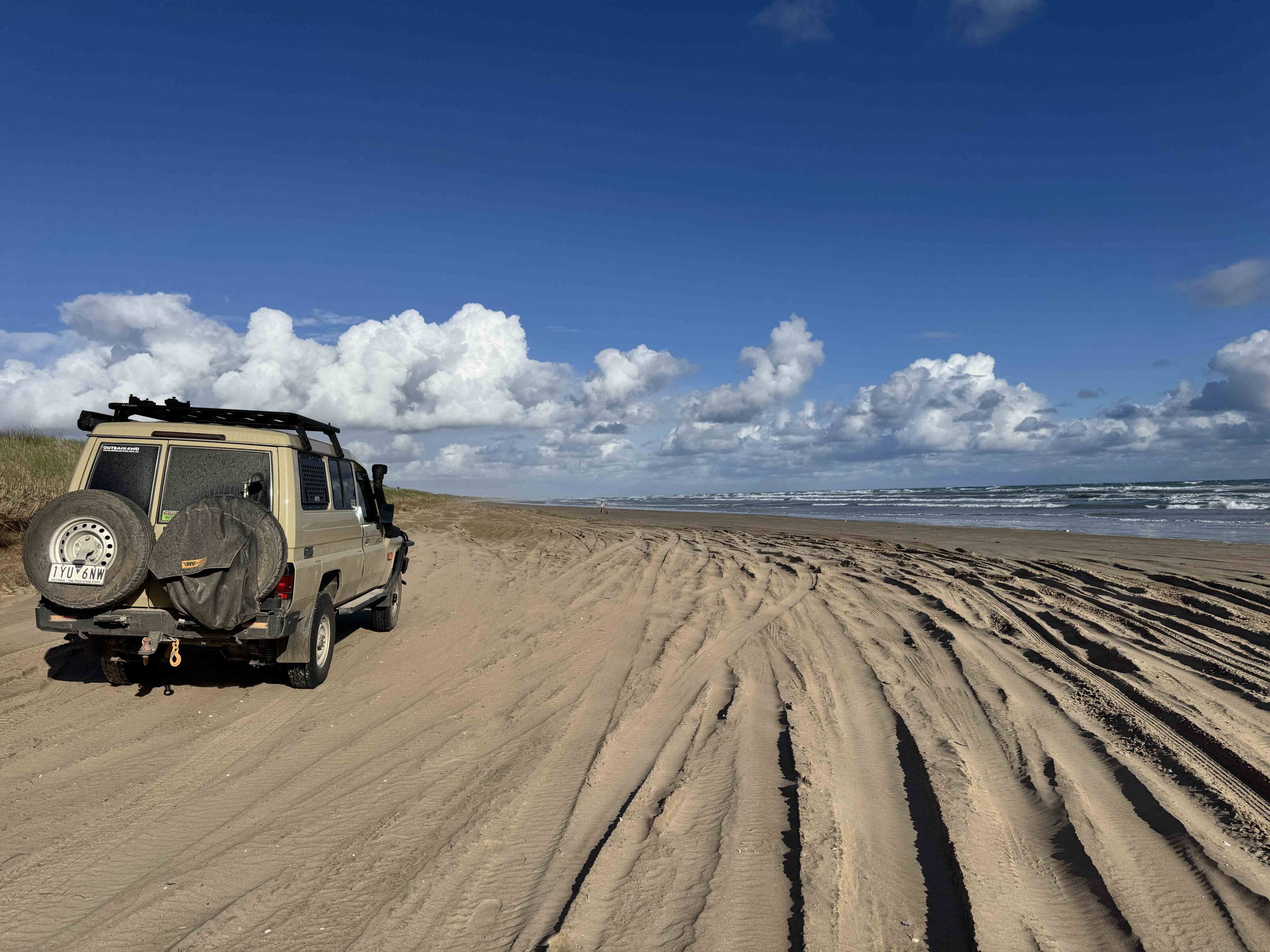
Embarking on a thrilling 4WD journey, I found myself retracing the steps of explorer Charles Sturt’s legendary expedition down the Murrumbidgee and Murray rivers. "I slipped the Cruiser into four-wheel drive and eased onto the sand track that dropped down to the beach," I recalled, thrilled to begin the final leg of this historical trek. Warnings about soft sands days prior seemed overblown, because once I dropped the tyre pressures, I felt secure and ready for adventure.
The journey kicked off from Camden, located on the southern outskirts of Sydney. Despite the gloomy weather, the spirit of exploration prevailed, as I could almost feel Sturt's presence from 1829. During his second expedition, Sturt stayed with a friend at the newly established Brownlow Hill station. "Remarkably, that property just west of central Camden has survived the pressure of urbanisation and remains one of Australia’s most significant colonial estates," I noted as I drove past the historic property, a testament to the area’s colonial past.
Navigating the landscape nearly 200 years later posed its challenges, especially in line with Sturt’s original route. As I journeyed south of Picton, I managed to find a stretch of gravel that led us through Canyonleigh, paralleling Sturt’s historic path. A shallow ford awaited at the Wollondilly River near Towrang, but as I suspected, it’s not always a gentle crossing. "Be prepared to turn back if the river is running too fast or too deep," I kept in mind as I traversed the area.

Continuing my journey to Goulburn, I reflected on Sturt who had camped on the Wollondilly in November 1829. "Try as I might to do the same, I was continually stymied by private property and ‘No Entry’ signs," I lamented, realizing that modern developments often obstruct our connection to history. However, perseverance paid off. I navigated dirt roads across the Breadalbane Plains, tracing the original track altered by time, much like the course of the Hume Highway that would come to define this route.
Along the way, I located the site where Sturt first spotted the Murrumbidgee River at Jugiong. "A monument marking the crossing stands in the local caravan park near the modern road bridge," I observed, marveling at this pivotal point in both my journey and Sturt’s.
As I continued along the Murrumbidgee towards Wantabadgery, I felt a sense of connection to the past. "We’d camped there before, and I knew it would be just the start – a great introduction to the many fine camping spots dotted along the Murrumbidgee that we’d enjoy in the days ahead," I noted with anticipation. The allure of the river had captivated explorers long before me, and here, I embraced nature’s offerings while contemplating the endeavors of those who ventured these lands before.
In Wantabadgery, I took time to pay my respects at a monument to Senior Constable Edward Mostyn Webb-Bowen, whose bravery during a bushranger incident resonated with the spirit of adventure that had brought me to this point. The echoes of history surrounded me as I reflected on both Sturt’s mission and Webb-Bowen’s efforts to maintain order in an untamed land.

This journey through time and wilderness provided a deeper understanding of the hardships Sturt faced during his expedition. The echoes of history paired with the beautiful Australian landscapes encapsulated the essence of our nation’s rugged past.
Looking ahead, I am eager to continue following Sturt’s trail through the breathtaking vistas of South Australia. Much like the explorer, each turn brings new discoveries, and I am ready to uncover what lies ahead.