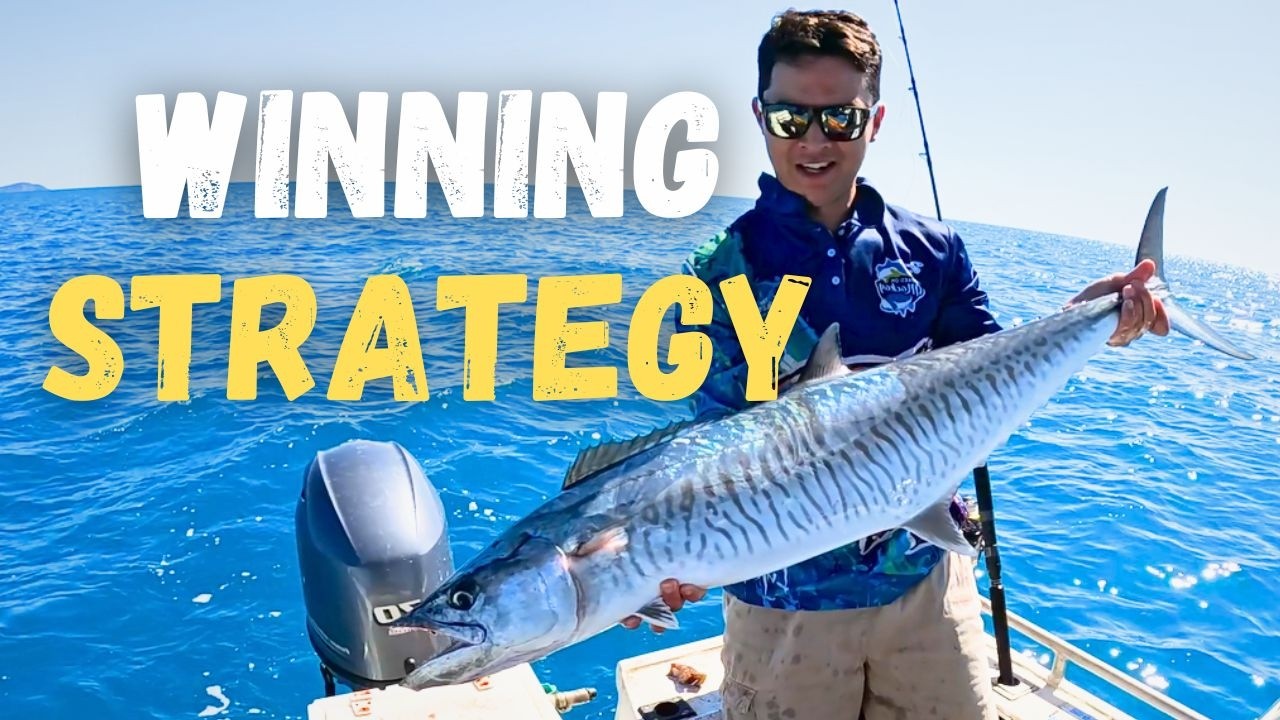
Endless Seas Fishing's Luke has distilled his big Spanish mackerel game into three steps—catch a yellowtail scad on a sabiki rig, present it under a wire two-hook rig with a single in the nose and treble in the tail, and slow-troll the pressure edge of structure—boxing two solid Spanish on a family trip out of southeast Queensland.
The Endless Seas Fishing tutorial, fronted by Luke with his father and brother Jeffrey on board and daughter Caitlin handling some of the camera work, frames the method around live bait selection. Yellowtail scad sit at the top of the menu for Queensland and northern New South Wales mackerel anglers, and Luke uses a fish-skin sabiki rig with luminous beads to fill the live well.
"There's a particular fish called the yellowtail scad. It's absolute dynamite for the Spanish mackerel," Luke explained. "If you catch one of those, do not throw it away. Put a hook in it and throw it out. You might catch a whole range of different fish, but Spanish mackerel absolutely love them."
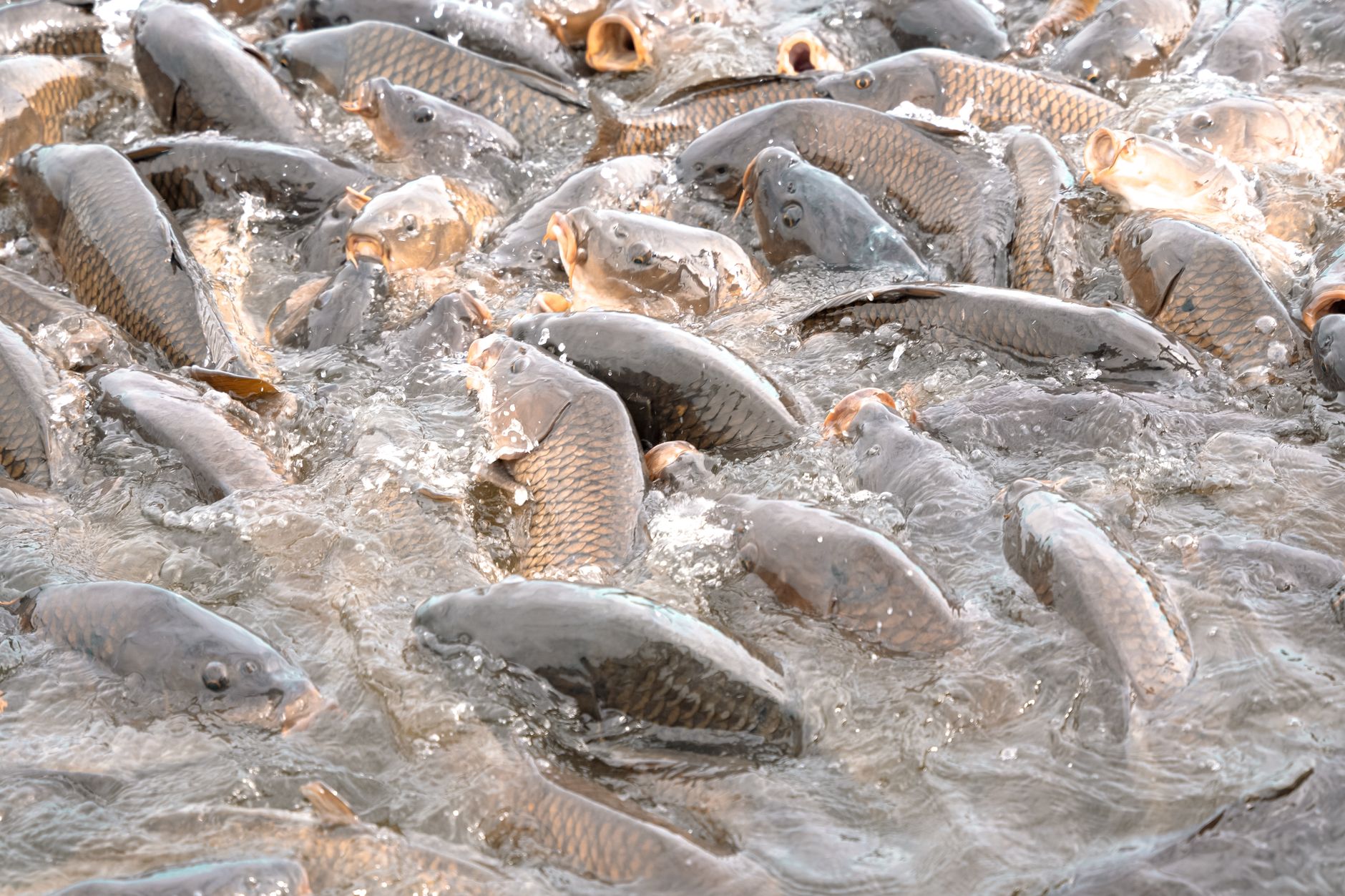
The location selection itself was a tutorial point. Mackerel were busting on the surface in a bay formed between an island and a rock wall, with the live bait holding tight against the structure.
"This island and there's a bit of a rock wall here and creates a bit of a bay," Luke noted. "Your fish often like to hold up in these bays between the deep water and the structure. Very dangerous spot for them there because the bait fish can come through and get trapped between that island and rock wall and the deep water. But good for us. That's how we're locating them, seeing them busting up on the surface."
Step two is the rig. Luke runs a two-hook setup on 69-pound single-strand wire—a single hook in the nose of the scad to keep it swimming and a stinger treble back in the tail to convert short strikes. The mainline goes to a swivel via a Bimini twist, the wire goes to the single via a haywire wrap, and the second strand carries the treble. His dad has built him several variations of the rig and keeps spares hanging in the boat ready to swap on the fly.
"Don't over-complicate it," Luke said. "Just simply you need something attached to the nose. A big treble in the back."
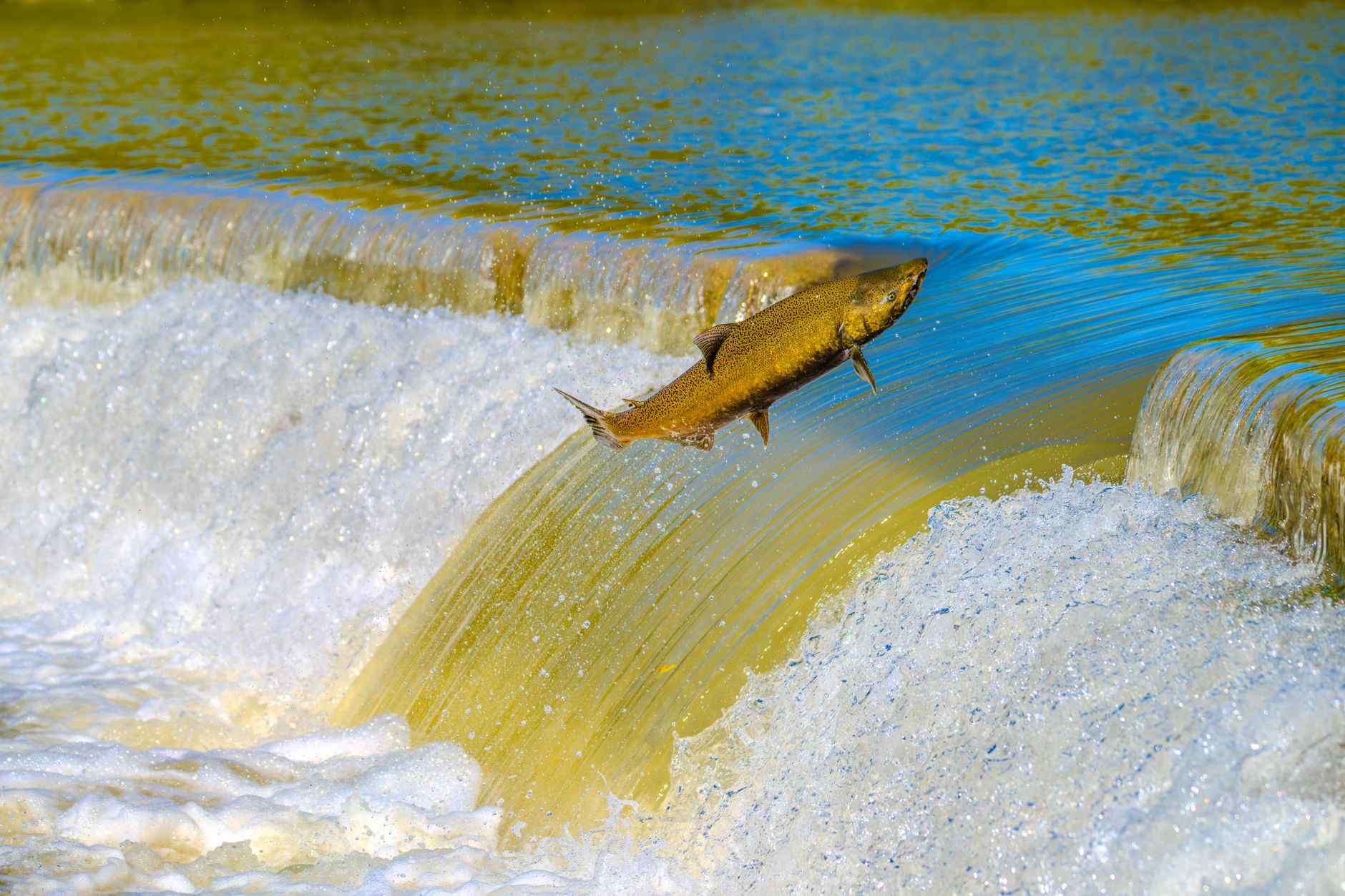
"Hook right in the nostril there," he said, demonstrating. "Not a lot of flesh there. That seems to kill them if I go too much further in."
Step three is presentation. Luke runs a very slow troll—just enough drive to keep the line tight—rather than drifting. He has been bitten off too many times by mackerel coming up to a slack-line scad and slicing the braid as they ate.
"If I've got the line slack and the boat's just drifting, I notice the live baits like to swim around and tangle a bit or even swim in a circle. And so your line's not tight," Luke said. "When the mackerel come in to eat it, because the line's not tight, they actually catch my braid line on the way to eat the fish and snip the whole thing off. You might not even feel the bite. It's just, oh, my live bait's gone. It's happened to me numerous times."
The other half of the presentation is current orientation. Mackerel set up on the pressure side of structure, and Luke positions himself to keep the live bait swimming against the flow on that pressure edge of the island.
The technique paid off twice in quick succession. The first fish, taken on a live scad behind the boat, went around five kilos to the brag mat—Luke's dad's catch. "That's about a five kilo," Luke said as the fish came over the rail. "Looks like your rig worked."
The second hookup happened before Luke had finished feeding line out. "That took it on the freefall. I could see it," Luke said as Jeffrey leaned into the rod. "Wow. That's going for a run. Watch out, the fish is jumping." The fish was foul-hooked—treble in the mouth, single hook jagged behind—and released estimated around seven kilos.
The full episode also touches on bycatch—queenfish, mahi-mahi and the inevitable pike that the sabiki rig will pick up alongside the scad. But the headline is the tight three-step framework: live scad, wire two-hook rig and a slow troll on the pressure edge of any island or reef where mackerel are likely to be feeding.