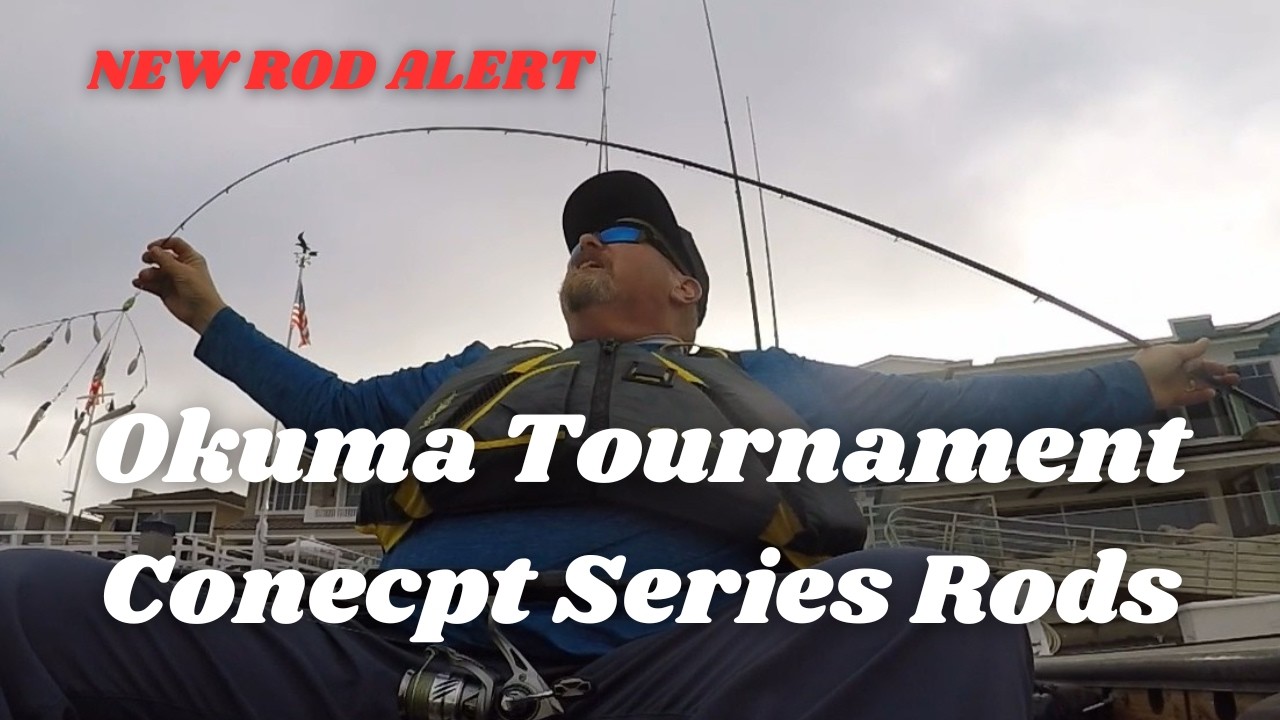
Okuma's long-running Tournament Concept rod family is back with a third generation, and Davey Nguyen of Davey's World Fishing has been one of the first to put a couple of the new TCS B sticks in front of a camera.
Nguyen pulled two rods from the lineup for the walkthrough, posted to YouTube on 19 May 2026: a 6-foot-9 spinning rod and a 7-foot-11 heavy baitcaster he has been swinging for spotted bay bass, calico bass and sand bass on Southern California saltwater.
The rods trace back to a partnership most bass fans will remember. Nguyen explained the genesis on camera.
"The original TCS rods were designed by professional bass angler Scott Martin. This is about 10 years ago. He was on our staff, Okuma staff. He went over to the factory, designed these things from the ground up, and he fished them hard in all of his tournaments. FLW when he was doing that, getting out winning that Forrest Wood Cup was really, really awesome."
When Martin and Okuma parted company, the brand held onto the Tournament Concept name and kept iterating. The TCS B is the third generation, with what Nguyen described as a "30-ton graphite rod" blank: very sensitive without a UFR tip, reactionary, and loaded with backbone for the hook set.
Three new models join the family for 2026. The spinning range now stretches from a 6-foot-9 up to a 7-foot-6 medium light or medium that Nguyen singled out as a dedicated dropshot stick - "that thing is fantastic for dropshotting," he said. The baitcasters span 6-foot-9 to 7-foot-11, with the longest length offered in heavy, extra heavy and double-extra-heavy actions.
Nguyen has been fishing the 7-foot-11 heavy in the salt with a Komodo 350 baitcaster and 50-pound braid, slinging A-rigs out from the harbour and letting the blank do the work.
"I have 50-lb braid on this when I'm fishing out here in the salt and it absolutely just loads up nicely. You can really get that long cast, get that bait out there as far as you want to do, let it sink down, and then just get it right on back to the boat."
He paired it with the 350-size Komodo deliberately because of the variety of fish that show up on those A-rigs. Most days it is spotted bay bass, calico or sand bass, but yellowtail and other bigger pelagics will eat them, and Nguyen wanted a reel that could handle the surprise without giving line away.
The spinning rod he showed - a 6-foot-9 in the 691 model - is a medium-plus, sitting between traditional medium and medium-heavy ratings. He matched it with an Okuma X-series spinning reel and a Hookup Bait jig for vertical work from a kayak, dropping it tight to dock pilings and boat hulls. The action, he noted, is a touch more parabolic than the baitcasters but still loads down to roughly a moderate-fast taper.
Fuji K-concept guides round out the build across the range. The TCS rods first arrived in the Okuma catalogue about a dozen years ago and the model numbers and lengths have stayed consistent since launch, with the B generation adding new actions rather than reshaping the chart.