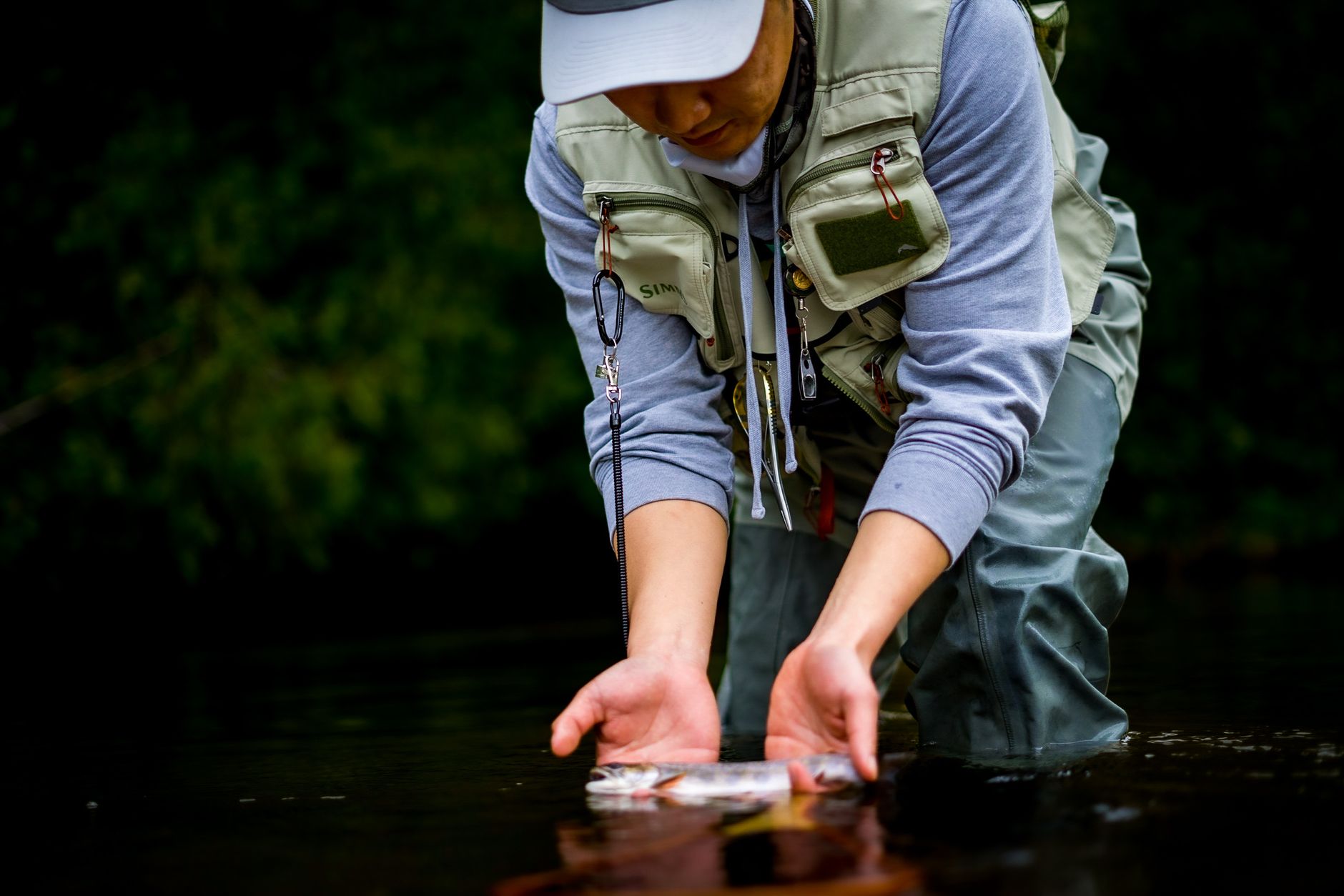
The heat restrictions that shut down afternoon fishing across the interior West in late July are coming off, water by water, as a cooler run of weather drops stream temperatures back to something trout can survive.
Wyoming Game and Fish lifted its voluntary afternoon closures on the Snake River and Flat Creek on Friday morning, effective immediately. Both had been in place since late July, when the department asked anglers not to catch and release between noon and sunrise.
"Thanks to recent cooler weather, afternoon stream temperatures have dropped back down to levels safer for trout and catch and release fishing," said Jackson Region Fisheries Supervisor Darren Rhea. "We deeply appreciate the angling community's cooperation in protecting these natural resources during the summer heat."
The Snake River closure was the first of its kind. According to Game and Fish spokesperson Raegin Akhtar, Flat Creek had only been closed this way once before.
The numbers behind the reversal are stark. Through July, the Snake River below Flat Creek regularly ran above 68 degrees Fahrenheit, and the Snake at Moose topped 68 on fifteen separate days, according to US Geological Survey data cited by the Jackson Hole News and Guide. By last Thursday the Snake at Moose peaked at 62.8 degrees, the river below Flat Creek at 62.6, and Flat Creek itself at 62.2.
Warm water holds less dissolved oxygen. A cutthroat fighting an angler in 70-degree water is doing so with a smaller margin than it looks, which is why the thresholds are set where they are. Game and Fish is asking anglers to keep carrying a stream thermometer, stop catch-and-release as temperatures approach 70, and - at 65 degrees - consider harvesting a fish rather than releasing it.
Yellowstone National Park moved two days earlier. The park lifted the restrictions it imposed on 29 July, which had closed every river and stream to angling daily from 2 p.m. to sunrise.
"Cooling weather and water temperatures in the forecast allow for these restrictions to be lifted," the park said in its statement. "Anglers will be able to fish on most park rivers, streams and lakes daily from sunrise to sunset as specified in the 2026 Fishing Regulations booklet."
Not everything reopened. Full closures on the Madison, Firehole and Gibbon rivers - the last of these downstream of Norris Campground - have been in place since mid-July and stay in place. Those three run hot regardless of the weather because of nearby geothermal areas, and the park is holding the line on them to protect native and wild trout.
The park was careful to frame the reopening as conditional rather than settled. "Your cooperation will protect the park's fisheries and may prevent the need to prohibit fishing at all times of the day on some rivers and streams if conditions worsen," it said. Staff are still monitoring temperatures and can put the restrictions back.
Montana's version of the story is the most instructive, because it moved in both directions at once. Fish, Wildlife and Parks lifted hoot-owl restrictions - the 2 p.m. to midnight closures - and river-mouth closures on ten stretches on 13 August, including the Bitterroot above Hamilton, the lower Blackfoot, the Clark Fork below the Blackfoot, Rock Creek, Lolo Creek, Monture Creek and the Yellowstone from Springdale down to Laurel.
On the same day, FWP closed two sections of the Big Hole River outright. Section 1, from Saginaw Bridge to the North Fork confluence, and Section 5, from Tony Schoonen fishing access site to the Beaverhead confluence, are shut to angling until conditions improve.
The trigger there was not temperature. It was flow. Under the Big Hole Drought Plan, low streamflow and falling dissolved oxygen close water regardless of how cool the nights get, and the agency said it is working with irrigators to hold what flow it can.
That distinction matters as the season winds toward autumn. Cool nights fix a heat problem quickly. They do not put water back in a river.