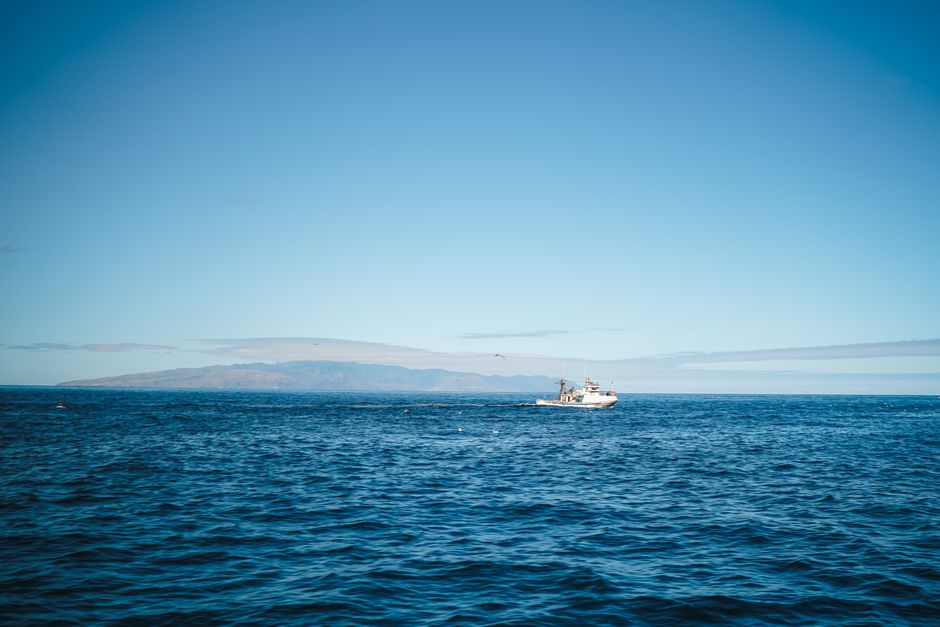
A fight over who controls nearly 5,000 square miles of ocean off Cape Cod — and a vast stretch of the Pacific — moved into a congressional hearing room this week, and the outcome could reshape how American fishing grounds are opened and closed for years to come.
On June 3, the House Subcommittee on Water, Wildlife and Fisheries heard testimony on a bill that would stop presidents from using the Antiquities Act to ban commercial fishing inside marine national monuments. Sponsored by Representative Aumua Amata Coleman Radewagen (R-American Samoa), the legislation would instead route any fishing restrictions through the Magnuson-Stevens Act, the federal law that already governs most US fisheries through regional councils, stock assessments and public comment.
The two monuments at the centre of the debate are the Northeast Canyons and Seamounts Marine National Monument — roughly 4,913 square miles about 150 miles off Cape Cod, established by President Barack Obama in 2016 — and the Pacific Islands Heritage Marine National Monument. President Donald Trump moved to reopen the Northeast Canyons to commercial fishing in February 2026, and the new bill would make that kind of access harder for a future administration to reverse.
Supporters frame the issue as one of process, not protection. Representative Harriet Hageman (R-Wyoming) told the hearing that "some of the most serious misuses of the Antiquities Act have occurred in the U.S. exclusive economic zone." Assistant Secretary Tim Petty argued the existing regulatory web is already strict enough, saying the Magnuson-Stevens Act, "together with the Endangered Species Act, Marine Mammal Protection Act, and other laws, provides enforceable, adaptive, and science-based mechanisms."
Industry witnesses pointed to the sheer scale of water at stake. William Gibbons-Fly of the American Tunaboat Association testified that "roughly 53 percent of the U.S. EEZ in the Pacific Islands Region falls within marine national monuments." New Bedford Mayor Jon Mitchell, who has backed reopening the Atlantic site, argued the monument designation skipped the usual checks. "This is the way it usually works under existing federal fisheries law, but when it comes to the Atlantic Canyons and Seamounts, the federal government took a short cut," Mitchell said.
Conservation groups see it very differently, and several have signalled they will fight the changes in court. Erica Fuller, senior counsel at the Conservation Law Foundation, called the Atlantic site irreplaceable. "The Northeast Canyons and Seamounts Marine National Monument is a biodiversity hotspot and one of the most biologically productive areas in the Atlantic Ocean," Fuller said. The monument's three canyons run deeper than the Grand Canyon and its waters shelter endangered sperm, fin and sei whales, sea turtles and corals that are thousands of years old.
Dr. Jessica Redfern of the New England Aquarium, who has flown survey flights over the area, said the wildlife is not abstract. "This monument supports amazing species from the seafloor to the sea surface, and we see evidence of that during every aerial survey," she said. Brad Sewell, managing director of oceans at the Natural Resources Defense Council, went further on the politics, arguing that the move to dismantle the protections "is unlawful."
For recreational anglers watching from the sidelines, the case sets a precedent that reaches well beyond two remote monuments: it tests whether a president's pen or a fisheries council's process decides where the lines on the water get drawn.