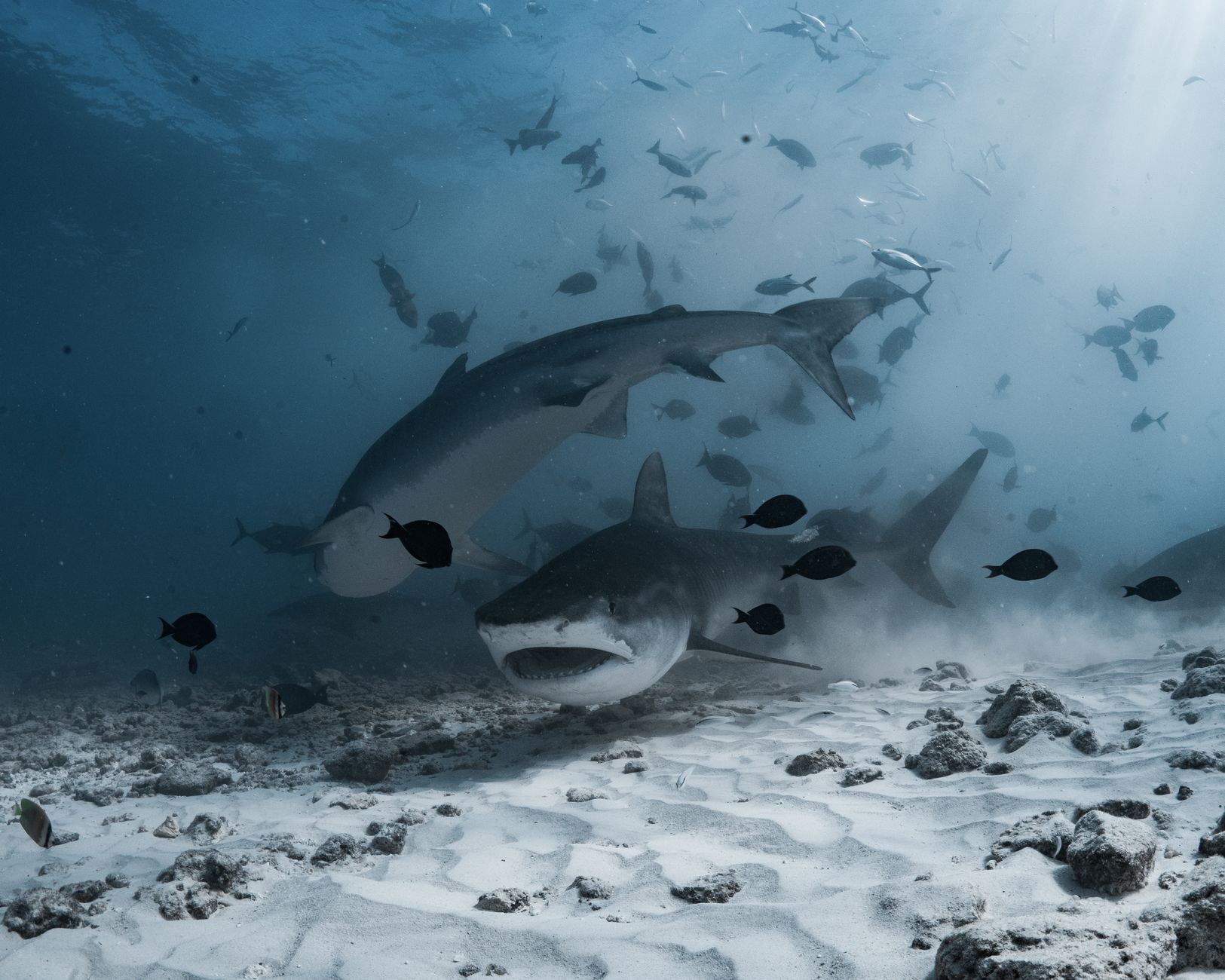
Thirty boardings. Fifty-two violations. That is the arithmetic Fisheries and Oceans Canada came home with after this summer's patrol of the North Pacific high seas, and the ratio is the story.
The inspections ran between May and July as part of Operation North Pacific Guard, a Canadian-led mission that has run annually since 2019. Officers travelled aboard the Canadian Coast Guard Ship Sir Wilfrid Laurier, covering more than 15,000 kilometres of international waters, boarding fishing vessels and checking them against the rules set by regional fisheries management organisations.
The violations clustered in one place. Sean Wheeler, the agency's chief of international operations for conservation and protection, told CBC News the pattern was unmistakable.
"Canada's inspection work detected a significant number of violations within the tuna fishery, specifically targeting shark," Wheeler said.
He framed it as a continuation rather than a discovery. "This is consistent with a couple of years of violations that we've seen around shark finning practices," he said. "Unreported catch bycatch, discard violations - which raised the concern about the sustainability of these fisheries, and also the impact on things like sharks and dolphins."
Finning - cutting the fins from a shark and throwing the rest of the animal overboard - remains a focus of the boardings. Wheeler said sharks were also going unlogged after capture, a bookkeeping failure that makes the practice harder to prove and easier to repeat. Aerial surveillance flights in earlier phases of the operation had already flagged possible shark finning, dolphin harpooning, salmon retention, pollution and vessel-marking breaches.
The 52 figure sits above last year's. A 2025 Canadian-led patrol of the same waters turned up 39 potential incidents of illegal, unreported and unregulated fishing.
What officers found on deck went beyond the catch. Wheeler described excessive working hours, unhygienic conditions, no proper sleeping quarters, and crew identity documents being held by the vessel rather than the people they belonged to.
The agency declined to name the flag states involved, saying only that they were countries that typically operate in that part of the Pacific. That reticence points at the structural limit of the whole exercise: Canadian officers can board and document, but they cannot prosecute. Suspected violations are referred to the flag state for investigation, with serious cases escalated to international fisheries bodies that can, in principle, impose fishing bans.
Wheeler argues the referrals do land. "We have seen from our previous year's operation significant fines now being implemented, and including up to jail time for a Canadian investigation that was conducted last year," he said.
The patrol also carried a scientific brief, funded through Canada's Pacific Salmon Strategy Initiative, and it produced the most unsettling finding of the trip. Officers recorded a marked drop in catches of pelagic species - sardines, mackerel, Pacific saury, Pacific salmon - with no corresponding drop in the number of vessels working for them.
"These are very important forage fish for the entire ecosystem," Wheeler said. "We need to work with our science colleagues to determine if this is a seasonality change, if there's been a shift in migration pattern, or if there's a larger ecosystem impact happening."
That is an open question, and Wheeler was careful not to close it. Fewer fish in the nets across a whole basin can mean the fish moved, or that the season shifted, or that there are fewer fish. Distinguishing between those three is not an enforcement job.
The operation was run with inspectors from the United States, Japan and South Korea, and its Japanese component has grown fastest. Peter Lambertucci, the national chief enforcement officer for Fisheries and Oceans Canada, listed the year's additions: two memorandums of co-operation on information sharing, Japanese officers training alongside Canadians in Victoria, and a joint workshop in Tokyo with American and Japanese partners.
"Japan sent officers to train with our Canadian officers in Victoria. We held a joint workshop in Tokyo with the U.S. and Japanese partners, and Japan deployed officers to our aircraft," Lambertucci said. "In addition, for the first time, Japan hosted one of our fishery officers aboard their patrol vessel."
Nineteen Canadian fishery officers took part this year. Four worked the aerial surveillance programme out of Hokkaido, where Canada has stationed a long-range aircraft for daily patrols, and one rode aboard a Japanese vessel.
Fisheries Minister Joanne Thompson set the operation's purpose in broader terms when it launched. "Healthy fish stocks are crucial for food security, economic resilience, and the livelihoods of coastal and Indigenous communities in Canada, and around the world," Thompson said. "Through Operation North Pacific Guard, Canada is advancing responsible stewardship as a trusted convening partner to combat illegal and unsustainable fishing practices and support the long-term sustainability of our oceans."